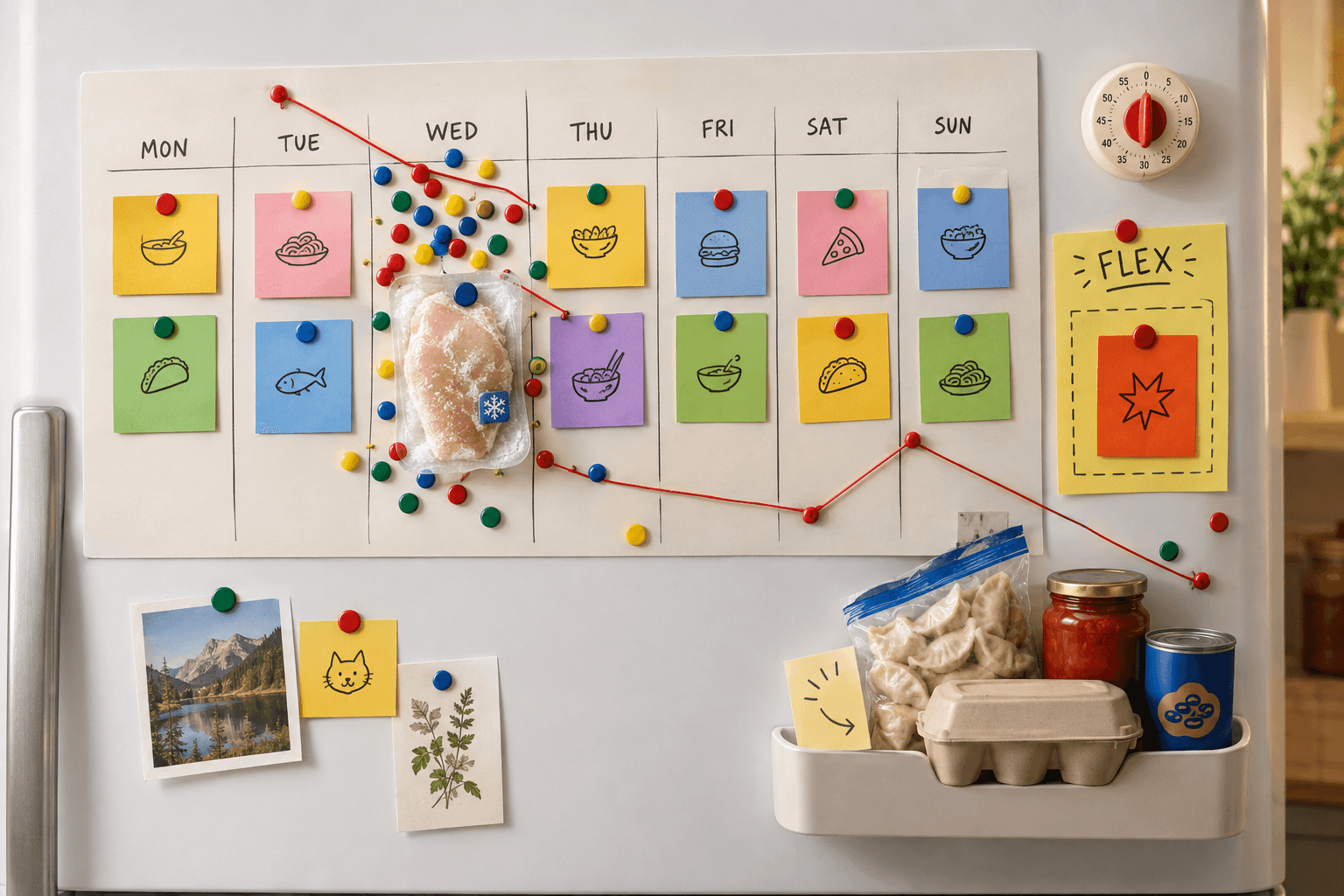
How to Make a Weekly Meal Plan That Survives Wednesday
Build a flexible weekly meal plan with a practical fallback, anchor and movable meals, and a simple way to recover when dinner gets bumped.
The Spiceful Team
Wednesday is where many meal plans go to die.
The chicken is still frozen. Somebody has a late meeting. You have exactly nine minutes of patience and a refrigerator full of ingredients that seem personally offended by your choices. So you order takeout, eat cereal, or assemble a dinner from cheese and spite.
Fine. The meal plan did not fail. It encountered a weekday.
A useful weekly plan leaves room for that. Rather than assigning seven elaborate dinners to seven fixed nights, make a short list of meals, decide which ones need to happen sooner, and keep one intentional emergency exit available. Think of the plan as a queue, not a court summons.
Leave one dinner loose on purpose
You can call it a fallback, a flex night, or the meal you make when the day has gone full Windows error sound.
A good fallback dinner has a few traits:
- Everyone in the household will actually eat it, or at least tolerate it without launching a parliamentary inquiry.
- It requires very little thinking after 6 p.m.
- Its ingredients are things you already tend to keep around, or can keep around without planning a special errand.
- It does not steal the key ingredient from Thursday's intended dinner.
The specifics depend on your household. Freezer dumplings might be the answer. So might eggs and toast, pasta with sauce you froze earlier, a canned-bean situation, or a deliberately scheduled leftovers night. If takeout fits your budget and routine, that can be the fallback too. A plan is allowed to contain capitalism's little treat.
Pick one fallback most weeks. Five backup dinners is just a second meal plan wearing a fake mustache.
The point is to remove the decision from the bad night. Decide while you are reasonably rested, possibly holding coffee, not while staring into the refrigerator as if it owes you a briefing document.
Sort dinners into anchors and movable meals

Once you have your list, do not assign meals by vibes alone. Look at the ingredients.
An anchor meal should happen earlier because it uses ingredients you want to use promptly. That might mean delicate herbs, salad greens, ripe produce, a component already thawed, or leftovers you intend to turn into another meal.
A movable meal is more forgiving. It relies mostly on frozen ingredients, canned goods, dried pasta, grains, sturdy produce, or other shelf-stable components. A chickpea-and-tomato pasta can wait more comfortably than a meal built around tender herbs and fish you thawed for Tuesday.
This is a ranking exercise, not a collection of universal expiration rules. A wilting bunch of cilantro may be a quality problem. A delayed cooked meal or raw perishable ingredient can become a food-storage question. Those are different categories, and they deserve different levels of drama.
A quick way to arrange the week:
- Put the most time-sensitive meal first or second.
- Place a couple of movable meals later.
- Keep your fallback unassigned, or reserve one night as flexible.
- Buy only the perishable ingredients that this realistically supports.
That last part matters. Buying seven dinners' worth of fragile produce for a week containing a birthday dinner, a school event, late work, leftovers, and one evening where nobody can locate the will to mince garlic is how you end up conducting a tiny funeral for the spinach on Sunday.
You do not need seven distinct dinners, either. Planning for leftovers once can make the whole week less fragile. Make more of something you already know you will want again, then give it a slot. Leftovers deserve an appointment too. They have been through enough.
Give skipped dinners a new job

Say Tuesday's planned meal did not happen. Do not push every meal back by one day automatically like a doomed airport departure board. Take sixty seconds and reshuffle.
Start with the fallback if you need it. Then look at what remains:
- Which meal uses the ingredient that needs your attention first?
- Which dinner can move because its components are frozen, shelf-stable, or generally less time-sensitive?
- Can the skipped meal become tomorrow's dinner, later in the week, lunch, or a freezer project if the recipe and appropriate storage guidance support that choice?
Move the flexible meal, protect the anchor meal, and keep going.
For example, imagine Wednesday was supposed to be tacos with tender lettuce and fresh cilantro, while Thursday was pantry pasta with canned tomatoes and dried noodles. Wednesday gets derailed. Make the fallback tonight, cook tacos Thursday, and slide pasta to Friday. The plan has changed shape. It has not burst into flames.
Sometimes the correct move is to let a meal go. Perhaps you had takeout twice, the weekend is busy, and that ambitious tray bake now has the emotional energy of an unopened email from payroll. Freeze or repurpose ingredients only when that makes sense for the food and your storage guidance. Otherwise, revise the grocery list for next week and accept that you are a human being, not a meal-prep vending machine.
A small but important food-safety pause
Use ingredient urgency to avoid waste, but do not use it to make safety calls from memory, optimism, or a suspiciously persuasive sniff.
Food can be unsafe even if it looks, smells, and tastes normal. If a plan changes and you are deciding what to do with raw perishables or cooked leftovers, check the specific food rather than relying on a homemade refrigerator calendar.
- USDA FoodKeeper has food-specific refrigerator, freezer, and pantry storage guidance.
- USDA FSIS leftover guidance covers safe handling of leftovers.
Use those sources for the actual food in question and how it has been stored. They are less fun than guessing, admittedly, but so is throwing out dinner because a plan was treated like a set of blood-oath obligations.
Keep the grocery list flexible too
A resilient plan starts at the store. Buy for your anchor meals, your movable meals, and your fallback, while being honest about the week ahead.
If Thursday might become takeout because it always does, do not buy a second set of fragile ingredients for a dinner that only exists in your fantasy calendar. Lean on freezer and shelf-stable components for the movable portion of the week. Save the highly perishable purchases for meals you genuinely expect to cook early.
When the plan changes, update the list before the next shop. Remove the ingredients you no longer need, add anything for the meal that moved forward, and combine duplicates where you can. There is no prize for owning three half-used jars of capers because two recipes happened to look good on Sunday.
If you keep your recipes in Spiceful, this reshuffle can live where the recipes do. Schedule saved recipes on its calendar-style meal plan, drag dinners when the week changes, then generate grocery items from the revised plan. Spiceful can also consolidate duplicate grocery ingredients and lets you add manual items. It cannot choose your fallback, see into your pantry, or determine whether last Tuesday's chicken is safe. Frankly, your app should not be making poultry decisions on your behalf.
A weekly plan exists to spare you some decisions later. It does not get to prosecute you for ordering noodles on Wednesday.
Ready to tame the chaos? Build your recipe book.
- Save recipes from anywhere
- Turn ingredients into one tidy list
Start free. No credit card needed. Upgrade anytime.