Grocery List Categories That Catch More Than Dinner
Use a simple two-pass grocery-list method: start with meal-plan ingredients, then scan breakfast, snacks, drinks, pantry staples, and household supplies recipes cannot predict.

The Spiceful Team
Dinner has a plan. The rest of life has apparently been freelancing.
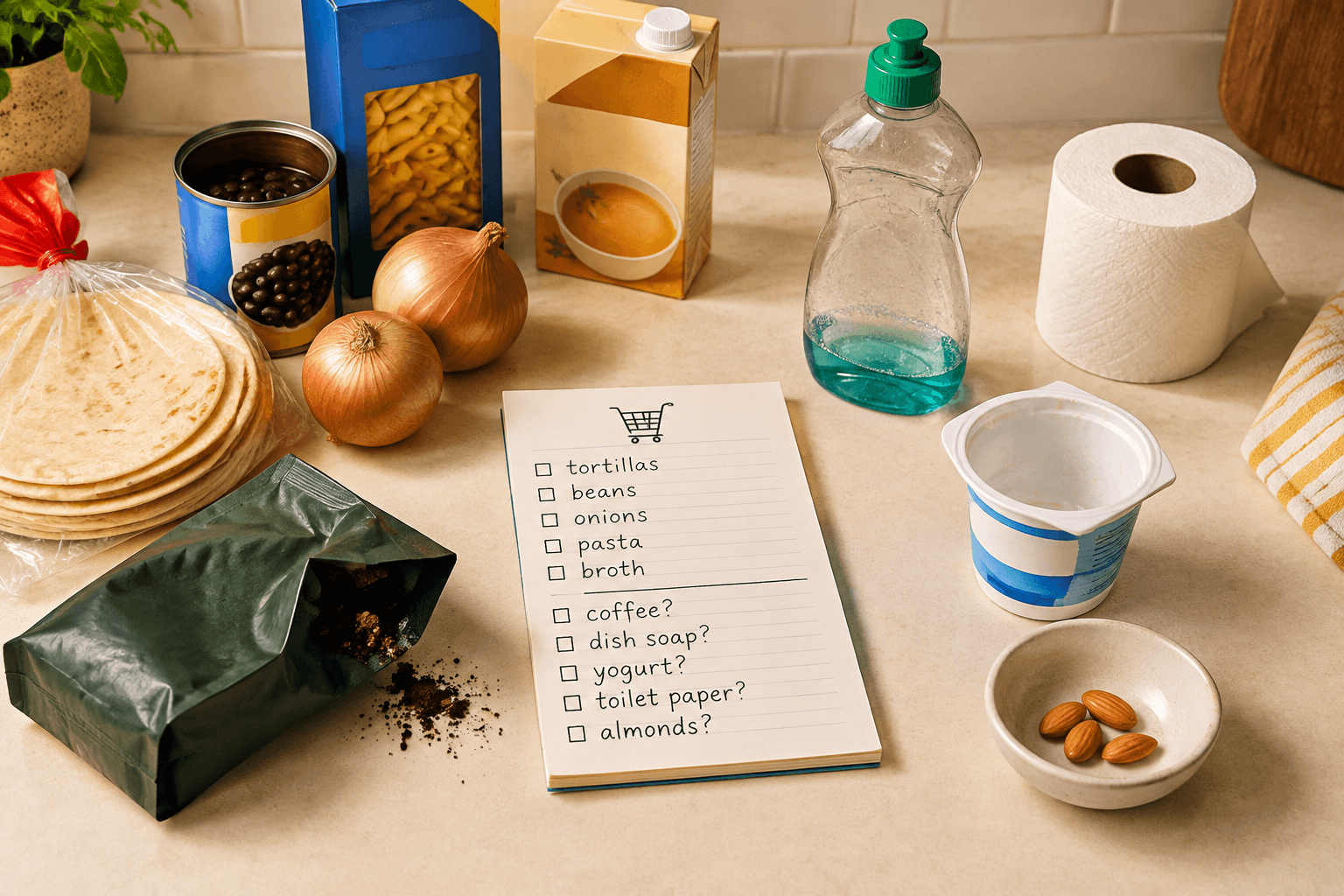
Your meal plan says tacos on Wednesday, pasta on Thursday, and soup on Sunday. You add tortillas, beans, onions, tomatoes, pasta, and broth. Then you get home from the store and discover there is no coffee, no yogurt, no lunch food, and the dish soap bottle is making that horrible hollow wheeze.
A grocery list built from recipes is a strong start. It is not a complete map of your household. Recipes cannot know somebody finished the cereal, the toilet paper situation is becoming philosophical, or you have exactly four sad almonds left for snacks.
The fix is a two-pass list. It takes a few minutes and avoids treating your kitchen like an escape room.
Pass 1: Add what the meal plan requires
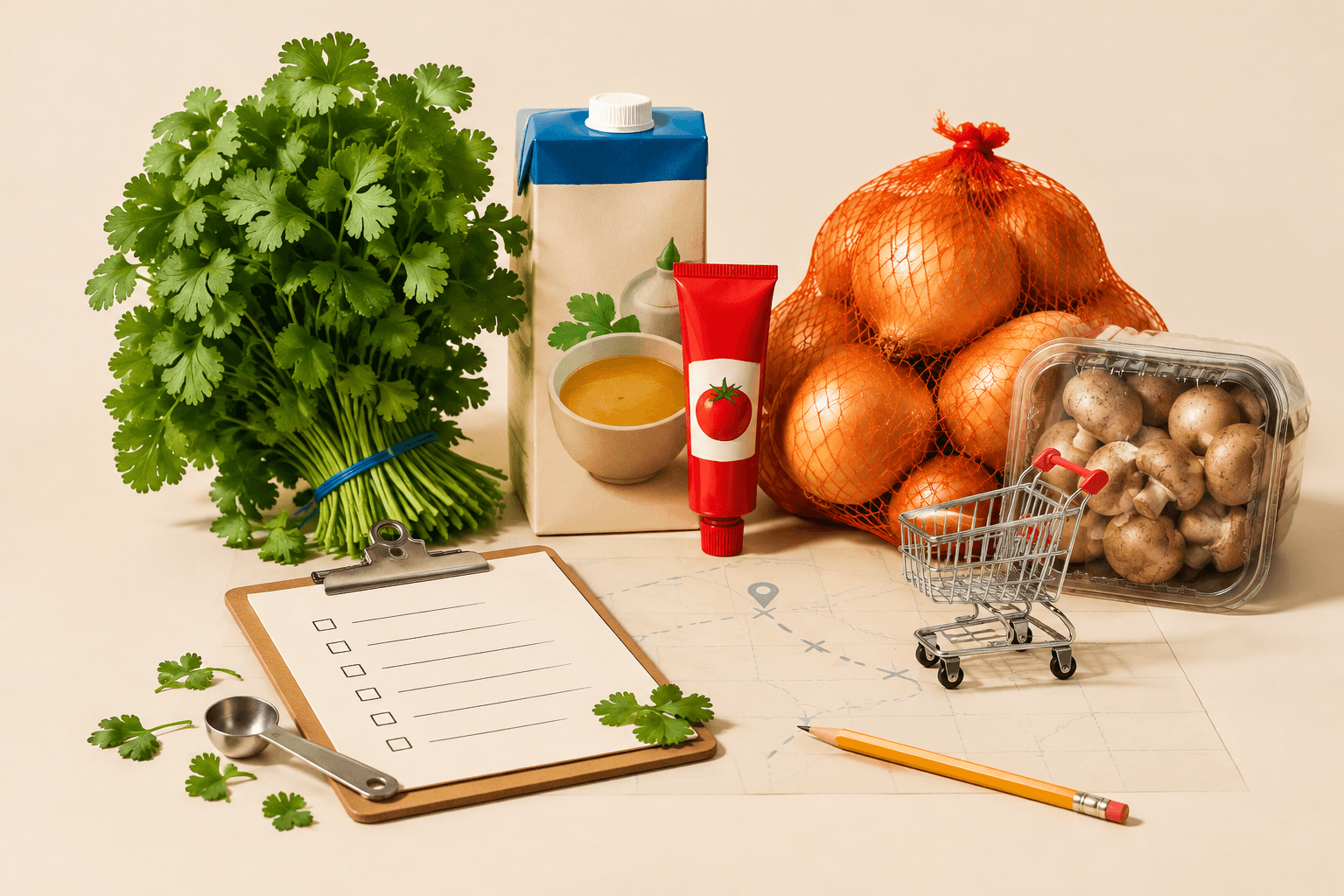
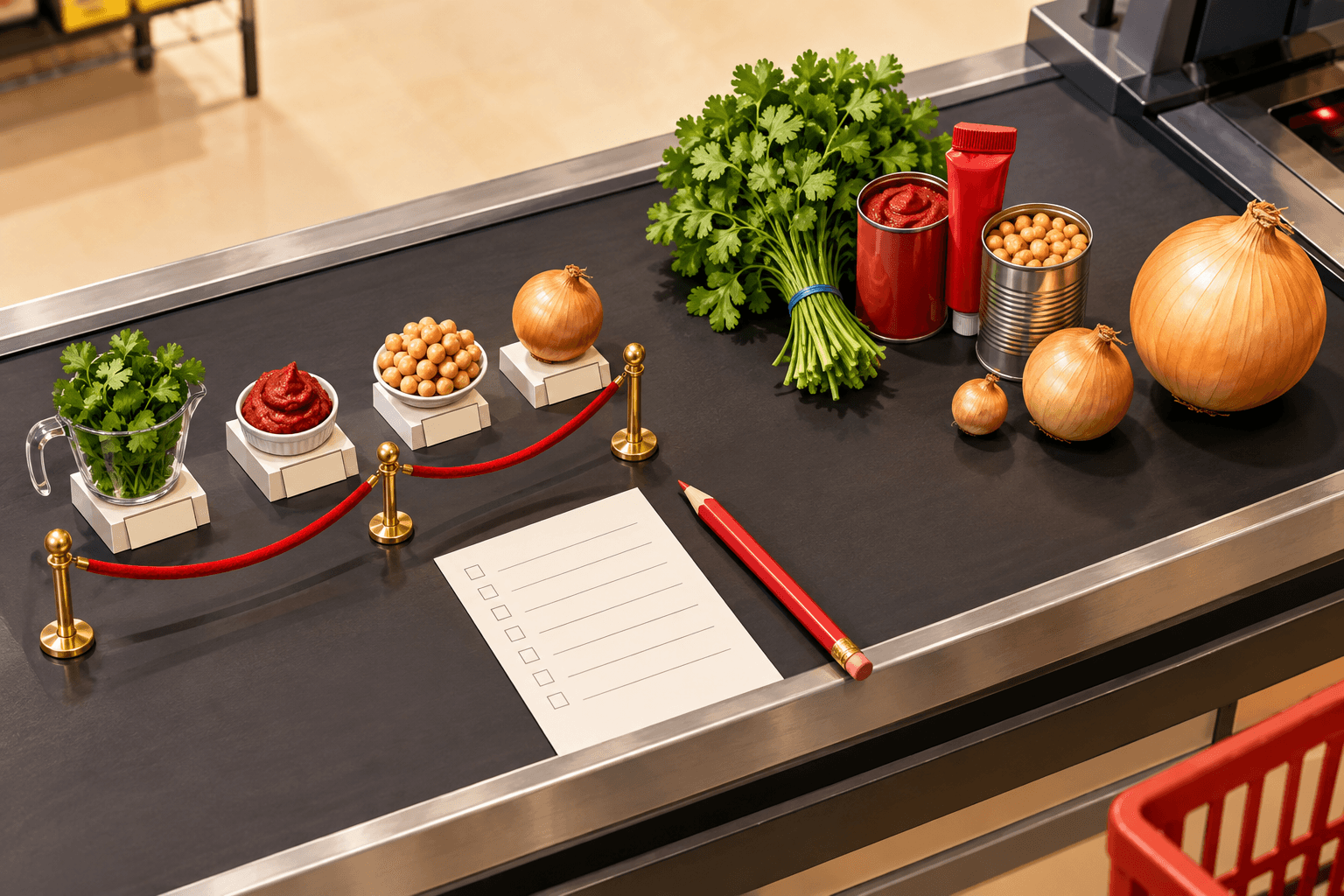
Start with the meals you actually expect to cook. Add ingredients from those recipes, then consolidate duplicate ingredients where appropriate. If tacos and chili both need onions, your list should reflect the combined need rather than launching two separate onion quests.
This pass answers: What do I need for the meals I planned?
You do not need to schedule every crumb you will consume between now and Sunday. You need enough of a plan that Wednesday-you does not have to interpret Sunday-you's text message to yourself: “Taco stuff??”
Pass 2: Do a quick household-life scan

Now look beyond dinner. Use a few broad categories as prompts, not as a sacred printable document handed down from the grocery gods.
This pass answers: What will we use that is not listed in a recipe?
Keep it brief. You are trying to catch repeat purchases, not conduct an archaeological dig through every cabinet. If you own a spice that expired during the Obama administration, today does not have to become its day in court.
A compact category setup might look like this:
Planned meals
Keep the recipe ingredients from Pass 1 in their own heading if that helps you see whether every scheduled meal is covered.
Breakfast and lunch
Think about the meals that happen while everyone is busy pretending lunch does not require advance planning.
- Cereal, oats, bread, eggs
- Yogurt or whatever you usually pair with it
- Sandwich ingredients, wraps, soup, leftovers-friendly sides, or frozen lunches
Snacks and drinks
Snacks and beverages have a remarkable ability to disappear without appearing in any recipe plan.
- Fruit
- Crackers, chips, popcorn, or the household's chosen crunchy object
- Coffee, tea, sparkling water, or juice
- The extremely specific snack one person will accept and everyone else will ignore
Staples and pantry
Use this for regularly replenished cooking basics and shelf-stable foods. Grocery people sometimes call these aisles “center store,” which sounds like a mall kiosk but generally means the shelves in the middle of the supermarket.
- Rice, pasta, beans, canned tomatoes
- Oil, vinegar, broth, or flour
- Sauces, condiments, and spices you use often
Do not turn this into a permanent inventory spreadsheet unless that brings you joy. A quick glance for the things you buy repeatedly is enough.
Produce
A separate produce prompt can catch fruit for breakfasts and snacks, salad greens, herbs, or the vegetables you buy because they make you feel like a person who has a plan.
Refrigerated and frozen
Combine this with other categories if that matches your store route. It can help you remember items you buy regularly but that do not always appear in recipes:
- Milk, yogurt, cheese, or butter
- Frozen vegetables
- Frozen breakfast items or emergency dinners
Household and cleaning
Recipes are tragically silent on dish soap, paper towels, trash bags, detergent, and toilet paper. This category can also include pet food, batteries, or any other non-food item you routinely grab during grocery runs.
If you buy bulk paper goods somewhere else, give them their own list or note rather than forcing them into your weekly supermarket mission.
The taco-week example
Say your meal plan includes tacos, pasta, and soup. Pass 1 adds tortillas, beans, ground meat or a meat alternative, salsa ingredients, pasta, canned tomatoes, broth, and whatever else those recipes need.
Then do the household-life pass:
- Breakfast and lunch: yogurt, cereal, bread, sandwich ingredients
- Snacks and drinks: coffee, fruit, sparkling water, popcorn
- Staples: rice is getting low, so add it
- Household and cleaning: dish soap and toilet paper
Now the list reflects the week you are about to live, rather than assuming people only eat one carefully scheduled dinner per day and never clean anything.
Make the categories match your actual errand

There is no universal best grocery-list taxonomy. Store departments vary, and so do shopping habits. One retailer may separate meat, seafood, bakery, deli, dairy, frozen, beverages, and nonfood. Another may have a tiny produce section beside the entrance and a freezer aisle that feels like a long-term commitment.
Common groupings such as produce, bakery, dairy, frozen, shelf-stable goods, beverages, and nonfood are useful starting points, not commandments. Instacart's category guide and Supermarket News' department list show how differently grocery categories can be framed.
Your list should resemble the way you shop.
If you walk to one supermarket, a simple sequence based on your route may be enough:
- Produce
- Pantry and snacks
- Refrigerated and frozen
- Household
If you make a Costco run for paper goods and a regular-store run for everything else, separate those jobs. “Toilet paper” does not need to sit beside “one lime,” silently judging your car's cargo space.
If you shop at a corner store twice a week, categories can be even looser: dinner ingredients, breakfast, snacks, and home stuff. The list exists to jog your memory and reduce wandering, not to qualify you for a logistics job.
Use a meal plan as the starting list, not the whole list
A meal plan is excellent at knowing you want tacos on Wednesday. It cannot know the coffee is gone, your kid packed the last granola bar, or the dishwasher tablet supply has become a high-stakes situation.
Give each category a fast scan, add what is genuinely needed, and stop. You can always buy fewer novelty sauces. Probably.
If you use Spiceful, you can generate grocery items from saved recipes and a meal plan, then manually add the non-recipe items from the household-life pass. Spiceful can also consolidate duplicate ingredients where appropriate when several planned meals call for overlapping items. It does not track what is in your pantry, so your own quick cupboard, refrigerator, and supply-shelf check still matters.
A good grocery list does not need to know everything about your household. It just needs to remember enough that you do not return from the store with cilantro, three kinds of cheese, and zero breakfast.
Ready to tame the chaos? Build your recipe book.
- Save recipes from anywhere
- Turn ingredients into one tidy list
Start free. No credit card needed. Upgrade anytime.