Common Ingredient Substitutions: What to Use When You're Missing Something
Missing an ingredient halfway through a recipe? Use this practical substitution guide for common cooking and baking ingredients, from buttermilk and eggs to herbs, broth, and pantry staples.

The Spiceful Team
You picked a recipe. Dinner is underway. Then you reach for the ingredient you were sure was in the fridge.
It isn't.
Before you abandon the recipe or make an emergency grocery run for one tablespoon of something, check whether you already have a reasonable substitute.
Some swaps are surprisingly simple. Others depend on what the ingredient is doing in the recipe. Here's a practical guide to the substitutions worth knowing.
Quick ingredient substitution chart
| If you're missing | Try this instead |
|---|---|
| 1 cup buttermilk | 1 cup milk minus 1 tbsp, plus 1 tbsp lemon juice or vinegar |
| 1 cup sour cream | 1 cup plain Greek yogurt |
| 1 cup heavy cream | 3/4 cup milk + 1/4 cup melted butter for many cooking uses |
| 1 cup whole milk | Lower-fat milk for most cooking applications |
| 1 cup broth | 1 cup water + bouillon according to package directions |
| 1 tbsp fresh herbs | 1 tsp dried herbs |
| 1 clove garlic | About 1/8 tsp garlic powder |
| 1 tbsp cornstarch | 2 tbsp all-purpose flour for thickening |
| 1 cup breadcrumbs | Crushed crackers, rolled oats, or crushed unsweetened cereal depending on the recipe |
| 1 cup brown sugar | 1 cup granulated sugar in many recipes, with some change in flavor and texture |
| 1 cup all-purpose flour | 1 cup all-purpose gluten-free flour blend designed for 1:1 substitution |
| 1 egg | Depends on the recipe. See the baking section below. |
Think of this chart as a starting point, not a guarantee that every swap works in every recipe. The more important an ingredient is to the structure of a dish, the more carefully you'll want to substitute it.
Dairy substitutions
Dairy is one of the easiest categories to improvise with, especially in savory cooking.
Buttermilk
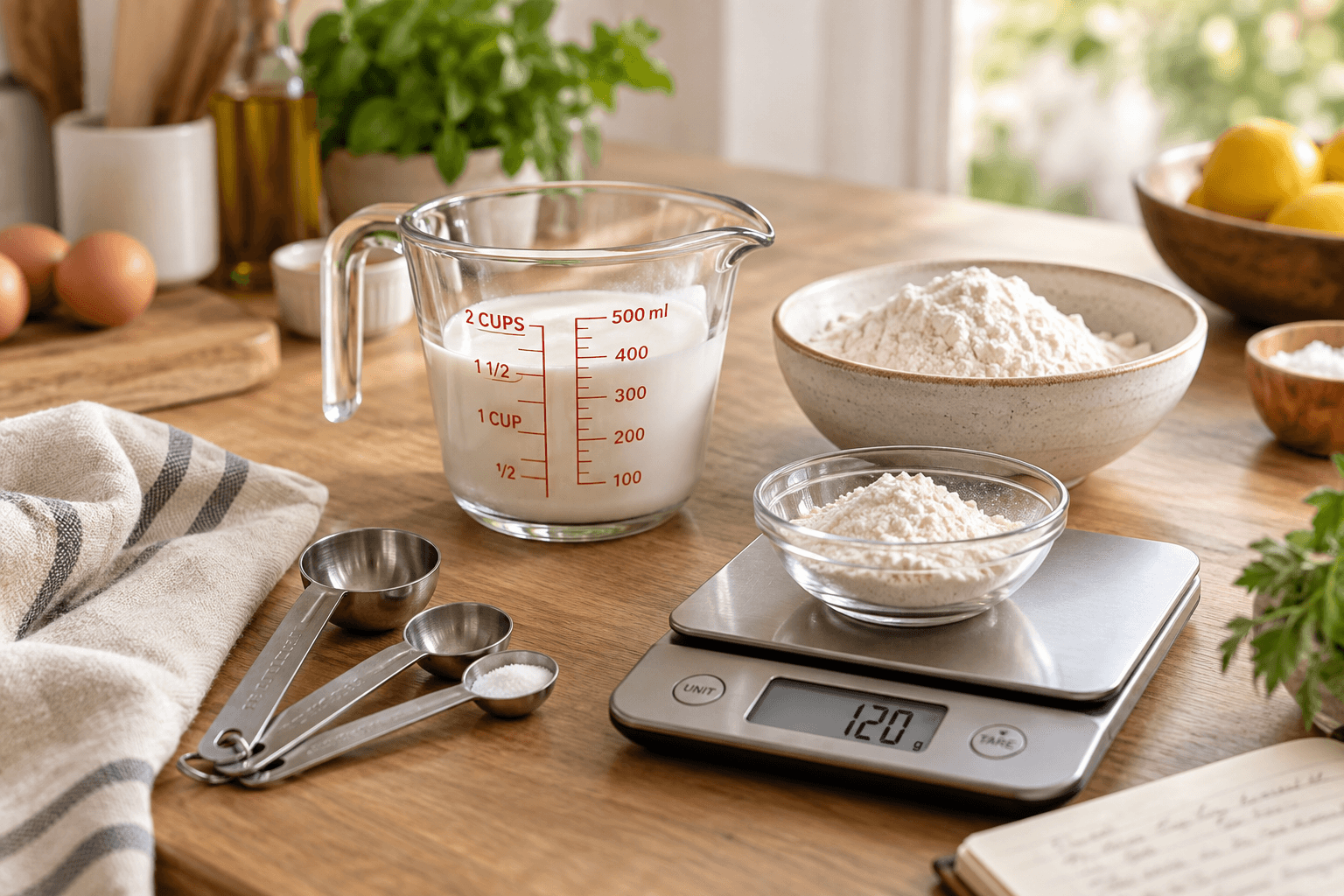
For 1 cup of buttermilk, put 1 tablespoon of lemon juice or white vinegar in a measuring cup, then add enough milk to reach 1 cup. Let it sit for a few minutes before using.
This gives you the acidity many recipes need from buttermilk.
Sour cream
Plain Greek yogurt can often replace sour cream at a 1:1 ratio.
It's especially useful in dips, sauces, dressings, baked goods, and recipes where sour cream adds moisture and tang.
Heavy cream
If a savory recipe needs heavy cream and you don't have any, a mixture of 3/4 cup milk and 1/4 cup melted butter can work as a stand-in for 1 cup of cream.
There's an important catch: this mixture won't whip like heavy whipping cream. Save it for soups, sauces, casseroles, and similar dishes rather than whipped-cream recipes.
Milk
For many soups, sauces, pancakes, and other everyday recipes, you can swap one type of dairy milk for another.
The result may be slightly richer or thinner depending on the fat content, but dinner will usually survive.
Fresh and dried herb substitutions
Buying an entire bunch of herbs when a recipe needs two tablespoons can feel a little excessive.
Luckily, fresh and dried herbs can often stand in for each other.
A useful rule is:
1 tablespoon fresh herbs = about 1 teaspoon dried herbs
Dried herbs have a more concentrated flavor, so you generally need less.
This works well for herbs such as oregano, thyme, rosemary, and sage. More delicate herbs such as basil, parsley, cilantro, and dill can taste noticeably different when dried, so the substitution may change the character of the finished dish.
Garlic substitutions
No fresh garlic? Garlic powder can get dinner moving again.
A common starting point is:
1 garlic clove = about 1/8 teaspoon garlic powder
Garlic powder won't give you the exact same texture or flavor as fresh garlic, but it works well in sauces, soups, marinades, spice blends, and plenty of weeknight meals.
If garlic is the star of the recipe rather than a background flavor, fresh garlic is harder to replace convincingly.
Broth and stock substitutions
If a recipe calls for chicken, beef, or vegetable broth, bouillon is the obvious backup.
Prepare it according to the package directions and use the amount of liquid the recipe calls for.
In some recipes, plain water can also work. You'll lose some flavor, so you may need to adjust the seasoning afterward.
This is particularly forgiving in dishes that already contain plenty of aromatics, spices, tomatoes, or other strongly flavored ingredients.
Cornstarch substitutions
Cornstarch is often used to thicken sauces, soups, gravies, and fillings.
If you're out, all-purpose flour can usually do the job, but you need more of it.
A useful starting point is:
1 tablespoon cornstarch = about 2 tablespoons all-purpose flour
The texture won't be identical. Cornstarch tends to create a glossier, more translucent result, while flour produces a more opaque sauce.
For either one, mix the thickener with a little cool liquid before adding it to hot liquid to help prevent lumps.
Breadcrumb substitutions
Breadcrumbs are another ingredient with plenty of possible backups.
Depending on the recipe, try:
- Crushed crackers
- Rolled oats
- Crushed unsweetened cereal
- Crushed croutons
The best choice depends on what the breadcrumbs are doing.
For meatballs or meatloaf, you're looking for something that can help absorb moisture and bind the mixture. For a crispy topping, texture matters more.
Brown sugar substitutions
If you're making a sauce, glaze, or another forgiving recipe, granulated sugar can often replace brown sugar in equal amounts.
The flavor won't be exactly the same. Brown sugar brings molasses flavor and additional moisture, so the difference becomes more noticeable in baking.
If you have molasses, you can make a closer substitute by combining it with granulated sugar.
Flour substitutions
Flour is one category where improvising deserves a little caution.
Different flours absorb liquid differently and contain different amounts or types of protein. That means swapping almond flour, coconut flour, whole wheat flour, or another specialty flour directly for all-purpose flour can significantly change a recipe.
If you need a gluten-free alternative, a flour blend specifically formulated as a 1:1 replacement for all-purpose flour is generally the simplest option. Follow the directions on the package rather than assuming every gluten-free flour works the same way.
Egg substitutions depend on the recipe
Eggs are tricky because they can do several jobs at once.
They can provide structure, moisture, richness, binding, and leavening. The right substitute depends on which of those jobs matters in your recipe.
For some baked goods, common options include mashed banana, applesauce, commercial egg replacer, or a mixture of ground flaxseed and water.
But these aren't interchangeable in every recipe.
A banana may work nicely in a muffin and taste very strange in something that isn't supposed to taste like banana. An egg replacer that works in cookies may not behave the same way in a custard.
If eggs are central to the structure of a recipe, look for a substitution specifically tested for that type of dish.
Baking substitutions need more care
A missing ingredient in a pot of soup is one thing.
A missing ingredient in a cake is another.
Cooking gives you plenty of room to taste, adjust, add more liquid, or change the seasoning as you go. Baking relies more heavily on specific ratios and chemical reactions.
That's especially true for baking soda and baking powder.
They aren't simply two versions of the same ingredient. Baking soda requires acid to produce the reaction that helps baked goods rise. Baking powder already contains the components needed for leavening.
Because changing one can affect several other ingredients in the recipe, it's usually better to use a substitution developed for the specific recipe rather than making a casual one-for-one swap.
How to decide whether a substitution will work
Before replacing an ingredient, ask what it's actually doing in the recipe.
Is it there for flavor?
You probably have some flexibility.
Is it adding moisture?
Look for something with a similar consistency and water or fat content.
Is it thickening a sauce?
Choose another thickener and adjust the quantity.
Is it providing structure or helping something rise?
Be more careful. This is where substitutions can change the result significantly.
Is it the main ingredient?
At some point, you're not making a substitution. You're making a different dish.
And sometimes that's completely fine.
Taste as you go when you can
When you're cooking something savory, make smaller substitutions first and adjust.
If you're replacing broth with water, taste before adding more salt. If you're using dried herbs instead of fresh, start with less. If you're swapping one dairy product for another, check the consistency before adding the full amount.
A substitution doesn't need to reproduce the original ingredient perfectly. It needs to work in the dish you're making.
Make next week's grocery run a little easier
Of course, the easiest ingredient substitution is the one you don't need to make.
When you're planning several recipes for the week, Spiceful can turn those saved recipes into a meal plan and generate a consolidated grocery list from what you're planning to cook.
That means fewer separate recipe tabs to cross-check while you're figuring out what belongs on the shopping list.
And if dinner still calls for something you forgot?
Keep this guide handy.
Ready to tame the chaos? Build your recipe book.
- Save recipes from anywhere
- Turn ingredients into one tidy list
Start free. No credit card needed. Upgrade anytime.