How to Meal Plan From What You Already Have Without Keeping a Pantry Inventory
A quick, low-maintenance method for planning around leftovers, produce, and half-used ingredients, then shopping only for the gaps.

The Spiceful Team
Your refrigerator does not need to become a database.
It needs a brief interrogation before you shop.
A full pantry inventory sounds sensible until somebody eats the last tortilla at 11:42 p.m., moves chicken from the freezer to the fridge, and forgets to update the app because they are a person rather than a warehouse barcode scanner. By Thursday, the inventory is fiction. Prestige television-level fiction.
A better habit is a quick scan before you plan the next few meals. Look for food that needs a decision, pick a handful of meal anchors, check the few staples that can make or break dinner, then buy only what is missing.
Ten minutes is plenty. You are making a useful plan, not preparing evidence for a congressional hearing about the yogurt situation.
Do a “use this soon” scan first
Open the refrigerator, freezer, and cupboards with one goal: find the ingredients most likely to become annoying if ignored.
Start with:
- leftovers you intend to eat
- delicate produce, especially greens, herbs, berries, mushrooms, or the bag of spinach already auditioning for a swamp documentary
- opened refrigerated items
- ingredients bought for one specific meal that never happened
- food moved from freezer to refrigerator for a plan that changed
Write down only the things that catch your attention. This is your priority list, and it should be short enough to be mildly bossy rather than spiritually crushing.
For example:
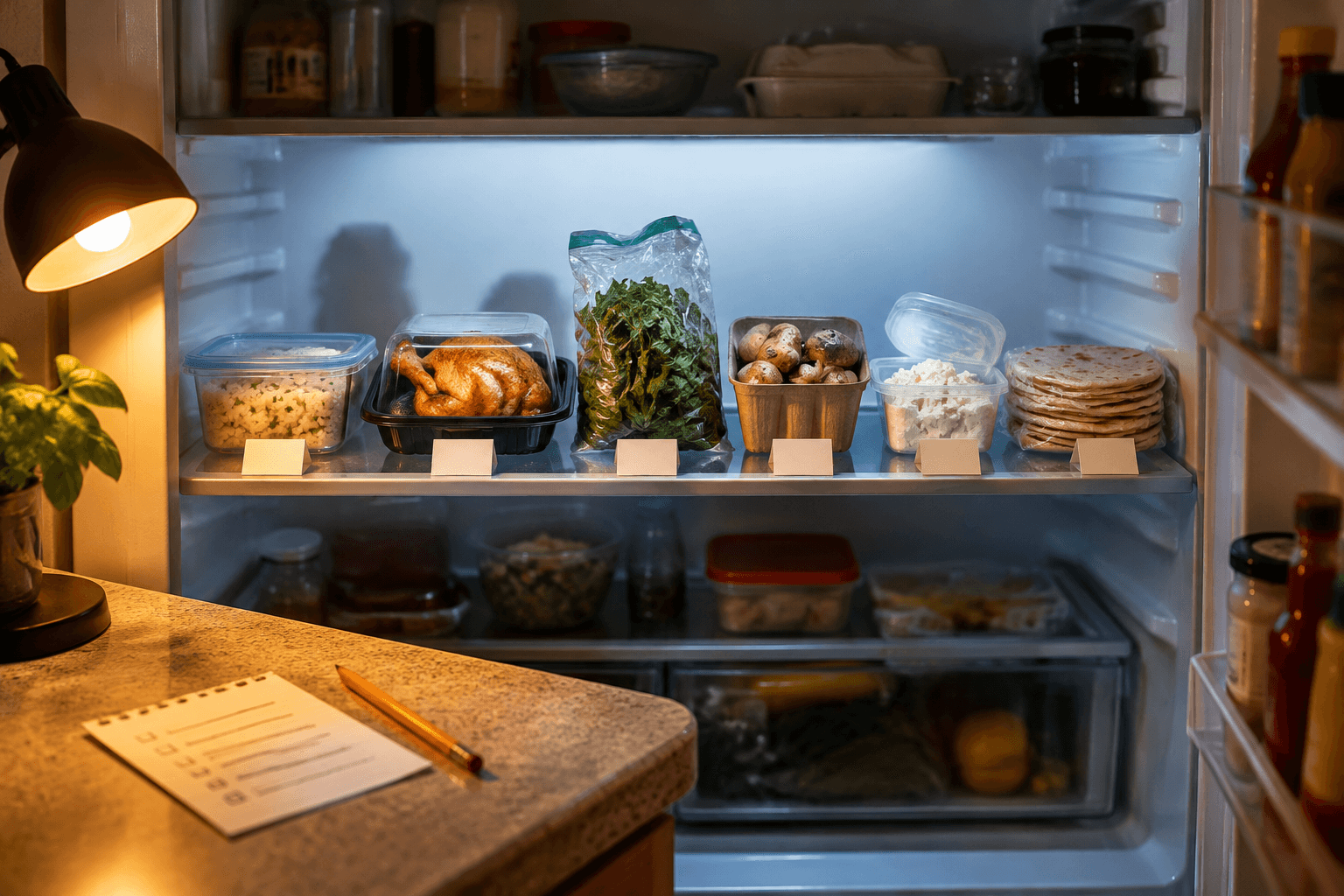
Leftover rice, half a rotisserie chicken, spinach, mushrooms, opened feta, tortillas
That list tells you far more than “12 cans of beans, 4 types of vinegar, one deeply mysterious packet of ramen seasoning.” Dry goods matter, but most of them are not waiting around with their tiny suitcases packed.
A small food-safety reality check
A planning scan can help you notice food. It cannot certify that food is safe.
Do not use smell, appearance, or a tiny “just to check” taste as the sole test for questionable food. Follow package guidance and authoritative food-safety advice for leftovers or anything you are unsure about. A printed date is also not a universal safety verdict, since food-date labels can mean different things depending on the product and location. USDA FSIS has guidance on leftovers and food safety and food product dating.
If an item gives you pause, do not build the week around it. Dinner has enough plot twists.
Pick two or three meal anchors
A meal anchor is an ingredient or prepared food that points toward dinner. It might be cooked chicken, broccoli, tortillas, a container of beans, or a pile of rice that needs a new career.
Choose a few anchors from your priority list. You do not need to use every ingredient in one heroic fridge-cleanout casserole. That is how you wind up eating shrimp, kale, cheddar, olives, and cinnamon in the same bite, then blaming “meal prep.”
With the example list above, your anchors might be:
- rotisserie chicken
- leftover rice
- spinach and mushrooms
- tortillas
That is enough to start generating realistic meals:
- chicken and mushroom fried rice, with spinach folded in near the end
- quesadillas with chicken, spinach, feta, and whatever salsa is around
- grain bowls with rice, chicken, greens, and a sauce
The meals do not need to be dazzling. They need to use the food you bought and sound plausible on a tired Wednesday.
Check only the staples that decide whether dinner is possible
This is where pantry tracking turns into a full-time administrative hobby if you let it.
Do not count every can, spice jar, or condiment. Check the items that are either frequently depleted, already opened, or recipe-critical. The exact list depends on how you cook, but it might include eggs, milk or a preferred alternative, cooking oil, garlic, onions, rice, pasta, bread, a favorite sauce, or a specific spice blend.
Use a confidence rule:
- Confident you have it? Assume it is there.
- You regularly run out of it? Check.
- The recipe falls apart without it? Check.
- It is open and has been lurking for an unknown amount of time? Check package guidance before making it the star.
Soy sauce is a classic trap. Many kitchens contain several bottles because nobody checked before buying another one. The same species exists in the wild with cumin, flour, mayonnaise, and little jars of capers purchased for one pasta recipe in 2021.
You are allowed to say, “Probably enough olive oil,” and move on. The system should survive ordinary life, including surprise sandwich-making.
Turn the scan into a loose plan, not a seven-day hostage situation

Plan the next few meals around the priority ingredients. Three or four dinners is often more useful than a rigid week where Thursday’s menu assumes you will have exactly the energy of a person in a meal-prep montage.
Give ingredients a job, then leave room to swap nights.
| Priority ingredient | Possible job | Missing piece to check |
|---|---|---|
| Leftover rice | Fried rice or grain bowls | Eggs, frozen vegetables, sauce |
| Spinach | Quesadillas, pasta, eggs | Tortillas, cheese, pasta |
| Cooked chicken | Bowls, wraps, soup | Broth, salad greens, bread |
| Mushrooms | Stir-fry, omelet, pasta | Garlic, cream, noodles |
This is the useful middle ground between “I have no plan” and “Thursday at 6:15 p.m. we consume Sheet Pan Harissa Chickpeas whether anyone likes it or not.”
A few flexible meals work especially well here:
- tacos, wraps, or quesadillas
- fried rice or grain bowls
- pasta with vegetables and a protein
- eggs for dinner
- soup, if you have enough suitable ingredients and actually want soup
The point is to give the fragile or already-open food a destination. You can still change your mind later. Meal plans are supposed to help dinner happen, not become a tiny manager in a lanyard.
Make the grocery list last
Shopping comes after you choose meals.
Once you have a short plan, make a gap list: the few things needed to turn your food into actual meals. That might be eggs for fried rice, tortillas for chicken wraps, or lemons because every recipe in your saved collection apparently believes lemons grow in your coat pocket.
This order matters. Checking what is on hand before shopping can help prevent duplicate purchases and forgotten ingredients, a practice also recommended in USDA MyPlate’s shopping guidance. It can help reduce wasted food, too, though no method can save the broccoli you repeatedly choose not to cook. The EPA has more practical guidance on reducing wasted food at home.
Add regular household items separately, if needed. Toilet paper has no role in chicken tacos, yet somehow it remains relevant to the shopping trip.
Keep the scan easy enough to repeat
A good routine has a low tolerance for perfectionism.
Try the same quick sequence before each main grocery run:
- Notice leftovers, perishables, and opened items that need a plan.
- Pick a few meal anchors.
- Check only the staples that matter for those meals.
- Choose several flexible dinners.
- Shop for gaps.
If you forget an ingredient, you have not failed meal planning. You have experienced meal planning as it is practiced by nearly everyone who has ever discovered an empty garlic powder jar mid-recipe.
The scan gets faster because you learn your own household’s trouble spots. Maybe it is tortillas. Maybe it is herbs. Maybe you have enough pasta to feed a small Italian village but never enough parmesan. That knowledge is more useful than a perfect inventory that nobody maintains.
Use a recipe app for recipes, not surveillance
Once you know what needs using, a personal recipe library can make the next step less chaotic. Search your saved recipes for the ingredients or meal types you identified, choose a few, and put them on a calendar if that helps you remember what Sunday-you had in mind.
Spiceful does not track your pantry, which is honestly the point here. Use a quick scan to see what needs using, then search your own saved recipe library, add chosen recipes to the meal-plan calendar, and create a grocery list from that plan. It can consolidate duplicate grocery ingredients, and you can add a manual item when the list needs dish soap or the extremely specific cereal someone requested.
Your kitchen remains a kitchen. The inventory remains delightfully, usefully approximate.
Ready to tame the chaos? Build your recipe book.
- Save recipes from anywhere
- Turn ingredients into one tidy list
Start free. No credit card needed. Upgrade anytime.