How to Plan Dinner When Everyone Eats at a Different Time
Plan staggered dinners around forgiving bases, separate crisp and fresh toppings, refrigerate portions promptly, and save one small finishing step for each person.
The Spiceful Team
One person eats at 6:15. Another gets home at 8:40. You would like to cook dinner once, because you are a home cook, not a small airport restaurant with a night shift.
The useful question is not “Which 47 meals reheat well?” It is: Which parts of dinner can wait, and which parts need to happen at the last minute?
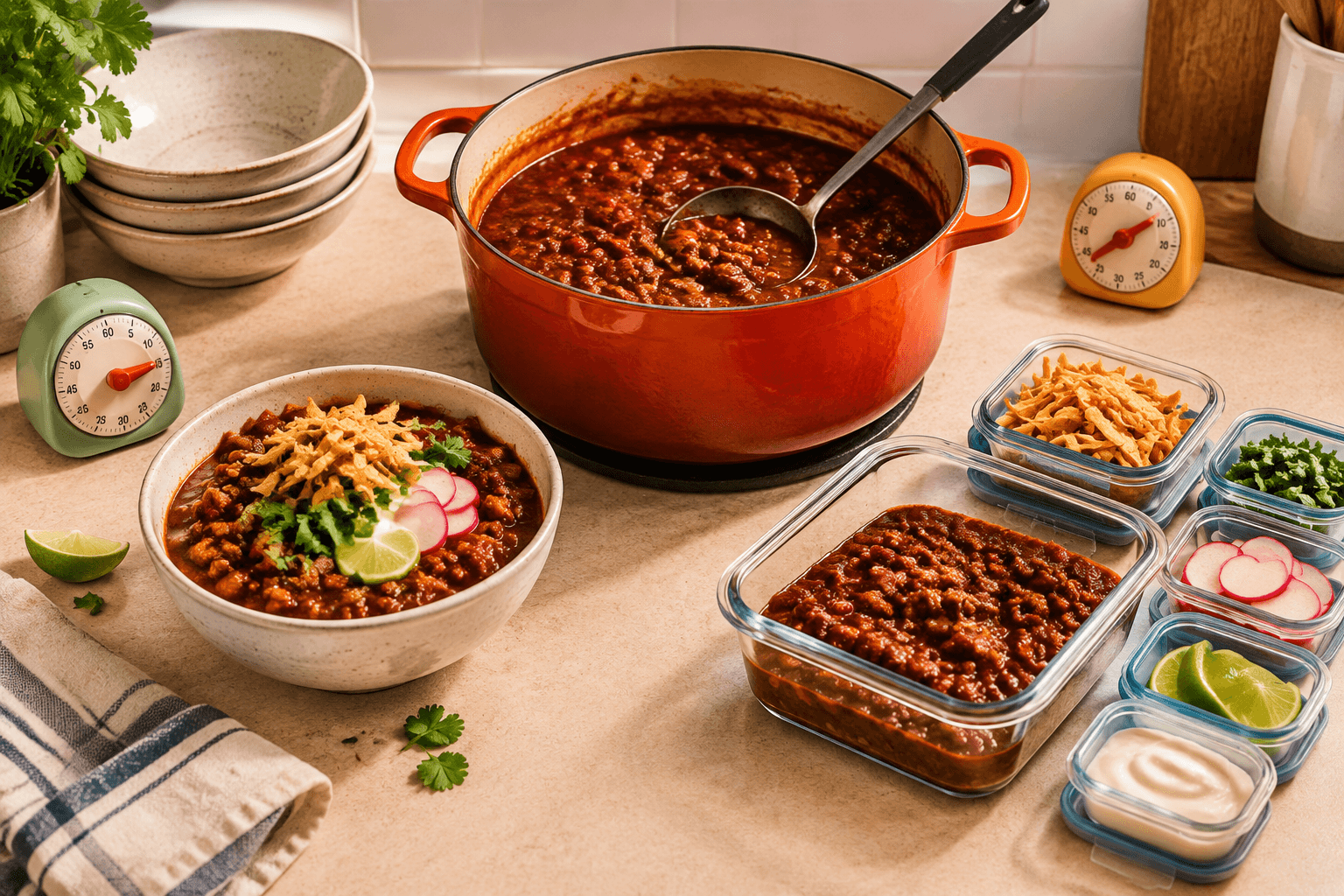
A good staggered dinner usually has a forgiving base, a few components held back for texture, and a small final move for each plate. Chili with toppings works. A fully dressed salad trying to maintain morale in the refrigerator does not.
Choose dinner by its components
Before picking a meal, look at four things:
- Moisture: Broth, sauce, beans, braising liquid, or some fat can give a base more room during reheating.
- Texture: Crispy, delicate, and fresh components usually deserve separate storage.
- Final cooking step: Can the last bit of cooking happen for one portion without turning into a second dinner?
- Assembly: Can the warm base and the fresh finish meet in the bowl, on the plate, or inside the taco right before eating?
This framework points you toward formats that are generally forgiving, rather than promising that every dish will emerge from the microwave as it was in its youth.
Good candidates include:
- soups, stews, chilis, curries, and bean dishes
- braises or shredded meat with sauce
- grain bowls, with the grains and warm topping reheated before fresh elements go on
- taco, burrito, or baked-potato bars
- pasta with sauce held separately, or with extra sauce available for reheating
- casseroles or baked dishes served with something fresh at the end
A bowl-style dinner is a useful example. Warm the rice, beans, and saucy chicken or vegetables. Add avocado, herbs, sliced radishes, crunchy seeds, lime, or a cold sauce once the portion reaches the bowl. The later eater gets dinner, not a warm container of beige compromise.
Keep the contrast separate

A lot of dinner disappointment comes from storing every component together because it feels efficient at 7:00 p.m. By 8:40, the crispy onions have become onion confetti in a puddle, and the herbs look like they saw something.
Store these separately when you can:
Crunchy things: toasted nuts, seeds, breadcrumbs, fried onions, tortilla chips, croutons, and crispy chickpeas.
Fresh things: herbs, scallions, delicate greens, sliced cucumber, radishes, avocado, and citrus wedges.
Wet finishing things: salad dressing, yogurt or crema, pesto, salsa, hot sauce, vinaigrettes, and lemon or lime juice.
Anything whose entire personality is crisp: skin-on chicken, fried food, roasted potatoes with a crunchy edge, and toasted flatbread.
This is a quality choice, not a safety rule. Limp cilantro will not trigger an emergency response team. Food held at unsafe temperatures is a different category of problem.
Portion dinner before the evening gets weird

If someone will eat later, portion their share soon after cooking instead of reheating the whole pan every time somebody walks through the door.
The person eating now gets the freshest portion, while the later portion can be cooled and refrigerated rather than sitting in a warm casserole dish waiting for a text that says “leaving now” from a location that is clearly not now.
Use smaller or shallow containers for food you are saving. USDA recommends shallow containers to help food cool more quickly. Perishable food that will not be eaten promptly should be refrigerated within 2 hours, or within 1 hour when the temperature is above 90°F. USDA identifies 40°F to 140°F as the temperature danger zone, where bacteria can multiply rapidly.
Do not use smell or appearance as your safety test. Food can look and smell normal after it has been handled unsafely. If you intentionally hold food hot for a later diner, follow current food-safety guidance and the instructions for your equipment. A warming setting may protect safety under the right conditions, but it will not necessarily protect texture.
Sources: USDA FSIS, Leftovers and Food Safety and The Danger Zone: Keep Food Safe!.
Save one small final step for each person
The goal is not to make two dinners. Leave yourself a small serving-time move that restores contrast.
For the early eater, that might mean spooning hot stew into a bowl and adding herbs and crispy bread. For the late eater, reheat a portion of stew and do the same thing. You have repeated a garnish, not recreated dinner from raw ingredients while wearing your indoor shoes at 9:00 p.m.
A few useful finishing moves:
- Add cheese after reheating so it melts on top instead of disappearing into the container.
- Keep taco fillings warmable and let each person build tacos with fresh toppings.
- Reheat pasta gently with its sauce, then add grated cheese, herbs, or toasted breadcrumbs.
- Store baked potato toppings separately. Reheat the potato, then add chili, cheese, yogurt, or scallions.
- Serve a casserole or baked dish with a fresh salad dressed at the table.
- Warm the grain and cooked topping for a bowl, then add cold or crunchy components afterward.
Some meals benefit from delaying a final cooking step. You might prepare a sauce and cooked vegetables ahead, then crisp one portion of tofu or melt cheese over an individual serving later. Keep that final step genuinely small. If it involves six pans, a grocery run, and finding the microplane, the system has betrayed you.
If the final step involves cooking raw meat, seafood, or another safety-sensitive ingredient, use a current food-safety source for its safe endpoint. Reheating a cooked leftover and cooking a raw ingredient are different jobs.
Foods that tend to disappoint later
Some foods can work on a staggered schedule. They simply require more care, or a change in expectations.
Fried food loses much of its appeal when it sits around. Reheating may restore some texture, depending on the food and method, but it rarely recreates the fresh version.
Dressed salads are poor candidates for holding. Store greens, dressing, crunchy toppings, and watery ingredients separately. Assemble only the portion being eaten.
Delicately cooked seafood can overcook during reheating. It may work better in a meal where the seafood is cooked close to serving time and the supporting components are ready beforehand.
Crisp-skinned proteins have the same problem as fried food, just wearing a nicer jacket. If crackly skin is the point, serve it fresh when possible. A saucy preparation or shredded-meat format is usually less fussy for a late plate.
Soft-centered eggs are also awkward candidates for repeated reheating. If that texture matters, make the rest of the meal wait instead and handle the egg close to serving time, using a trusted recipe and current food-safety guidance.
None of these are permanent bans. A leftover fried cutlet can still be lunch. Dinner is allowed to be imperfect. It helps to avoid building the whole plan around a texture with a very short lease on life.
Reheat the portion, not the whole universe
When practical, reheat only the serving someone will eat. Repeatedly heating and cooling a large batch wears down texture and creates extra handling.
For refrigerated leftovers, USDA guidance says to reheat food to 165°F. Microwaves can create hot and cold spots, so cover the food and stir or rotate it during heating to help it heat more evenly. Use a food thermometer rather than trusting an appliance time. Portion size, container shape, starting temperature, food density, and microwave power all change the result.
Source: USDA FSIS, Leftovers and Food Safety.
The 165°F guidance is about safety. Whether rice needs a splash of water, sauce needs loosening, or crunchy toppings belong on afterward are quality decisions. Both matter, but they are different decisions.
Make the system repeatable
Once a dinner works for your household's schedule, keep it in rotation. Give it a useful label in your recipe collection: “good for late shift,” “works in bowls,” or “do not refrigerate the chips with it under any circumstances.” Future-you will appreciate the intelligence briefing.
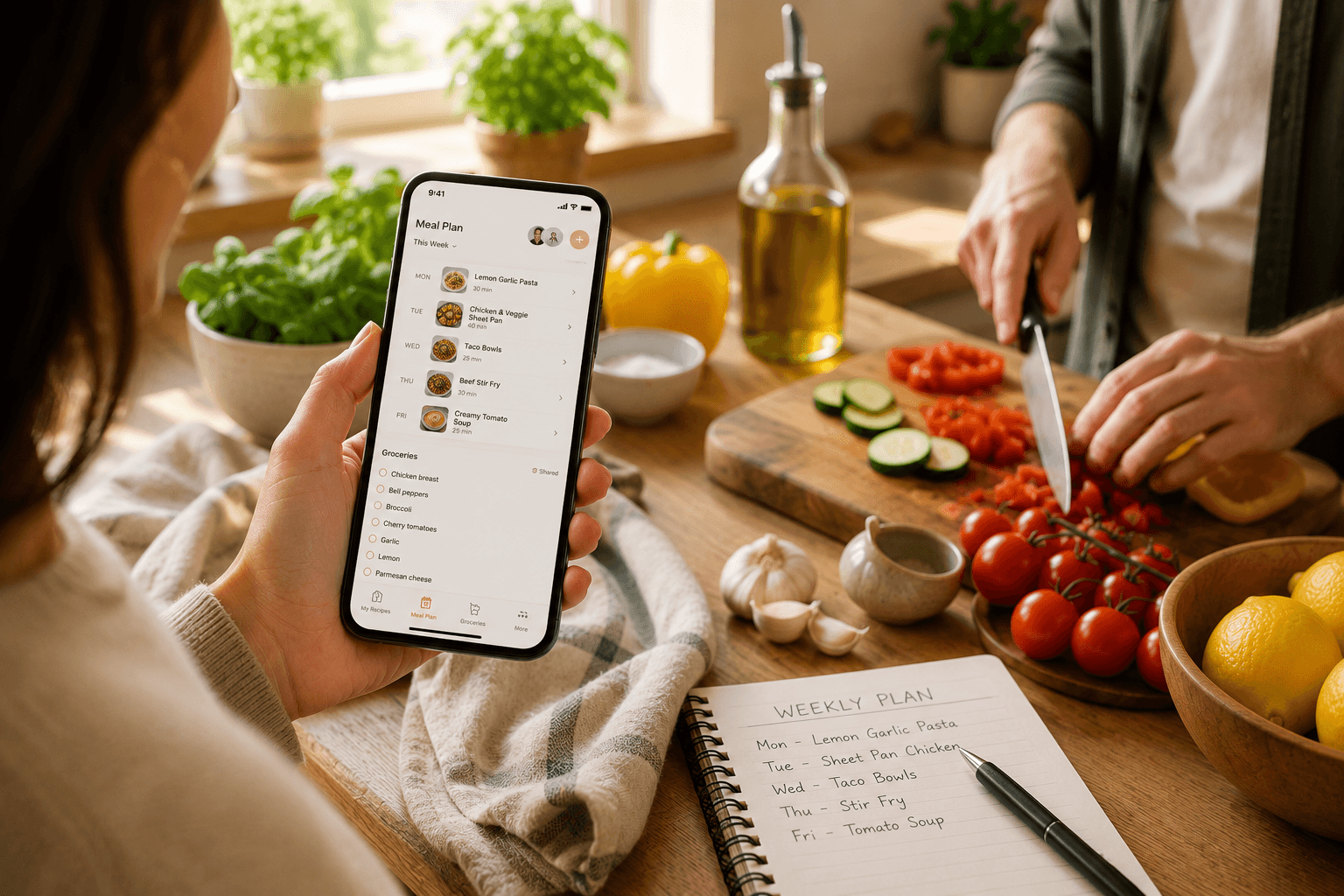
When planning the week, choose a couple of dinners built for staggered eating instead of forcing every night to become a perfectly synchronized family-table event. Tuesday can be taco components. Thursday can be curry with rice and fresh toppings. On a night when everyone somehow appears at the same time, enjoy the rare celestial alignment.
If your reliable recipes currently live across bookmarks, screenshots, texts, and one browser tab titled “!!! make,” Spiceful can keep them in a personal recipe library. You can save the dinners that survive your actual schedule, add saved recipes to a meal plan, and turn that plan into a grocery list with ingredients consolidated where appropriate. It cannot make everyone arrive home at the same time, sadly. That feature remains exclusive to fictional sitcom families.
Ready to tame the chaos? Build your recipe book.
- Save recipes from anywhere
- Turn ingredients into one tidy list
Start free. No credit card needed. Upgrade anytime.