How to Plan Family Dinners Around the Latest Practical Split
Learn how to keep one family dinner shared until preferences truly diverge, with practical examples for sauces, spice, toppings, texture, shopping, and meal planning.
The Spiceful Team
One household. One dinner window. Several valid and deeply held positions on hot sauce, cheese, cilantro, mushrooms, crunchy things, and whether sauce touching food is an act of war.
You do not need a seven-day meal plan built around the one dish everyone loves. That creature may exist, but it is usually chicken nuggets.
A more useful approach is to find the latest branching point in dinner: the last practical moment when one shared meal can divide into different versions without becoming two entirely separate cooking projects.
Make the part people can share. Delay the disagreements until they actually matter.
What a branching point looks like
A branching point is where a meal can split into customized portions.
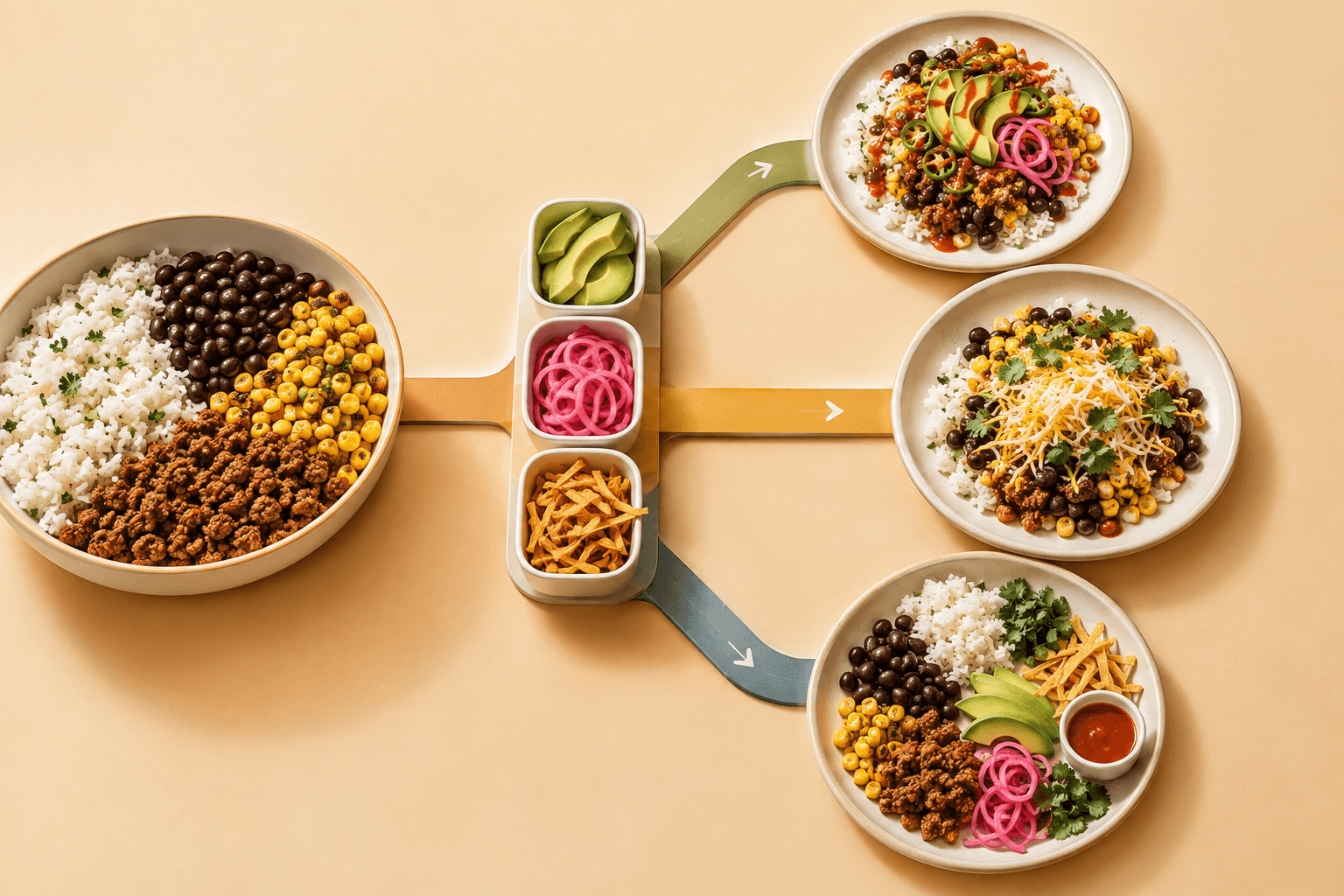
Say you are making taco bowls. The shared base might be rice, beans, roasted corn, and a simply seasoned protein or vegetable filling. After that, dinner can head in several directions:
- hot sauce for people who regard a meal without chile as unfinished paperwork
- cheese for people who want it
- cilantro for people who think it tastes fresh, not like soap’s loud cousin
- avocado, pickled onions, salsa, crunchy tortilla strips, or plain yogurt
- a plain bowl with ingredients kept separate because texture has entered the chat
Nobody needs a second skillet for an entirely different entrée. The meal branched at assembly.
The goal is not total customization. A build-your-own dinner with fourteen tiny bowls and three sauces requiring separate blenders has turned you into the manager of a very underfunded fast-casual restaurant. Aim for a shared structure with a few useful exits.
Find the latest workable split
When planning a dinner, use this sequence.
1. Pick a shared base people genuinely accept
A shared base can be rice, pasta, tortillas, baked potatoes, bread, roasted vegetables, or a simply seasoned protein. It has to be something the relevant diners can actually eat and mostly tolerate as prepared.
“Everybody can scrape the offending thing off” does not count. Neither does making one person eat around a pile of peppers every Tuesday until they begin drafting a manifesto.
2. Name the actual disagreements
Keep this concrete. “Picky” is not useful planning information. “Likes the flavor but hates soft onions” is useful. So is “wants sauce on the side” or “needs the meal mild.”
Write down the differences that happen repeatedly. Your household may not need five separate dinners. It may need chili crisp, grated cheese, plain pasta, and a small bowl of cucumbers that nobody is allowed to cook.
3. Sort each difference by when it needs to happen
Put each preference into one of these buckets:
Can add late: heat, herbs, cheese, crunchy toppings, finishing sauces, condiments, pickled things, olives, and many garnishes.
Needs its own component: a disliked vegetable roasted separately, a plain portion of pasta, a sauce served separately, or a protein cooked without a seasoning someone cannot tolerate.
Changes the whole cooking method: a long marinade, a braise, a baked casserole, a creamy sauce cooked into the pasta, or two proteins that need dramatically different treatment.
Then choose the latest point where you can still make the split without making dinner worse. That is your branching point.
The easiest differences to handle late
Late changes work best when they affect final flavor, texture, or assembly rather than the way the food cooks.
Heat
Keep the shared component mild enough for the people eating it, then put hot sauce, chili crisp, sliced fresh chiles, or a spicy finishing sauce on the table. This will not perfectly recreate the deep flavor of chiles cooked earlier, but it is a practical weeknight trade-off.
When spice is central to the dish, make a small spicy sauce or seasoned topping instead of forcing every portion to become the same thing.
Sauces
Sauce is one of the most useful things to separate. Pasta can be portioned before the main sauce is added. Roasted vegetables can stay plain while one person adds tahini sauce and another goes with ranch. Sandwich fillings can be dressed individually.
This also protects texture. Sauce on the side can keep a crisp element crisp, which is a worthy cause. Nobody wants dinner to become a negotiation hosted by one soggy mushroom.
Cheese, herbs, and toppings
These are natural late branches because they often belong at the end anyway. Think grated cheese, feta, scallions, cilantro, basil, toasted nuts, seeds, breadcrumbs, crushed chips, fried onions, and crunchy slaw.
Put out the additions people actually use. You do not need a garnish board with the visual ambition of a luxury hotel breakfast buffet.
Assembly order
Sometimes the ingredient is fine. The configuration is the problem.
A wrap can become a plate of separate components. A grain bowl can become rice beside beans beside vegetables. A sandwich can be built with condiments on one half and none on the other. It is still one dinner, just less committed to a single architectural vision.
When the split needs to happen earlier

Some differences are baked into the dish, sometimes literally.
A marinade changes the food before it reaches the pan. A braise develops as everything cooks together. A casserole generally does not appreciate being asked to become half cheesy, half dairy-free, half sauce-free, and somehow crunchy at the end. The results may look like a group project where nobody opened the shared document.
When a difference needs to happen early, you can:
- cook a separate component, such as mushrooms on a second tray while the rest of the vegetables roast together
- keep the shared base simple, then make two distinct sauces or proteins
- choose a dinner format that is naturally modular
- accept that this particular meal is a poor candidate for branching
Forcing every dish into a flexible family format can create more labor than it saves. A spicy braise and a mild, separately flavored dinner may be two different meals in practice. Plan accordingly.
Dinner formats that make branching easier
Some formats arrive with useful split points built in.
Taco or grain bowls: Build around a grain, beans or another protein, and a vegetable. Let toppings and sauces do the customization.
Pasta with sauce added by portion: Reserve some plain pasta before adding the main sauce. Serve cheese, herbs, chile flakes, and crunchy breadcrumbs separately. This is handy when one person loves tomato sauce and another treats it as a personal betrayal.
Baked potatoes: The potato is the base. Beans, shredded meat, cheese, broccoli, butter, yogurt, chives, salsa, and hot sauce can arrive at the finish line.
Sandwiches and wraps: Set out fillings separately and let people choose the construction. Someone who would rather not have a wrap can eat the same components on a plate. Bread is not mandatory just because it has been invited.
Component-style sheet-pan dinners: Roast broadly acceptable vegetables together. Put a strongly disliked vegetable on a separate tray, or leave it off one portion. Add sauces and crunchy elements after cooking.
The shared work matters more than making every plate look identical.
A quick branching-point test
Use these questions while choosing meals for the week:
- Can everyone share the base as prepared? If not, find a different base or plan separate components.
- Can the difference be added after cooking? Sauces, spice, herbs, cheese, and crunch often can.
- Will the split create more work than it saves? One extra bowl of toppings is reasonable. Seven custom elements may be a cry for help.
- Is this a preference or a safety or medical constraint? Treat those as different planning problems.
An ingredient removed after cooking, or a topping served on the side, does not automatically make a meal safe for someone with an allergy or other medical dietary restriction. Cross-contact can happen through hands, utensils, surfaces, and shared food. Follow the person’s medical guidance and allergen-avoidance practices rather than relying on “just pick it off.” The FDA’s food allergy guidance and Food Allergy Research & Education’s guide to avoiding cross-contact explain the distinction.
If you split raw animal proteins into portions, keep raw-food utensils and surfaces away from ready-to-eat food, and use clean tools for cooked portions. USDA’s Food Safety Basics is a useful refresher. Preference branching is usually simplest after cooking, when you are dealing with sauces and toppings rather than raw ingredients.
Shop for the base, then the branch ingredients
Flexible dinners get expensive when every person has a separate ingredient list. Start with the shared base, then keep a small rotation of optional finishers that work across several meals.
That might mean rice or potatoes, tortillas or bread, a few reliable proteins or beans, and vegetables your household will actually eat. Add a reusable cast of extras: hot sauce, a mild sauce, grated cheese, herbs, something crunchy, and perhaps pickled onions or yogurt.
The same jar of chili crisp can handle bowls, eggs, noodles, roasted vegetables, and the occasional 11:47 p.m. fridge stare. It has range.
Try planning two or three dinners around overlapping branch ingredients. Cilantro can go with tacos and grain bowls. Shredded cheese can top potatoes, pasta, and wraps. Crunchy breadcrumbs can rescue roasted vegetables and pasta. Buy an optional ingredient only if it will earn its shelf space more than once, or if somebody loves it enough to justify the tiny jar of destiny.
If you keep adaptable recipes in a personal collection, label them in plain language: “sauce on the side,” “easy to branch,” “build-your-own,” or “mild base.” Spiceful lets you save and organize your own recipes, including recipes imported from URLs, pasted text, and photos on mobile. You can add saved recipes to a meal plan, turn that plan into grocery items, and consolidate compatible duplicate ingredients. It will not decide which family member gets extra cheese, mercifully. That remains between you and the refrigerator.
A successful family dinner does not need to perform emotional diplomacy for everyone at the table. It needs to feed people without turning Tuesday into a short-order restaurant.
Ready to tame the chaos? Build your recipe book.
- Save recipes from anywhere
- Turn ingredients into one tidy list
Start free. No credit card needed. Upgrade anytime.