How to Thicken a Sauce Without Turning Dinner Into Glue
A thin sauce needs a diagnosis before it needs cornstarch. Learn when to reduce, use a slurry, change the sauce structure, or fix the watery ingredients first.

The Spiceful Team
A watery sauce can make a decent dinner look like it lost a fight with a garden hose. The instinct is understandable: grab cornstarch, fling it in, hope for the best.
Pause.
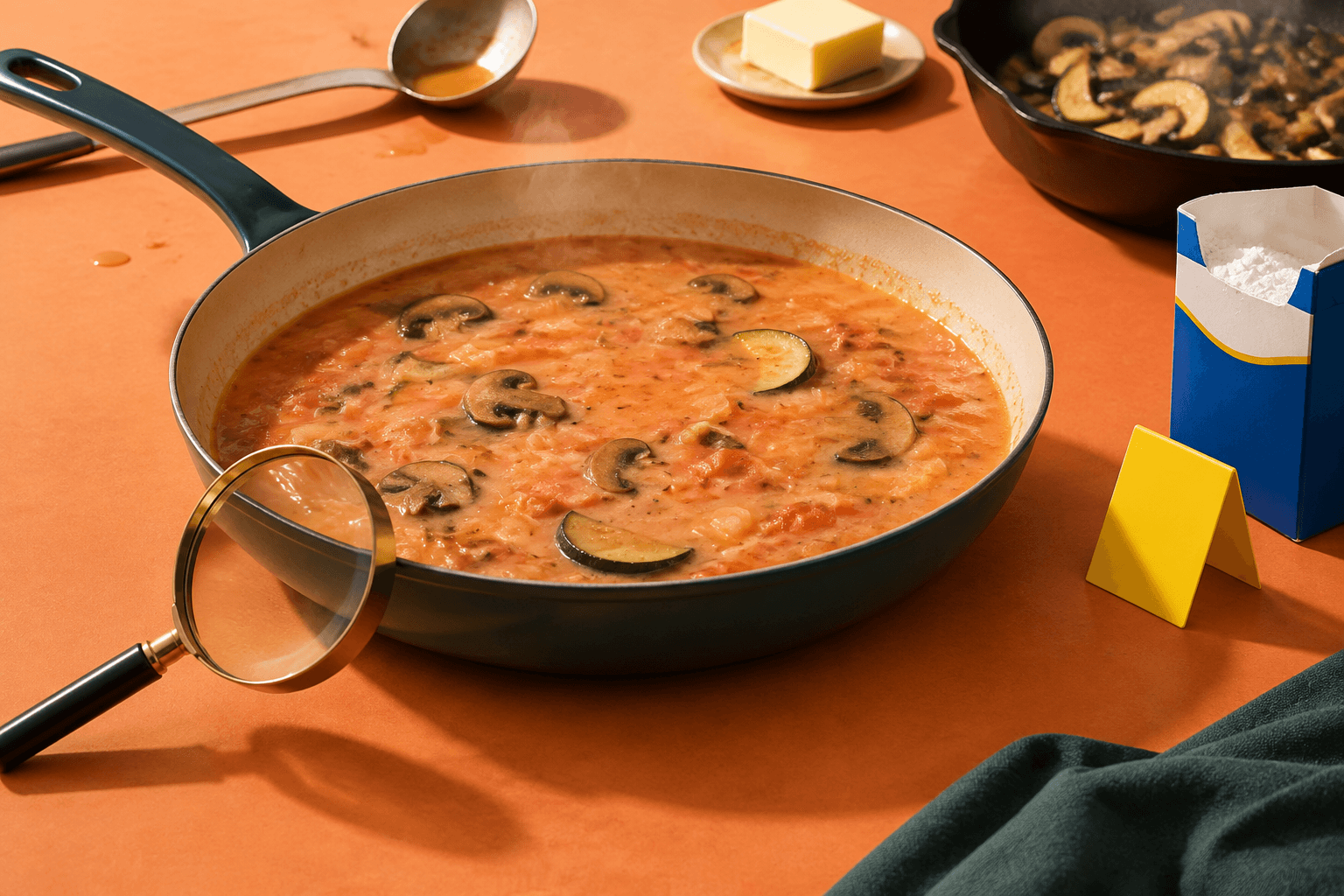
Thin sauce has several causes, and they need different fixes. Sometimes there is too much water and you need to evaporate it. Sometimes mushrooms, zucchini, frozen vegetables, or meat are still releasing liquid, so thickening now creates glossy vegetable soup around food that never got to brown. Sometimes the recipe simply started with more liquid than the dish can support. Sometimes a cream or cheese sauce has split, which is a structural problem, not a “more thickener” problem.
Before adding anything, look at the pan and decide which mess you have.
First, diagnose the watery situation
Use the clues you can actually see:
- The liquid is thin but tastes good: It probably needs reduction, assuming the sauce can handle a simmer.
- Vegetables are actively leaking water: Let that moisture cook off before reaching for starch. If the pan is packed like a subway car at 8:40 a.m., crowding may be part of the problem.
- The sauce tastes weak as well as thin: It may contain too much added liquid. Reducing can help, but watch the seasoning as the volume falls.
- The sauce already tastes salty, spicy, acidic, or intensely seasoned: Reduction may turn it into a tiny, furious flavor bomb. A more neutral thickening route may be better.
- The sauce looks oily, curdled, grainy, or separated: Treat it as a possible broken emulsion, especially if it contains butter, cream, cheese, or egg. Do not boil it harder like it owes you money.
- The dish is baked: A wet casserole filling may need time to settle, better moisture management next time, or a formula adjustment. Stirring a slurry into a finished casserole is rarely the elegant third-act twist you want.
The target texture matters too. A stir-fry usually wants a light, glossy coating. A curry can carry a fuller sauce. Tomato sauce may be rustic and spoonable. Gravy and creamy pan sauces need body, but not the texture of wallpaper paste.
If the sauce can reduce, reduce it first
Reduction means simmering off water so the ingredients left behind become more concentrated. It is often the cleanest fix because it does not add a new ingredient or change the sauce’s basic texture.
Use an uncovered pan with enough exposed surface area for steam to escape. A wide skillet generally gets rid of liquid more effectively than a narrow saucepan filled to the brim. Put a lid on and much of that vapor condenses and returns to the pan, like the world’s least helpful little weather system.
Keep the heat appropriate for the dish. A tomato sauce, curry, pan sauce, or broth-based sauce can often handle a controlled simmer while you stir occasionally and watch the level. You want visible evaporation, not a volcanic boil that overcooks the food.
Taste as the sauce tightens. Removing water also intensifies salt, acid, sweetness, chile heat, cheese, stock concentrate, curry paste, and other dissolved flavors. That pasta sauce that was “a little bland” can become a salt lick with basil if you reduce it too far.
Good candidates for reduction
Pan sauces: After deglazing, a pan sauce often needs an uncovered simmer to become more concentrated and cling to the food. That is part of the technique, not a kitchen emergency.
Curries: If the vegetables and protein are cooked and the curry is simply looser than you wanted, an uncovered simmer is often the least disruptive route. Stop before the sauce becomes aggressively salty or thick.
Tomato sauces: These are usually reduction-friendly, though reducing shifts the flavor toward deeper, sweeter, more concentrated tomato. Good if that is what dinner needs, less good if you wanted a bright, loose sauce.
Brothy skillet dishes: If the ingredients are already cooked, evaporating excess liquid may solve the whole problem. Give the pan room before reaching for starch-based necromancy.
When the pan is watery because the food is watery

Mushrooms are famous for this. So are zucchini, spinach, cabbage, frozen vegetables, and any produce shoved into an undersized skillet with its entire extended family.
If vegetables are still releasing water, adding starch early can make the liquid thicker without making the vegetables any better. You may end up with soft, pale mushrooms in a shiny beige gel. A bleak little tableau.
For a vegetable skillet meal or stir-fry:
- Keep the pan uncovered while you want moisture to escape.
- Give ingredients space when browning matters. Cook in batches if necessary.
- Avoid adding more wet ingredients until the first wave of liquid has reduced.
- Add a finishing sauce after the vegetables have had a chance to brown, rather than asking it to solve the pan’s entire moisture situation.
A crowded skillet encourages steaming because released moisture has fewer ways to escape. It is not the only possible culprit. Frozen ingredients, salt timing, vegetable type, cut size, and pan heat all affect the result. Still, the skillet is often telling you it needs fewer occupants, not more cornstarch.
Use a starch slurry when the flavor is right
A slurry makes sense when the sauce tastes right and has enough volume, but needs more body. Cornstarch is a common choice for a glossy finish, especially in stir-fries and some sauces. Other starches behave differently, so do not treat cornstarch, flour, arrowroot, potato starch, and tapioca starch as identical little white powders with different publicists.
The basic move:
- Mix the starch into a small amount of cold liquid until smooth.
- Whisk the slurry into the hot sauce gradually.
- Let it heat and thicken before deciding whether it needs more.
Do not scatter dry cornstarch into hot liquid. It clumps on contact, leaving you to fish out pale little dumplings of regret.
Do not pour in a heroic amount of slurry at once, either. Starch thickens as it hydrates and heats, and it is easy to overshoot. Add a little, stir, give it time to work, then reassess. You can add more. You cannot politely un-gelatinize a sauce that now has the consistency of craft paste.
Where a slurry makes sense
Stir-fry sauce: Once the vegetables are cooked and excess water has mostly evaporated, a small amount can give the sauce enough cling.
A balanced curry: If reducing would make the spices or salt too intense, a gradual slurry can add body with less flavor concentration.
A sauce made too loose by accident: Extra stock, pasta water, or broth happens. A slurry can bring the sauce back without reducing the whole thing into concentrated chaos.
Starch changes texture. If what you want is richness, a smoother base, or an emulsion that stays together, choose a method that addresses that instead.
Some sauces need a different structure
A thin sauce is not always missing starch. The best fix depends on what the finished sauce is supposed to be.
Roux and beurre manié for hearty sauces
A roux is flour cooked in fat, then used as the base for a thickened sauce. It suits gravies, creamy savory sauces, and other dishes where a more opaque, substantial texture makes sense.
A beurre manié is softened butter and flour kneaded together, then whisked gradually into a sauce. It can help late in the process when you want some of the body a roux provides without restarting dinner from scratch.
Both contain flour, so do not taste the uncooked mixture. Flour is raw, and the CDC advises against eating raw flour or raw dough. Flour-containing thickeners need to cook in the sauce before serving, but there is no universal timer that applies to every sauce. CDC guidance on flour and raw dough covers the safety basics.
Dry flour tossed directly into hot sauce tends to make lumps and creates a raw-flour mixture you now have to manage. This is dinner, not a live demonstration of why whisking exists.
Purées for sauces that can handle a flavor change
Puréeing some of the ingredients already in the dish can create a thicker, more integrated sauce. Think blended cooked vegetables in a soup-like curry, beans in a stew, or part of a tomato-and-vegetable sauce.
This works when the dish already wants that flavor and texture. It is a poor fit for a clear pan sauce or a stir-fry where distinct vegetables and a light glaze are the point. A purée is not neutral. It brings its own flavor, color, and personality to the meeting.
Cream, butter, cheese, and egg sauces need gentler handling
Dairy-heavy and emulsified sauces can be thin, but they can also be broken. Those are different problems.
A thin cream sauce may still look smooth and unified. It may need a gentle reduction, a roux-based structure, or a recipe adjustment next time.
A broken sauce often looks oily, curdled, grainy, or visibly separated. Hard boiling and endless reduction can make that worse, especially with butter, cream, cheese, or egg-containing sauces. The fat and water are no longer cooperating, and a random spoonful of cornstarch is not guaranteed to make them reconcile.
Turn down the heat and stop treating the sauce like standard gravy. The right recovery depends on the ingredients and how the sauce broke. Some sauces are salvageable; others will improve only partially. The useful first step is recognizing that “thin” is not the diagnosis.
A few common dinner-saving scenarios
Your mushrooms flooded the skillet. Keep them uncovered, give them space, and let the water cook away before adding a finishing sauce. If they are piled in a small pan, move some out or cook in batches next time. Thickener can wait.
Your curry is loose but balanced. Simmer it uncovered if the spices and salt can stand some concentration. If the flavor is already exactly where you want it, use a small slurry gradually instead.
Your tomato sauce is watery and already salty. Reducing may make the salt problem worse. A structural adjustment may be safer than cooking it down aggressively, though the best route depends on the sauce and how much excess liquid you have.
Your stir-fry has a puddle under under-browned vegetables. The issue is probably not insufficient cornstarch. Get rid of excess moisture and avoid crowding the pan. Add the sauce after the vegetables have cooked, then thicken lightly if it still needs cling.
Your cheese or cream sauce is thin and oily. Do not crank the burner and reduce it into oblivion. Lower the heat and treat it as a potentially split sauce. More force is rarely the vibe here.
Your baked casserole looks wet. Check whether it needs time to settle before assuming it failed. For next time, look at watery vegetables, sauce volume, and whether ingredients were drained or cooked before baking. Baked dishes are their own complicated little republic.
Do not make it worse
- Do not keep seasoning while the sauce reduces.
- Do not add dry cornstarch or flour straight to hot liquid.
- Do not dump in a large slurry dose and hope for tasteful miracles.
- Do not crowd the pan further when vegetables are already steaming.
- Do not boil a delicate butter, cream, cheese, or egg sauce harder because it seems thin.
- Do not assume every puddle needs thickener. Sometimes it needs time, surface area, or fewer mushrooms in one pan.
If a recipe repeatedly needs the same adjustment, save that adjustment with the recipe. Maybe it needs less stock, a wider pan, or a shorter covered cook. If your collection lives across browser tabs, screenshots, and a note titled “good noodle thing,” Spiceful lets you import recipes from URLs, pasted text, and mobile photos, then edit recipes in your own library. Imported recipes should still get a quick review. Computers, tragically, have not developed taste buds.
The short rescue checklist
- Stop adding liquid.
- Check whether ingredients are still releasing water.
- If the sauce is smooth and reduction-friendly, simmer it uncovered in a suitably wide pan.
- Taste as it reduces. Salt, acid, spice, and sweetness all concentrate.
- If the flavor is right but the sauce needs body, whisk in a cold starch slurry gradually.
- If the sauce should be hearty and opaque, consider a flour-and-fat approach instead of a last-minute starch fix.
- If it looks oily, curdled, or grainy, lower the heat and diagnose a broken emulsion before adding anything else.
Dinner may still be slightly weird. At least now it has a diagnosis.
Ready to tame the chaos? Build your recipe book.
- Save recipes from anywhere
- Turn ingredients into one tidy list
Start free. No credit card needed. Upgrade anytime.