How to Build a Recipe Set for an Alternate Kitchen, Even With One Dented Saucepan
Build a small, flexible recipe set for a rental, dorm, second home, or partner’s apartment by checking the kitchen first, shopping in stages, and planning around real equipment instead of optimistic listing copy.

The Spiceful Team
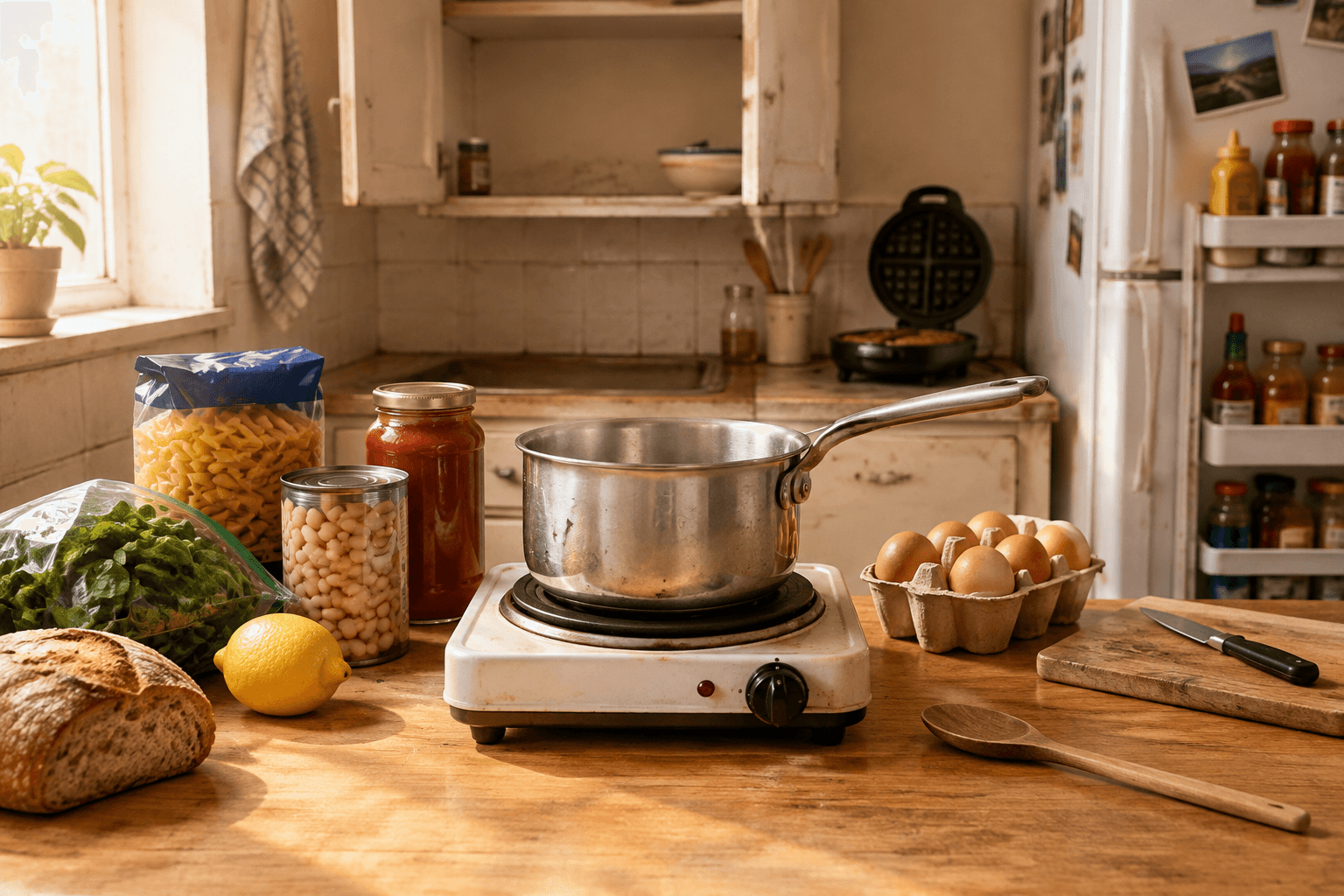
A vacation kitchen is not a culinary retreat just because the listing says “fully equipped.” Sometimes it is. Sometimes it has one dented saucepan, a knife that could spread butter if butter were feeling cooperative, and a refrigerator already packed with decorative mystery condiments.
Treat an alternate kitchen as a temporary operating system. Your goal is a small recipe set that works with the equipment, storage, nearby stores, and actual humans involved. You do not need a color-coded itinerary assigning every breakfast, lunch, dinner, snack, and emotional support cheese stick before you leave.
For most short stays, pick an arrival meal, a few flexible regular meals, and one departure-friendly meal. Leave open space for travel fatigue, rain, restaurants, sandwiches, and the ancient vacation tradition of eating crackers over the sink.
Audit the kitchen before you promise anybody dinner
Before building a grocery cart around baked ziti, find out whether you have an oven that works, a dish big enough for baked ziti, and refrigerator space for its extremely confident leftovers.
If you can ask a host or visit ahead of time, get answers. If you cannot, make your first grocery run small and inspect the kitchen when you arrive.
Your kitchen audit does not need to become a home inspection report. Check the things that determine what you can realistically cook:
- Heat sources: stovetop, oven, microwave, grill, and how many burners actually work.
- Cookware: a usable skillet, saucepan, sheet pan, pot, baking dish, lid, spatula, tongs, and colander. Quantity matters. One skillet changes the whole evening.
- Prep tools: knife, cutting board, can opener, peeler, measuring tools, blender if a recipe depends on one.
- Cold storage: refrigerator space, freezer space, and whether the fridge seems to be keeping food properly cold.
- Cleanup situation: dishwasher, dish soap, sponge, towels, and enough plates that you do not need to run a tiny dishwashing festival after every meal.
- The allegedly stocked pantry: salt, oil, pepper, foil, storage containers, coffee filters, spices. Consider all of these unconfirmed until seen with your own eyes.
A well-equipped rental is lovely. Verify anyway. “Kitchen included” can mean anything from “there is a functioning stove” to “someone owns a waffle maker and regards that as infrastructure.”
Also audit the local shopping situation. Is there a full grocery store ten minutes away? A small market with excellent produce but no rice vinegar? A gas station where dinner is technically possible but emotionally complicated? Your meal choices should reflect that.
Turn the audit into recipe rules

Once you know the limits, use them as filters rather than as reasons to give up and order pizza for four consecutive nights. Pizza is welcome in the plan. It just should be there because you want pizza.
A few useful rules:
One usable burner: Choose meals that cook in one pot or one skillet. Pasta with a simple sauce, skillet beans and greens, eggs for dinner, or a soup that does not require a separate sauté pan and a physics degree.
No reliable oven: Skip recipes whose whole personality is roasting. Look for stovetop, microwave, grill, or no-cook meals.
Weak knife or tiny cutting board: Favor pre-washed greens, canned beans, rotisserie chicken, frozen vegetables, jarred sauces, or recipes with minimal chopping. Vacation is not the time to dice six onions on a saucer with a blade from the Reagan administration.
Small refrigerator: Buy fewer perishables. Pick meals that use ingredients soon after opening, rely partly on shelf-stable items, and do not create a large leftover container that must live in the fridge like an unwanted tenant.
No storage containers: Avoid meals designed around leftovers unless you bring containers or can buy them easily. A recipe might be excellent at home and absurd in a rental where its remains must be stored under foil balanced on a bowl.
No dishwasher: One-pan and low-mess meals become much more appealing. Put “requires three mixing bowls” in jail for this trip.
Limited grocery store: Keep specialty ingredients optional. A meal that collapses because the store lacks harissa paste is a fragile little diva. Save it for home, or identify a simpler swap before you shop.
A recipe set works best when it contains options, not obligations. Maybe you save two skillet meals, a pasta, a no-cook dinner, and a grill meal if the grill checks out. You are giving yourself choices that fit the place, not writing a binding treaty with Tuesday night.
Plan fewer dinners than nights away
If you are away for five nights, planning five cooked dinners can be perfectly reasonable for a remote cabin with a hungry group. For many trips, though, it is overcommitting with a clipboard.
Travel days run late. People see a restaurant. Someone discovers a farmers’ market. It rains directly onto the grilling plan. A day at the beach produces the kind of exhaustion that makes assembling sandwiches feel like a major infrastructure project.
A flexible shape might look like this:
- Arrival meal: low equipment, low effort, easy to shop for or bring. Think pasta, tacos, grocery-store rotisserie chicken with bread and salad, or a snacky dinner.
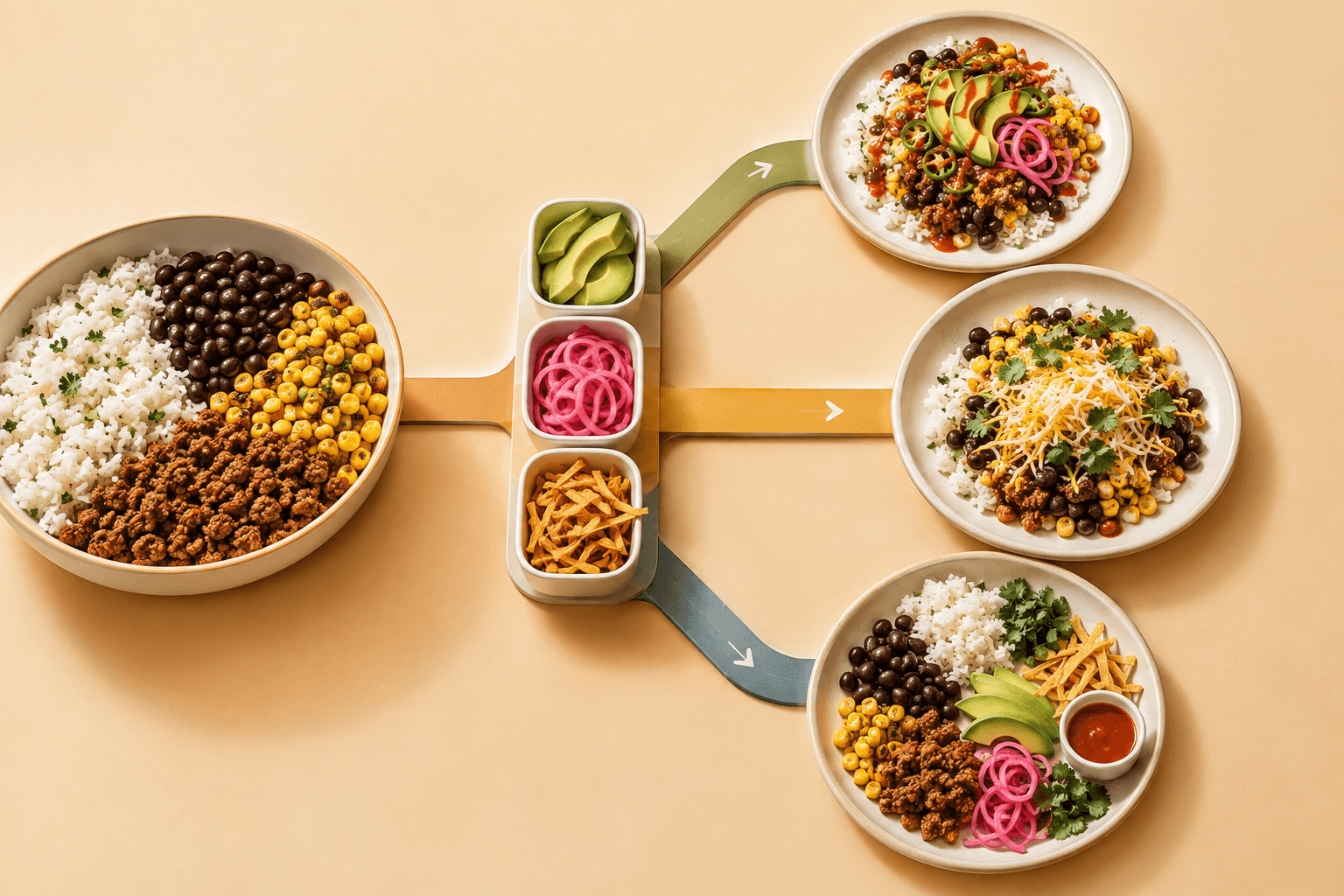
- Regular meals: two or three meals that share a few ingredients but have different moods. For example, tortillas can become tacos one night and breakfast wraps another. Greens can go in a pasta, alongside grilled food, or into sandwiches.
- Departure meal: something that uses remaining perishables and does not create a new mountain of leftovers. Eggs, fried rice, quesadillas, soup, or a flexible grain bowl can be useful here, depending on what the kitchen supports.
Restaurant meals, sandwiches, breakfast-for-dinner, and safely handled leftovers count as meals. The point is to feed people, not complete a vacation-planning side quest.
Let ingredients overlap, but do not make dinner feel like a rerun
Ingredient overlap is useful when it reduces waste and shopping chaos. It gets grim when every meal becomes a different arrangement of the same sad bag of spinach.
Choose a few anchor ingredients, then give them different jobs. A short example:
- Tortillas: tacos, quesadillas, breakfast wraps
- A block of cheese: tacos, pasta, sandwiches
- Greens: side salad, pasta add-in, sandwiches
- A protein: grain bowls one night, wraps another
- Lemons: dressing, grilled food, sparkling water, suspiciously fancy hotel-room beverage
Keep the overlap modest. You are trying to avoid buying a whole bottle of one-use sauce and leaving it behind like a culinary orphan, not proving that a single bell pepper can carry a week-long plot arc.
Package sizes matter too. A recipe may call for a small amount of an ingredient, but the local store may sell it only in a giant family pack. Check whether you have a second use for it, enough cold storage, and a realistic chance of eating it before departure.
Shop in two acts
The first grocery run should cover the arrival meal, basic breakfast or snack needs, and a short core list for the next day or two. This gets food into the kitchen without forcing you to predict every appetite and appliance condition from 400 miles away.
After you have seen the pans, the fridge, and the local store, make a top-up shop. You can buy ingredients for the meals that still sound good in the actual context, rather than the version of the trip that existed in a spreadsheet on Sunday.
If you are bringing food from home, pack perishables so they stay properly cold during travel and get them into reliable cold storage promptly. USDA’s guidance on food safety while traveling is a good starting point. If the rental refrigerator is not keeping food cold, do not use smell, appearance, or optimism as a safety test. Follow current guidance from the FDA on safe food handling, and discard food when its safety is uncertain.
For food-specific storage questions, check the government’s FoodKeeper guidance rather than relying on a universal “leftovers are probably fine” rule. Food safety and whether a leftover is still texturally worth eating are separate issues. Both deserve respect, although only one is likely to turn your rice into a weird little brick.
Keep a reusable shortlist, not a second recipe universe
If you regularly cook at a cabin, dorm, partner’s apartment, or family second home, keep a small location-specific shortlist. It might be called “Cabin, no oven,” “Sam’s apartment,” or “Beach kitchen where the skillet lives.”
Add recipes after they earn their place. A meal that worked with one pan and limited prep gets saved. A recipe that required an immersion blender nobody owned can remain in your general collection, where it may someday be reunited with an immersion blender.
Write a brief note somewhere useful about the constraints: one decent skillet, small freezer, good grill, no food containers, grocery store nearby. Update it when the place changes. This is not an app magically knowing what pans are in the cupboard. You still need to check the kitchen. It is simply a way to avoid forgetting that the cabin oven takes forty years to preheat.
If you use a recipe manager, Spiceful can hold these shortlists alongside your broader personal collection. You can save and organize your own recipes, search and filter them, use categories, favorites, and ratings, then put saved recipes onto a meal plan and turn that into a grocery list. It works on web, iPhone, iPad, and Android, which is handy when you are standing in an unfamiliar store trying to remember why you thought capers were essential.
Keep the location list small enough that it remains a decision aid. If it grows to 87 recipes, congratulations: you have recreated the exact dinner problem you were trying to escape.
The dented saucepan may still be there next time. At least you will know what it can handle.
Ready to tame the chaos? Build your recipe book.
- Save recipes from anywhere
- Turn ingredients into one tidy list
Start free. No credit card needed. Upgrade anytime.