How to Build a Digital Cookbook From Recipes You Already Love
Turn recipes scattered across websites, screenshots, cookbooks, and family recipe cards into a digital cookbook you can actually find, use, and keep adding to.
The Spiceful Team
Maybe your best pasta recipe lives in a browser bookmark.
The soup you make every winter is a screenshot.
Your favorite birthday cake is in a cookbook with a sticky note on the page.
And the recipe everyone asks for at Thanksgiving is still written on an index card.
You already have a cookbook. It's just scattered across five different places.
Building a digital cookbook isn't about starting a brand-new recipe collection. It's about bringing the recipes you already know and love into one place where they're easier to find, cook, and come back to.
Here's how to build one without turning it into a weekend-long data-entry project.
Start with the recipes you actually cook
It's tempting to begin by collecting every recipe you've ever saved.
Don't.
A useful digital cookbook is different from an endless inspiration folder. Start with the recipes that have already earned a place in your kitchen.
Think about:
- The dinners you make on repeat
- Family recipes you don't want to lose
- Recipes you've made and would happily make again
- Reliable breakfasts and lunches
- Favorite baking recipes
- Recipes you regularly make for holidays or gatherings
Twenty recipes you genuinely use are a better foundation than 500 recipes you might theoretically cook someday.
You can always add more later.
Gather recipes from all the places they live
Once you've identified your favorites, figure out where they're currently hiding.
For a lot of home cooks, that might include:
- Browser bookmarks
- Open tabs
- Screenshots
- Photos of cookbook pages
- Handwritten recipe cards
- Notes on your phone
- Recipe websites
- Recipes friends or family have sent you
- Saved social media posts
Don't worry about organizing everything yet. The first goal is simply to see what you're working with.
You may discover that the problem was never that you didn't have enough recipes.
You just couldn't find them when you needed them.
Choose one home for your cookbook
A digital cookbook only becomes useful when you know where to look.
There are plenty of ways to create one. You could use a document, spreadsheet, notes app, database, or a recipe manager.
The specific tool matters less than whether it fits how you actually cook.
Ask yourself a few practical questions:
Can I add recipes without retyping everything?
If saving a recipe takes ten minutes, you're probably not going to keep doing it.
Can I find a recipe quickly later?
A beautiful collection isn't much help when you're standing in the kitchen trying to remember where you put that chicken recipe.
Can I use it on the devices I cook with?
Think about where you normally look at recipes. That might be your phone at the grocery store, a tablet on the counter, or a laptop while planning the week.
Can the collection grow with me?
Your cookbook shouldn't feel finished. The best ones keep changing as you discover new favorites.
Bring your existing recipes in
This is the part that can make a digital cookbook feel like work, so keep it manageable.
Don't tell yourself you're going to digitize your entire cooking history tonight.
Start with five recipes.
Then add another recipe the next time you cook it.
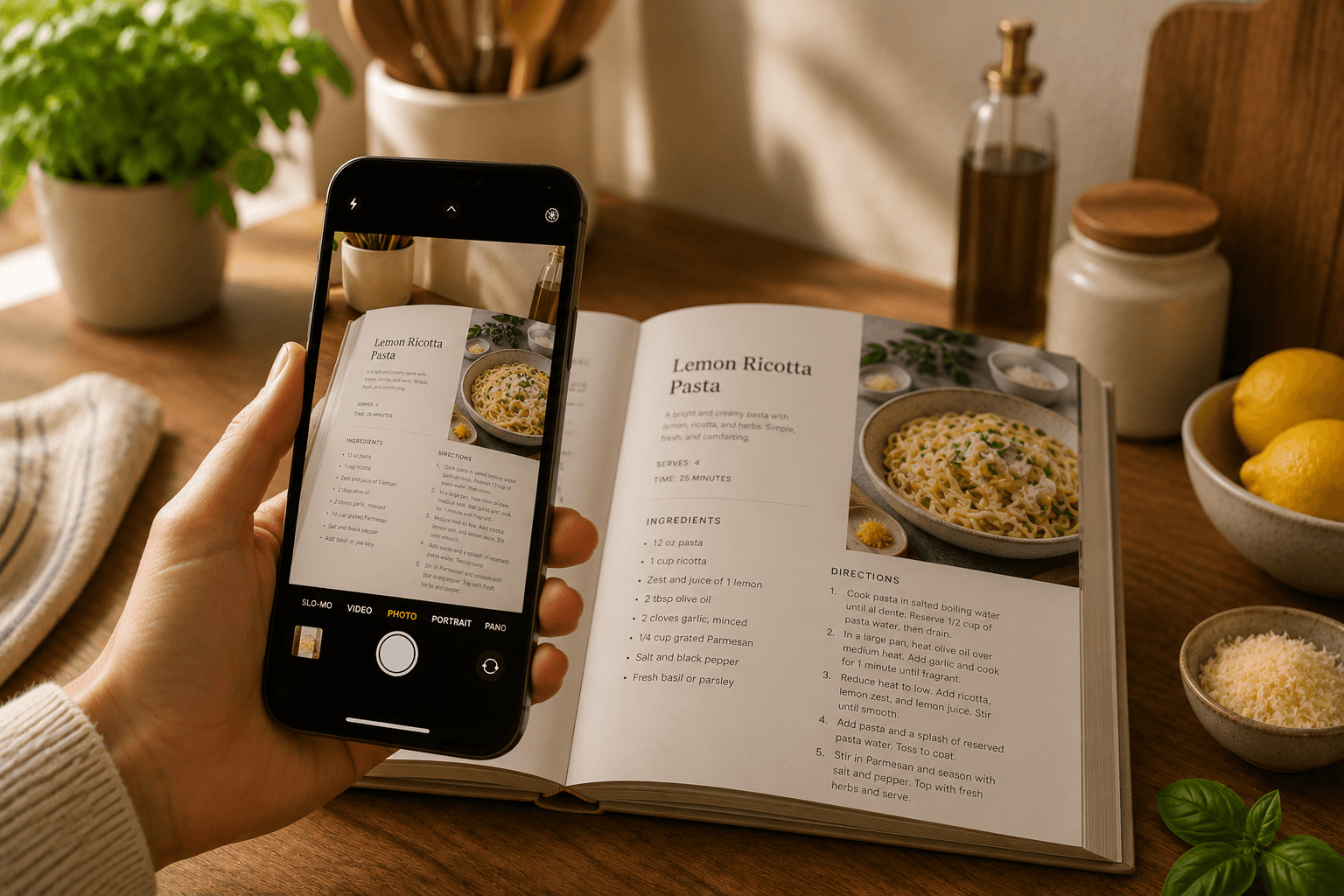
If you use Spiceful, recipes can be imported from a URL or a photo, which makes it possible to bring both online recipes and recipes you've photographed into the same collection.
That means the recipe on a website and the one you've kept on a handwritten card don't have to live in separate systems anymore.
The goal isn't to digitize everything as quickly as possible.
It's to gradually create one dependable place for the recipes you care about.
Organize around how you think about food
Once your recipes are together, resist the urge to create an elaborate filing system.
You don't need 37 categories.
Think about the words you naturally use when you're deciding what to cook.
Maybe that's:
- Weeknight dinners
- Pasta
- Soups
- Baking
- Breakfast
- Vegetarian
- Family favorites
- Quick meals
- Weekend cooking
- Holiday recipes
Your organization system should help future-you answer one question:
What do I want to cook?
If you would never think to look under "Contemporary American," don't create a category called Contemporary American.
Use the language that already exists in your head.
Keep the recipes that have proven themselves
A personal cookbook gets more valuable when it reflects your actual cooking life.
That means you don't have to keep every recipe forever.
Maybe you saved five versions of banana bread before finding the one you love. Your digital cookbook doesn't need all five just because you once thought they looked good.
Keep the winner.
Over time, your collection can become less about recipes you might make and more about recipes you know are worth making.
That's what makes it personal.
Don't forget the recipes that aren't online
Some of the most important recipes in a personal cookbook may never have had a URL.
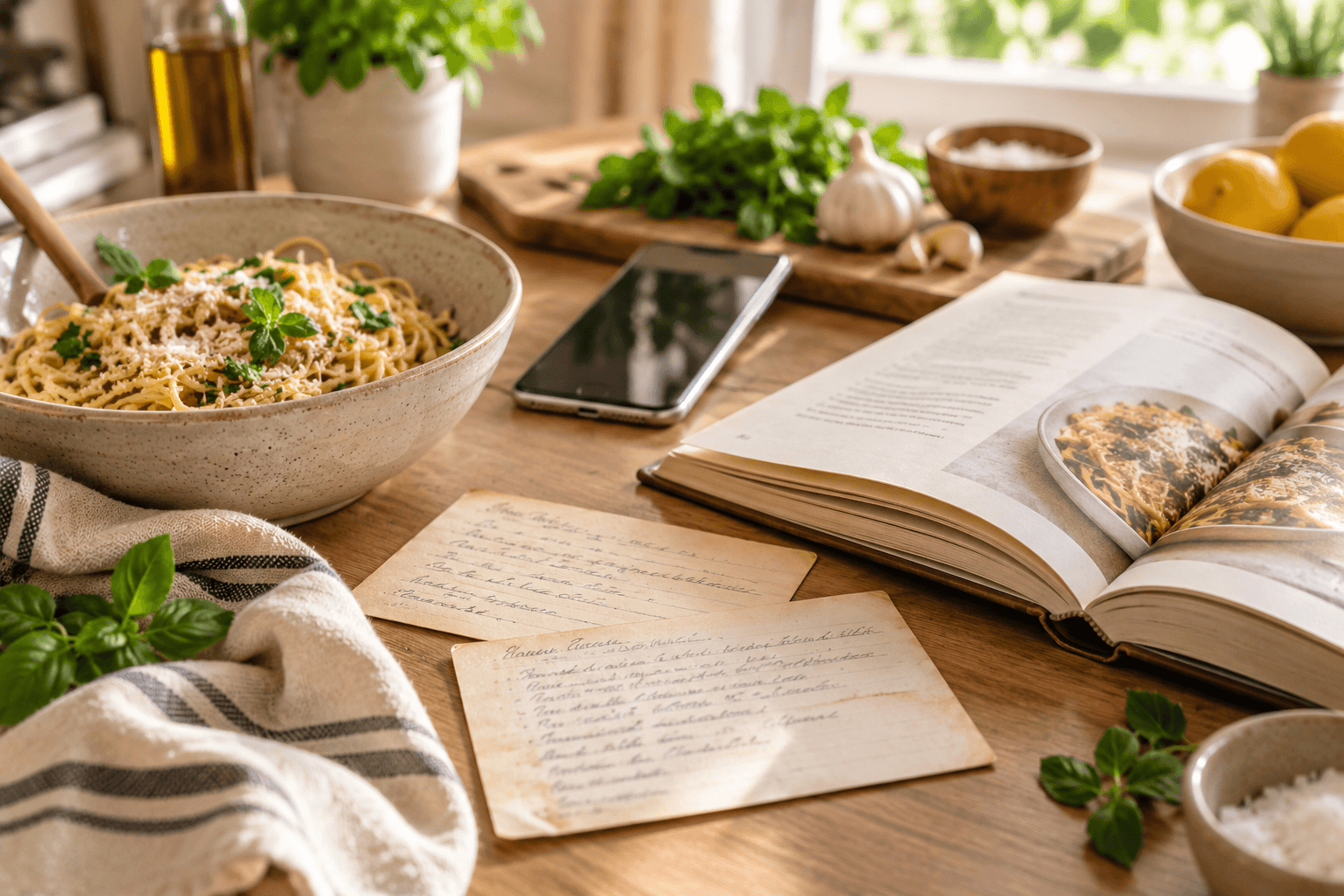
They're the handwritten cards, cookbook pages, printed recipes, and family recipes that have been passed around for years.
Those are worth digitizing too.
Take a clear photo of the recipe so you have a backup and can bring it into your digital collection.
For a recipe that mostly exists in someone's memory, write it down the next time you make it together. Ask about the details that usually get left out of formal recipes:
How brown should the onions get?
How thick should the sauce look?
How do you know the dough is ready?
"Until it looks right" makes perfect sense when you've watched someone cook a dish for 20 years. It becomes considerably less helpful when you're trying to recreate it by yourself.
Those little details are part of the recipe too.
Make your cookbook useful beyond storing recipes
A traditional cookbook mostly waits on the shelf until you decide to open it.
A digital cookbook can become part of how you decide what to cook.
Instead of starting meal planning by searching the internet for five new dinners every week, start with your own collection.
Look through the recipes you've already saved and choose what sounds good.
That small shift turns your cookbook from an archive into something you actually use.
And it helps solve one of the stranger problems of modern recipe collecting: having hundreds of saved recipes while still feeling like you have no idea what to make for dinner.
Add new recipes with a little more intention
Once you've cleaned up your recipe collection, try not to immediately fill it with another thousand possibilities.
Before saving something new, ask:
Would I realistically cook this?
Not "Does this look good?"
Lots of things look good.
Think about whether you'd buy the ingredients, whether it fits the way you cook, and whether you can picture yourself choosing it on an ordinary Tuesday.
You don't need to be overly strict. Trying new things is part of the fun.
But a digital cookbook becomes much easier to use when saving a recipe means something more than "I saw food on the internet and liked it."
Build it as you cook
You don't need a giant recipe-digitizing project.
Make the process part of your normal cooking routine.
Cooking an old favorite tonight? Add it.
Found the recipe card you always use for the holidays? Add it.
Tried something new and everyone wants it again? Add it.
A few months from now, you'll have something much more useful than a folder full of recipes you once found interesting.
You'll have a cookbook built around the way you actually cook.
Your cookbook can become your meal plan
This is where keeping your recipes together starts to pay off.
Spiceful is built to take the recipes you've saved and carry them into the rest of your week.
You can keep recipes from URLs and photos in one place, choose recipes for your weekly meal plan, and generate a grocery list from the meals you're planning to make.
So the recipe doesn't stop being useful once you've saved it.
It can go from recipe you love → meal you're planning → ingredients you need to buy.
That's the difference between collecting recipes and building a cooking system you actually come back to.
Ready to tame the chaos? Build your recipe book.
- Save recipes from anywhere
- Turn ingredients into one tidy list
Start free. No credit card needed. Upgrade anytime.