How to Organize Recipes Without Deleting Your Cooking History
Keep weeknight recipes easy to find without deleting family dishes, seasonal favorites, ambitious baking projects, or the pasta recipe you may eventually make.

The Spiceful Team
How to Organize Recipes Without Deleting Your Cooking History
Your recipe collection contains Tuesday dinners, a photo of your grandmother’s handwriting, three versions of the same creamy pasta, and a cake you saved during a brief period when you believed weekends were for laminated dough.
They do not all need the same treatment.
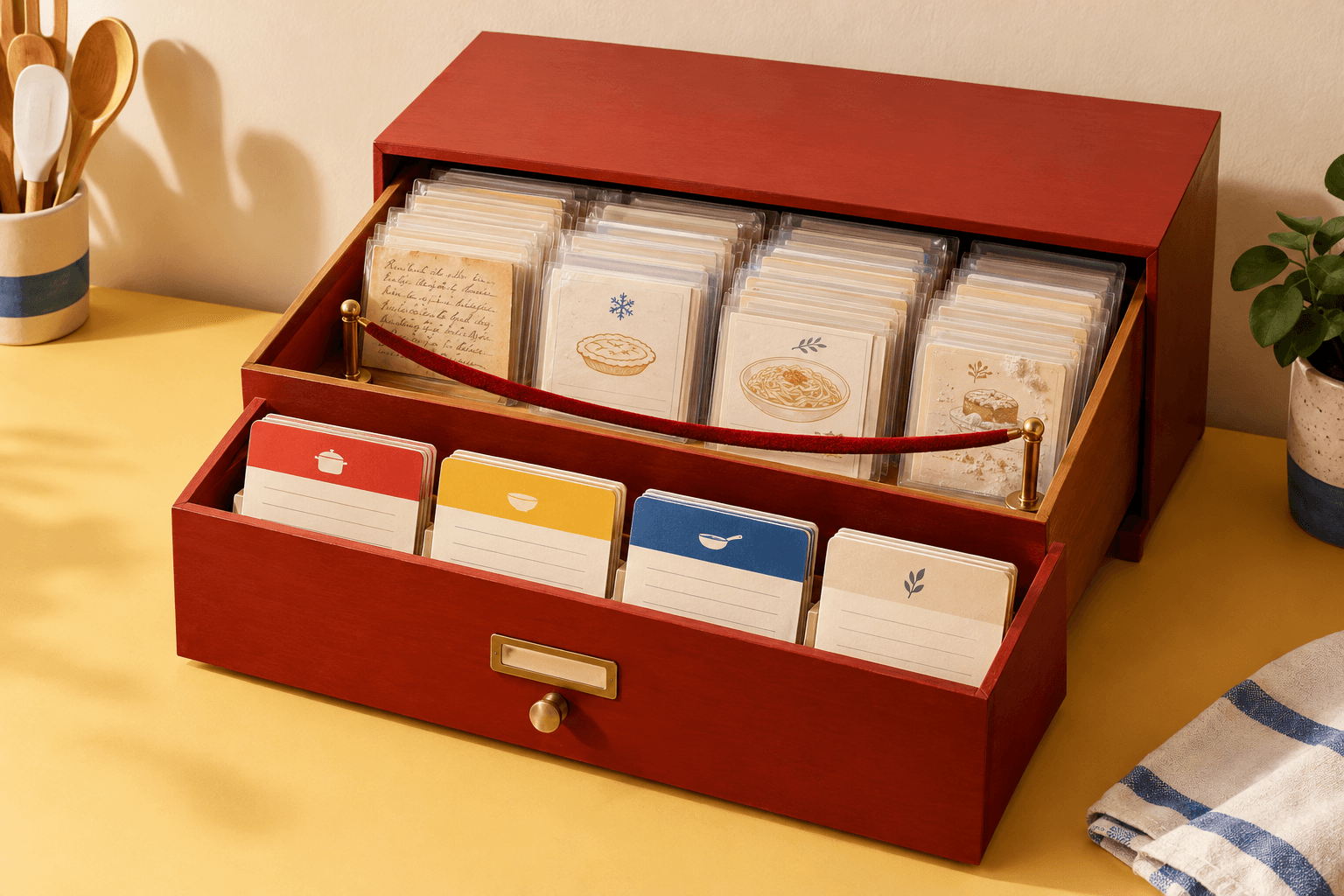
A useful recipe library has an active layer for things you might cook soon and an archive for recipes worth keeping without seeing them every time you need dinner. That lets you preserve the history without making Wednesday night compete with every idea you have ever saved.
Use four buckets, then stop organizing
You need a few useful distinctions, not a filing system with the administrative complexity of a small government.
1. Active repeats
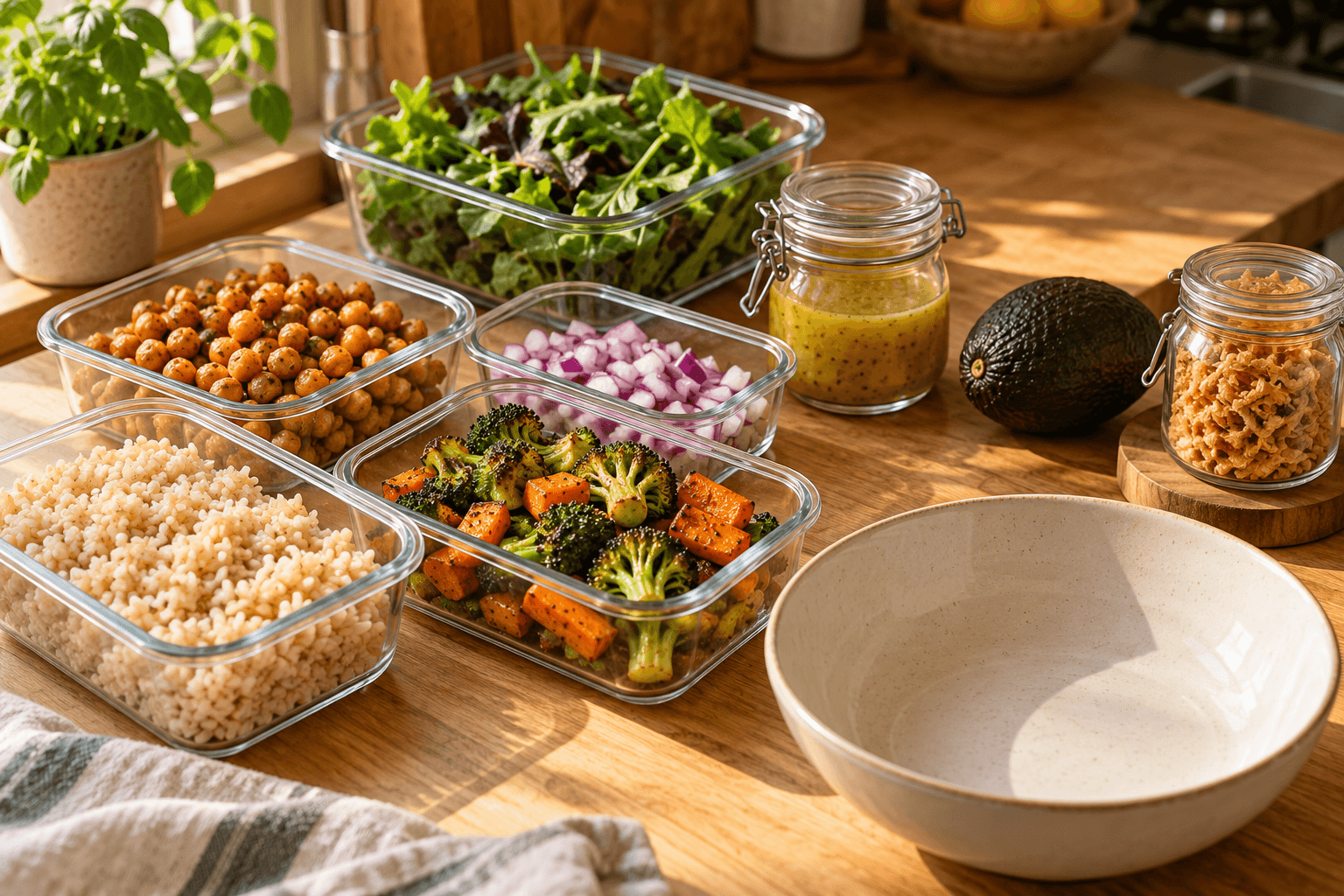
These are dependable recipes you cook regularly or expect to use soon. Think weeknight chili, the lentil soup that works when the grocery budget is being dramatic, or the chicken dish everyone requests when you ask what they want for dinner.
These recipes should be easy to reach when you are planning meals. Favorites can help here if you use them for recipes you particularly trust or enjoy. Keep the active group small enough that browsing it feels like choosing dinner, not reviewing evidence.
2. To-try recipes
This is where new ideas wait for their audition. Include the curry you saved last week, the bread project you keep mentioning, and the recipe that looked excellent at 1:14 a.m. when you were supposed to be asleep.
A to-try recipe can stay here until you make it. If it becomes a repeat, move it into the active group. If it loses its appeal, send it to the archive or delete it. No ceremony required.
3. Archive and reference
The archive is for recipes you want to keep without treating them as current dinner candidates.
That might include:
- a handwritten family recipe
- a holiday dish you make once a year
- a seasonal recipe waiting for the right weather
- a recipe from a former cooking phase
- a complicated project you still genuinely want to attempt
- a useful reference recipe you rarely make
An archived recipe has a home. It does not need to justify its existence every time you open your collection. Your grandmother’s recipe card does not have to win a popularity contest against Tuesday tacos.
4. Delete only with confidence
Delete exact duplicates, broken links, recipes you dislike, and ideas you are certain you will never use or want to reference. Keep the threshold high. The point of this system is to avoid turning every organizing session into a dramatic referendum on your past self.
If you hesitate, archive it. You can always remove it later. Recovering a recipe you deleted in a burst of productivity is considerably less fun.
Give each tool one job
A favorite, a category, a search filter, and an archive can overlap, but they do not need to mean the same thing.
Use favorites for recipes you especially trust or want to reach quickly. Use categories for a modest number of useful groupings, such as weeknight dinners, baking, or holiday food. Search is for the moment when you remember one ingredient, a dish name, or a fragment of the original recipe. The archive is for material you want to retain while keeping it out of your everyday browsing flow.
You do not need to classify every recipe by cuisine, meal, season, cooking method, difficulty, and emotional significance. Pick the retrieval clues you actually use. If you usually choose dinner by time available, a category such as “quick” may help more than a detailed map of global cuisines.
The test is simple: can you find an appropriate recipe when you are deciding what to cook? If yes, the system is doing its job.
Start with the collection you already have
Do not begin by creating twelve categories and then spending Saturday assigning each recipe a personality. Start with the mess.
Gather the sources
Bring together the recipes currently scattered across browser bookmarks, screenshots, notes, messages, social posts, paper cards, and other apps. You can do this gradually. The first goal is visibility, not perfect metadata.
If a recipe is difficult to read or missing important context, leave it in a holding area until you can review it. A saved recipe is not automatically a trustworthy or complete recipe. Imported material may need editing.
Find the regulars
Look for the recipes you actually cook. Mark those as active or favorite them, depending on the system you use. This is the most valuable part of the cleanup because it improves the view you use when planning dinner.
Make a small active structure
Choose only the categories that will help you retrieve food. “Weeknight,” “baking,” and “holiday” may be enough. So might “breakfast,” “dinner,” and “sides.” There is no prize for discovering that one recipe belongs in seven places.
Archive the obvious inactive material
Move old projects, seasonal dishes, sentimental recipes, and recipes you want to keep for reference out of the active layer. You are preserving them, not declaring them failures.
Stop before it becomes a tax audit
Once your regular recipes are easy to find and the rest have somewhere sensible to live, quit. The collection can improve through use. It does not need to reach a state of spiritual completion before you make dinner.
Handle duplicates without putting pasta on trial

Exact duplicates are easy. Keep the clearer or more complete copy and remove the others.
Near-duplicates need a little judgment. Two lasagna recipes may look similar while serving different purposes: one may be a reliable weeknight version and the other a holiday project. Keep both if you can explain the difference in a few words.
When several recipes are almost identical, choose the one you have used or the one you are most likely to use. Archive the rest if they have some appeal. Delete them only when they create clutter and you feel certain they add nothing.
Do not force an immediate verdict on every similar recipe. A collection can contain a temporary “decide later” group while you observe what you actually cook. Real behavior is better evidence than a spreadsheet made during a burst of organizing energy.
Keep sentimental and seasonal recipes visible in the right way
Some recipes matter because you cook them constantly. Others matter because a person, place, or season is attached to them. Those are different kinds of value.
A handwritten family recipe may belong in the archive even if you make it once a year. A summer tomato dish can wait for summer. A complicated baking project can remain a future possibility without pretending it belongs beside your reliable 30-minute meals.
The active collection answers, “What could I make soon?” The archive answers, “What do I want to keep?” Both questions deserve an answer.
Let maintenance happen while you cook
You do not need a universal monthly reset. Small decisions attached to real cooking are easier to maintain.
After making a recipe successfully a few times, favorite it or move it into your active group. If a recipe keeps being skipped, move it out of the active view. If you make a seasonal dish, return it to the archive when its season ends. If you discover that two saved recipes are the same, clean up that pair and move on with your life.
This approach keeps organization connected to actual cooking instead of turning it into a separate hobby. You already have enough hobbies that began with buying a special notebook.
Where a recipe manager can help
The method works with folders, a spreadsheet, a binder, or whatever system you will actually open. A recipe manager is useful when your collection lives in several places and you want one personal library to search and maintain.
Spiceful lets home cooks save and organize their own recipes, create and edit recipes, search and filter the collection, use categories, mark favorites, add ratings, and archive recipes. Recipes can be added from URLs or pasted text, entered manually, or imported from photos on mobile. Instagram recipes can be sent through the mobile share sheet or imported from a copied Reel URL. Some sites block automated access or require authentication, so pasted recipe text is a useful fallback when a URL import cannot work.
Spiceful works on the web, iPhone, iPad, and Android, with cross-device synchronization. Free includes five categories, while Premium includes unlimited categories. You do not need a large category system to use the archive approach, though. A few retrieval cues and a clear active layer are usually more useful than a beautifully labeled collection nobody wants to maintain.
The goal is a recipe library that remembers more than you cook this week while still helping you decide what to make this week. Keep the history. Move it out of the way when necessary. Dinner has places to be.
Ready to tame the chaos? Build your recipe book.
- Save recipes from anywhere
- Turn ingredients into one tidy list
Start free. No credit card needed. Upgrade anytime.