What to Prep Ahead for Better Weeknight Meals, and What to Wait On
A practical component-prep guide for keeping salads crisp, herbs usable, fruit less brown, and weekday dinners far less annoying.

The Spiceful Team
Sunday-you can do a lot for Wednesday-you. Cook rice. Roast vegetables. Chop an onion. Blend a dressing. Wash greens if you can get them properly dry.
Sunday-you should probably not dress the salad, slice every avocado in the house, or lovingly sprinkle fried onions over a grain bowl that will not be eaten until Thursday. Those fried onions deserve better than a slow descent into onion sadness.
The useful rule is simple: prep sturdy, dry-friendly components ahead. Keep fragile, watery, crisp, dressed, or browning-prone ingredients separate until closer to dinner.
Meal prep works better as component prep. Make parts that can mix and match, then assemble them when you are hungry and your standards are understandably lower.
The quick sorting system
| Prep bucket | Good candidates | What to do |
|---|---|---|
| Holds well | Cooked grains, cooked beans, roasted vegetables, chopped onions, many sauces and dressings | Prep, cool and refrigerate appropriately, then store in clean containers. Keep components separate if you want more meal options later. |
| Holds with protection | Washed greens, fresh herbs, cut apples, cut avocado, chopped watery vegetables, salad ingredients | Minimize extra moisture, use ingredient-specific storage, and protect cut surfaces or keep items separate until serving. |
| Do near mealtime | Dressed salads, sliced avocado, crunchy toppings, delicate herbs used as garnish, hot crispy foods | Assemble right before eating, or as close as your actual life permits. “Right before” can mean five minutes before, not a ceremonial gong at 6:30. |
These are decision buckets, not laws of produce. A sturdy cabbage salad behaves differently from tender butter lettuce. A just-ripe avocado has different ambitions than one that is already plotting a coup on your counter. Ripeness, cut size, refrigerator temperature, packaging, and how wet an ingredient is all matter.
The components that usually earn their Sunday slot
Start with the things that take time or make a mess, but do not immediately turn weird once cooked or cut.
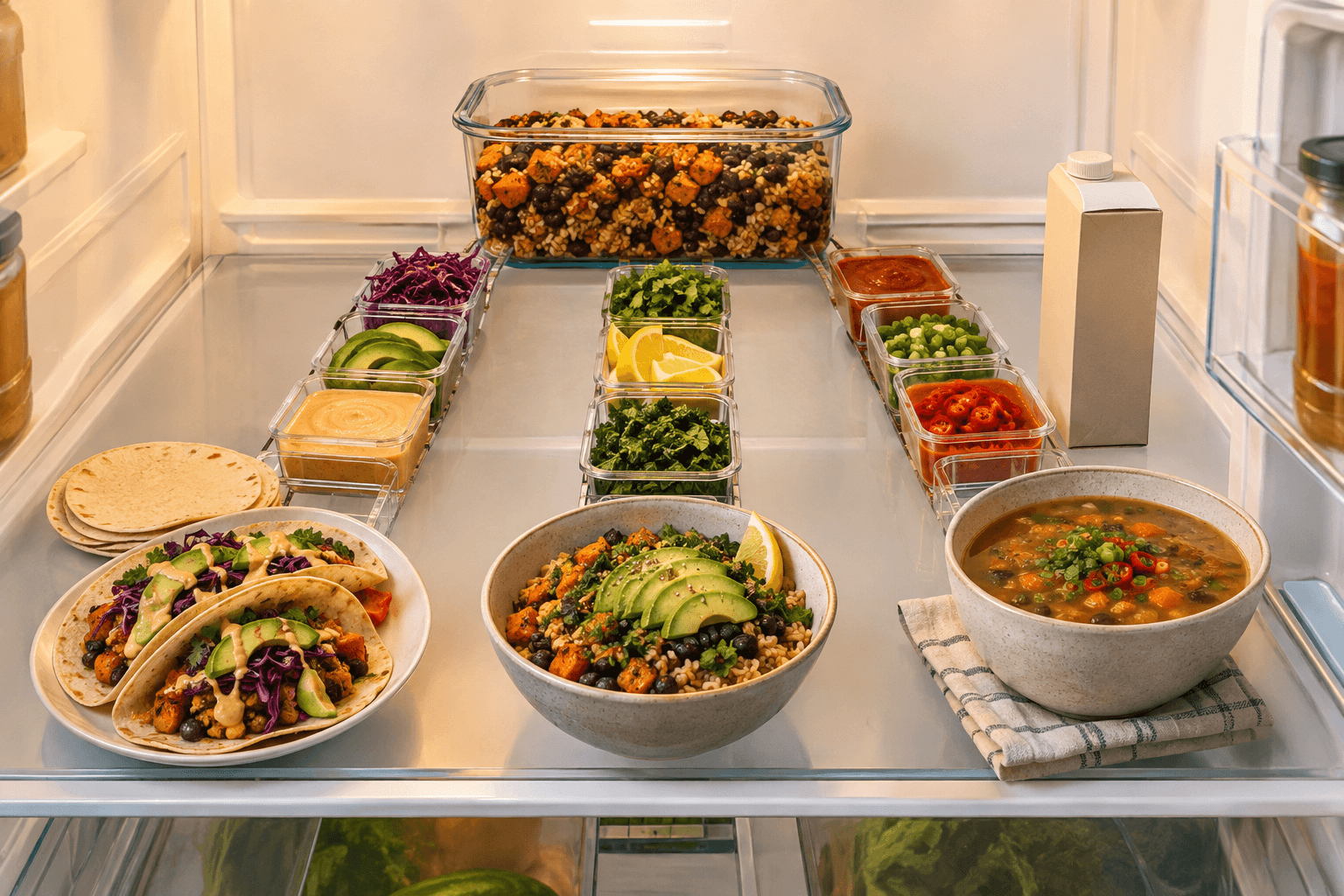
Cooked bases are classic advance prep: rice, other grains, beans, lentils, roasted potatoes, and similar building blocks. They make it much easier to turn a random Tuesday into a bowl, a salad, a taco situation, or “vegetables arranged near a carb,” which still counts as dinner.
Roasted vegetables tend to be more cooperative than raw chopped vegetables. Roast a tray of broccoli, carrots, squash, peppers, or whatever needs using up, then use it across meals. Keep them separate from dressings and wet sauces if you want them to retain more texture.
Chopped onions are a very normal thing to prep ahead, especially if chopping onions after work makes you feel like you have been personally attacked by agriculture. They can go into soups, stir-fries, sauces, omelets, and almost any dinner that begins with, “First, heat some oil.”
Sauces and dressings are often worth making early because they save disproportionate amounts of weeknight effort. A vinaigrette, yogurt sauce, peanut sauce, tomato sauce, or blended herb sauce can sit separately until it has a job. That separation is doing real work. It keeps greens from wilting and roasted vegetables from becoming damp little hostages.
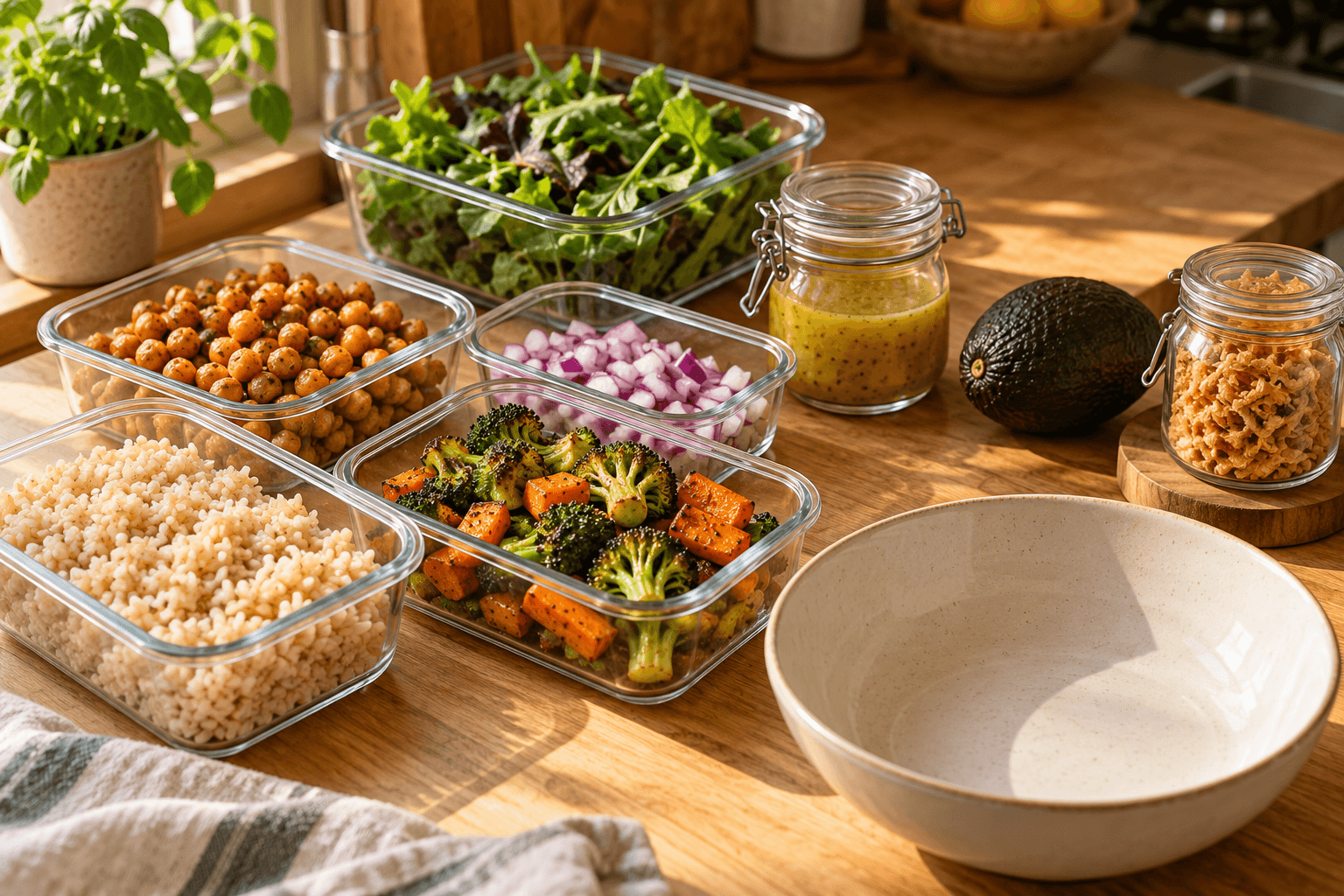
Think in meal parts rather than finished containers:
- Cooked grain
- Roasted vegetables
- Beans or another cooked protein component
- Greens, stored separately
- Dressing in its own container
- Avocado and crunchy topping added at serving
That becomes a grain bowl, a warm salad, tacos, or lunch with suspiciously few decisions required. You are not committing to five identical meals in matching containers like a tiny meal-prep prison.
Why some ingredients get dramatic after prep
You do not need a food-science degree to prep well. You mainly need to know which ingredient is likely to lose water, release water, brown, or absorb water from everything around it.
Cut surfaces dry out and brown
Once you cut produce, you expose fresh surfaces to air. Some items may dry out. Others, including apples and avocados, can brown through enzymatic reactions involving oxygen. Acidic treatments can slow browning in many fruits and vegetables, which is why lemon juice is often invited to this particular party. It is a quality trick, not a force field.
For apples, cut them closer to eating when possible, or use an appropriate acidic treatment if the flavor works for the dish. For avocado, leave it whole until you are ready to use it whenever you can. A cut avocado saved for later is sometimes fine, but it will be living on borrowed aesthetic time.
Salt and sugar can make cut produce weep
Salt draws water from many vegetables and greens. Sugar can do something similar with fruit. This can be useful when you want tomatoes to release juice for a salad or berries to soften into something saucy. It is less useful when you want crisp cucumber, crunchy cabbage, or a salad that does not arrive at lunch resembling a small pond.
Hold off on salting watery raw vegetables if crispness matters. Keep the salt, dressing, and acidic ingredients separate, then add them near serving. The exact effect depends on the ingredient, cut, amount of seasoning, and how long it sits, so treat this as a tendency rather than a culinary commandment carved into stone.
Steam and condensation murder crunch

Crisp toppings need dryness. Fried onions, toasted nuts, croutons, chips, crackers, and anything that makes a satisfying little cronch will absorb moisture from a dressed salad, steamy food, or saucy bowl.
Store those separately and add them at the end. The same goes for crispy roasted food if you care about its exterior. Refrigeration is great at many things. Preserving a fresh-out-of-the-oven crust is not its main character trait.
Greens and herbs need their own weird little systems
“Put it in an airtight container” is decent advice for lots of prepared food, but fragile produce has opinions.
Greens and herbs vary a lot. Some do better when kept dry with a paper towel to manage excess moisture. Some are happier with a little hydration. Some wilt if you look at them with administrative intent. Avoid one universal storage ritual and check guidance for the particular item when you need it.
For practical prep, the goal is usually to reduce excess moisture without letting leaves dry into Victorian specimens. If you wash greens before storing, dry them thoroughly. Wet leaves sitting in a container can deteriorate quickly. Keep dressings away until serving.
Tender herbs are often best treated as finishing ingredients. You can wash and prepare them if that makes dinner easier, but save the chopping or tearing for closer to mealtime when possible. Hardier herbs may be more forgiving, though they are still not immortal.
A realistic prep session, without cooking your entire week on Sunday
A useful session might look like this:
- Wash fresh produce under running water before eating, cutting, or cooking, following FDA guidance. Keep it separate from raw meat, poultry, seafood, and eggs.
- Cook a grain or bean component and roast a tray of vegetables.
- Chop onions and other sturdy vegetables you know you will use soon.
- Make one or two sauces or dressings.
- Wash and thoroughly dry greens if that fits the type of green and your storage plan.
- Leave avocado, delicate garnishes, crunchy toppings, and salad dressing for later.
That is enough. You do not need to pre-build seven flawless lunches with color-coded lids and an emotional-support label maker. You need Wednesday dinner to involve fewer steps.
Quality problems and safety problems are different problems
A limp herb is a quality problem. Brown apple slices are a quality problem. Soggy croutons are a tiny personal tragedy.
Food safety needs a different standard. Do not decide that prepared food is safe just because it looks or smells fine. Sensory checks can reveal obvious spoilage, but they cannot confirm safety.
For advance prep:
- Keep raw animal foods separate from ready-to-eat produce, including during washing, chopping, storage, and cleanup.
- Refrigerate cut, peeled, or cooked produce, as the FDA advises.
- Cool cooked food promptly and use shallow containers when appropriate so it can cool safely, following USDA leftovers guidance.
- Use FoodKeeper for item-specific storage guidance. Storage advice changes depending on whether food is raw, cut, cooked, refrigerated, or frozen. There is no honest universal timeline for “meal prep.”
A container of cooked rice, cut melon, roasted vegetables, and washed herbs are not the same storage question wearing different hats. Check the item and preparation state rather than trusting a vague memory from a meal-prep infographic made in 2017.
Keep the plan with the recipes, if that helps
Paper works. A notes app works. A mildly stained scrap of mail works, provided you can still read it on Wednesday.
If your meal ideas live across recipe websites, screenshots, Instagram, cookbooks, and browser tabs that have achieved tenancy, Spiceful can keep your own recipes in a searchable library. You can schedule saved recipes on a meal plan, then turn that plan into grocery items. It will not tell you whether your cilantro is still emotionally available, but it can make the cooking-admin part much less chaotic.
Prep the parts that hold up. Let the fragile stuff have its dramatic entrance at dinner.
Ready to tame the chaos? Build your recipe book.
- Save recipes from anywhere
- Turn ingredients into one tidy list
Start free. No credit card needed. Upgrade anytime.