How to Plan a Cooking Timeline So Dinner Hits the Table Together
Plan backward from serving time, protect the least-flexible dish, and leave room for slow preheats, stubborn potatoes, and the other tiny delays that derail dinner.
The Spiceful Team
Dinner timelines get a bad reputation because people picture a clipboard, a whistle, and somebody yelling “behind!” at the cat.
For an ordinary home dinner, the goal is much less dramatic: get the food to the table in good shape at roughly the same time. Your potatoes can wait a bit. Your crispy fish cannot sit around writing a memoir. Treat those foods differently and the whole meal gets less sweaty.
The simplest method is to pick a serving time, work backward from the meal’s least-flexible component, and leave some actual empty space in the plan. Empty space is not failure. It is where the water takes longer to boil than physics promised it would.
Start with when you want to eat
Write down a real serving time. “Around seven” is perfectly valid. It means food should reach plates around seven, not that you begin arranging parsley at 7:00 while everyone becomes mysteriously hungry and hostile.
Then list every component, including the annoying little jobs recipes tend to hide in the margins:
- preheating the oven
- chopping and measuring
- bringing water to a boil
- washing salad greens
- making a sauce
- resting a cooked item, if the recipe calls for it
- clearing a burner, sheet pan, or cutting board for the next job
- final assembly, garnish, and plating
A recipe may say “cook for 20 minutes,” but dinner also needs an oven, a clean pan, a sharp knife that has not vanished under a pile of onion skins, and a person available to do the work.
Find the anchor dish
Your anchor is the component with the narrowest acceptable finish window. It shapes the last stretch of cooking.
Sometimes it is a roast that needs the oven and has a recipe-specific resting period. Sometimes it is a baked dish that needs a particular oven temperature. Sometimes it is a quick-cooking item that gets sad almost immediately, such as fried food, delicate eggs, wilted greens, or a sauce that wants attention at exactly the moment you are trying to find the serving spoon.
The longest cook is often flexible. A pot of braised beans or roasted squash may be ready early and stay pleasant for a short while. A five-minute fish fillet may be the real anchor because it wants to be eaten while it is still hot, crisp, and behaving like itself.
Ask yourself:
- Which dish has the smallest acceptable waiting period?
- Which dish controls access to a shared resource, such as the oven or your only large skillet?
That is the item to protect. The anchor can change from meal to meal.
Sort jobs by what they demand from you

A timeline gets much clearer when you stop treating all “cook time” as the same thing.
Active tasks need you present: chopping, stirring risotto, flipping cutlets, assembling a salad, whisking a sauce, or checking a pan that seems one second away from doing something personal.
Passive tasks keep moving with little hands-on work: roasting, simmering, resting, chilling, or marinating. Passive does not mean abandon it for a bath, but it gives you room to do something else. A simmering dish may still need occasional checks.
Mark tasks that compete for equipment, too. Two recipes may each look easy until they both need the oven at different temperatures, the same burner, or the sheet pan currently occupied by potatoes. Your kitchen has a limited number of runways.
A quick paper version might look like this:
| Component | Needs attention? | Depends on | How flexible is it? |
|---|---|---|---|
| Roasted potatoes | A little while roasting | Hot oven, sheet pan | Usually fairly forgiving |
| Pan-seared fish | Yes, near the end | Free skillet, prepped fish | Very little waiting room |
| Quick greens | Yes, briefly | Free burner | Best at the end |
| Yogurt-herb sauce | Briefly | Chopped herbs | Can be made ahead |
| Salad | Briefly | Washed greens, dressing | Prep ahead, dress late |
You do not need project-management software. You need to notice that the fish, greens, and salad cannot all demand your hands at 6:58.
Work backward, then add buffer
Start at serving time and place the anchor dish first. Build in any resting or finishing time your recipe specifies. Then schedule the tasks that must happen before it: preheating, heating a pan, making a sauce, getting water boiling, or freeing the oven.
After that, fit the flexible pieces into the available gaps. Include setup, active work, passive cooking, equipment changes, and plating. If a recipe has a stated resting period, reserve that specific period rather than assuming every cooked item needs the same amount of time.
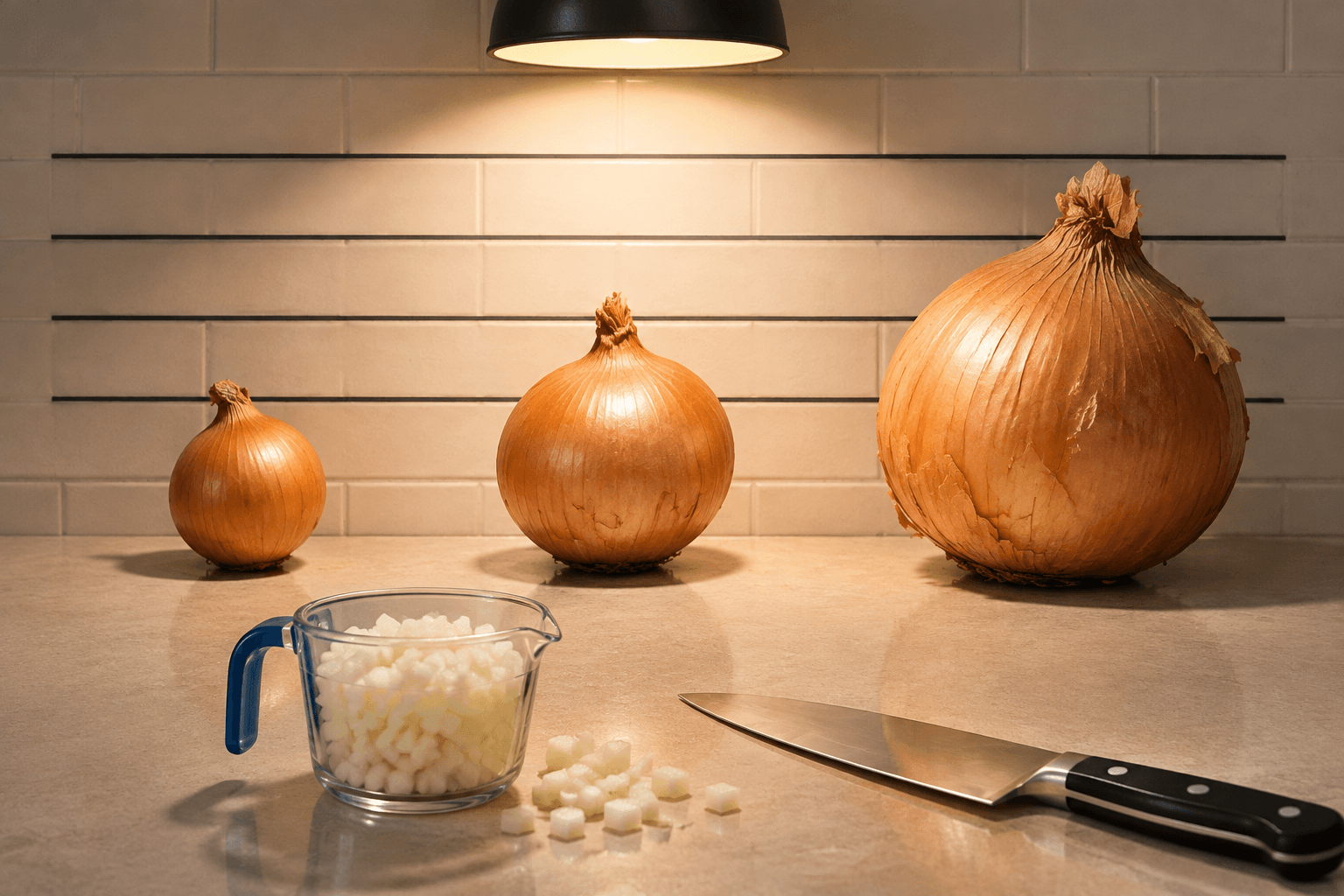
Recipe durations are estimates, not court orders. Ovens run differently, potatoes vary, and one onion can take three minutes to chop until it is somehow the world’s most complicated onion. Leave unassigned time before dinner, especially when you are making an unfamiliar recipe, cooking for guests, using a crowded oven, or producing a quantity of food that could feed a small village.
Your buffer might become a chance to set the table. It might disappear because the oven takes forever to preheat. Either outcome means it did its job.
Decide what can wait
This is where you spend your flexibility.
Many soups, braises, baked dishes, roasted vegetables, mashed potatoes, and cooked grains may tolerate a brief quality hold, depending on the dish and its instructions. Covering a forgiving component briefly, or reheating it gently when appropriate, can buy you time. Quality is the deciding factor here: a dish may remain safe when held correctly and still become dry, soft, split, or otherwise less appealing.
Keep crisp, delicate, or easily overcooked elements near the finish line:
- fried or breaded foods
- delicate eggs
- quick-cooking greens
- fresh salad after it is dressed
- crunchy toppings
- herbs, citrus zest, and other fresh garnishes
- some emulsified sauces
Reserve garnishes until the end. Nobody has ever been improved by cilantro that spent 25 minutes steaming under a lid like it was being interrogated.
You can also prep early without fully cooking early. Wash greens, chop herbs, measure spices, make a cold sauce, set out serving dishes, and portion ingredients while another component cooks. The final stretch gets calmer when you have already done the chores that do not need heat.
A compact example: serving at 7:00 p.m.
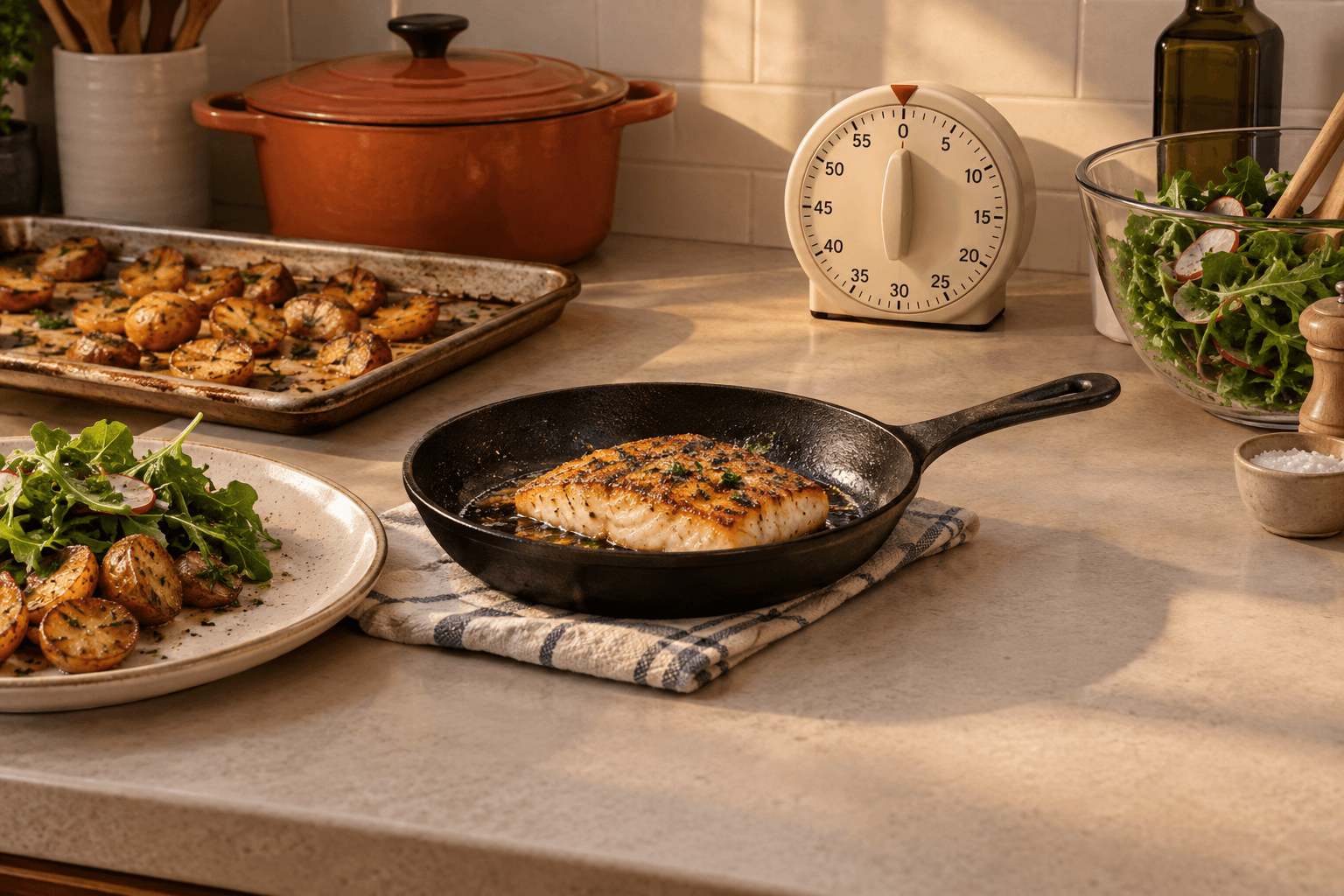
Imagine a hypothetical dinner of oven-roasted potatoes, pan-seared fish, quick greens, a cold herb sauce, and a salad. These times demonstrate the backward-planning logic only. Use the actual instructions for your recipes and equipment. This is not a universal schedule or a new recipe.
The fish is the anchor. It cooks quickly and is best served immediately. The potatoes take longer, but they have more patience.
Earlier in the afternoon or before the main cook: wash salad greens, chop herbs, make the cold sauce, and prep potatoes. Handle and store perishable ingredients according to current food-safety guidance while you wait to cook.
About 6:00: start the oven and get the potatoes going, based on the temperature and duration in your recipe. While they roast, set the table and prep the greens. This is passive-cook-time gold. Spend it wisely, or stare into the refrigerator for no reason. Both are available to you.
Around 6:35: check the potatoes against their recipe’s texture and browning cues. If they finish early, they may be one of the components you can cover and hold briefly for quality, depending on the dish. Leave crisp toppings and fresh herbs off until serving.
Around 6:45: clear the stovetop, put out plates, and make sure the skillet and fish are ready. This is the buffer. You are buying yourself a few minutes before the least-flexible work begins.
Near 6:50: cook the fish according to its recipe. Use a food thermometer and the applicable recipe or USDA guidance when doneness is safety-critical. The clock does not certify fish, meat, poultry, or egg dishes as done, no matter how confidently it is ticking.
In the final few minutes: cook the greens, dress the salad, spoon out the sauce, add herbs or crunchy toppings, and serve.
Notice what did not happen: potatoes, fish, greens, and salad were not assigned the exact same finishing minute. That schedule has the structural integrity of a tortilla chip in salsa.
When the timeline slips
It will. This is dinner, not a satellite launch.
Protect the anchor dish first. If the fish needs to be cooked now, cook it now. Move a flexible side into a short quality hold or a gentle reheat when appropriate. If potatoes are lagging, serve the greens and fish with the sauce, then bring the potatoes out when they are ready. The world keeps turning.
If an oven item runs long, simplify the least important finishing job. Skip the toasted nuts. Put the herbs on the table. Serve the sauce from its bowl instead of executing a precise drizzle pattern that nobody requested.
Trying to complete five urgent tasks at once usually produces one burned pan, one undressed salad, and a new personal philosophy about takeout. Pick the component that loses the most by waiting, then let the more forgiving food absorb the delay.
Keep quality holding separate from food safety
A dish can taste worse after waiting even if it is being held safely. It can also look perfectly fine and still require safe handling. Those are separate questions, because food is annoyingly committed to having more than one rule.
For hot holding, USDA Food Safety and Inspection Service guidance says to keep hot food at 140°F or above. Do not assume an oven’s displayed setting proves that the food itself is at that temperature. Measure the food when the precise temperature matters.
USDA also identifies 40°F to 140°F as the temperature range where bacteria can grow rapidly. Perishable food should be refrigerated within two hours, or within one hour when the air temperature is above 90°F. A delayed side dish is a scheduling problem. Leaving perishables out indefinitely while waiting for the main is a different problem with worse vibes.
For meat, poultry, seafood, egg dishes, and other safety-sensitive foods, use a food thermometer and follow the relevant recipe or USDA safe-temperature guidance. A timeline helps coordinate dinner. It cannot tell you what is happening in the center of a chicken breast.
Sources: USDA FSIS, Danger Zone (40°F to 140°F) and USDA FSIS, Keep Food Safe! Food Safety Basics.
If your recipes currently live in browser tabs, screenshots, cookbooks, and one text message from your aunt that says only “add enough garlic,” a recipe manager can make this workflow easier to repeat. Spiceful lets home cooks keep their own recipes organized, add saved recipes to a meal plan, and open structured recipes while cooking. The timeline still comes from you, your dinner, and the deeply personal drama between your oven and its alleged preheat time.
Ready to tame the chaos? Build your recipe book.
- Save recipes from anywhere
- Turn ingredients into one tidy list
Start free. No credit card needed. Upgrade anytime.