How to Grocery Shop for One or Two People Without Letting Produce Rot
A practical grocery-shopping method for small households: plan realistic meals, buy around ingredient overlap, choose flexible package sizes, and handle leftovers safely.
The Spiceful Team
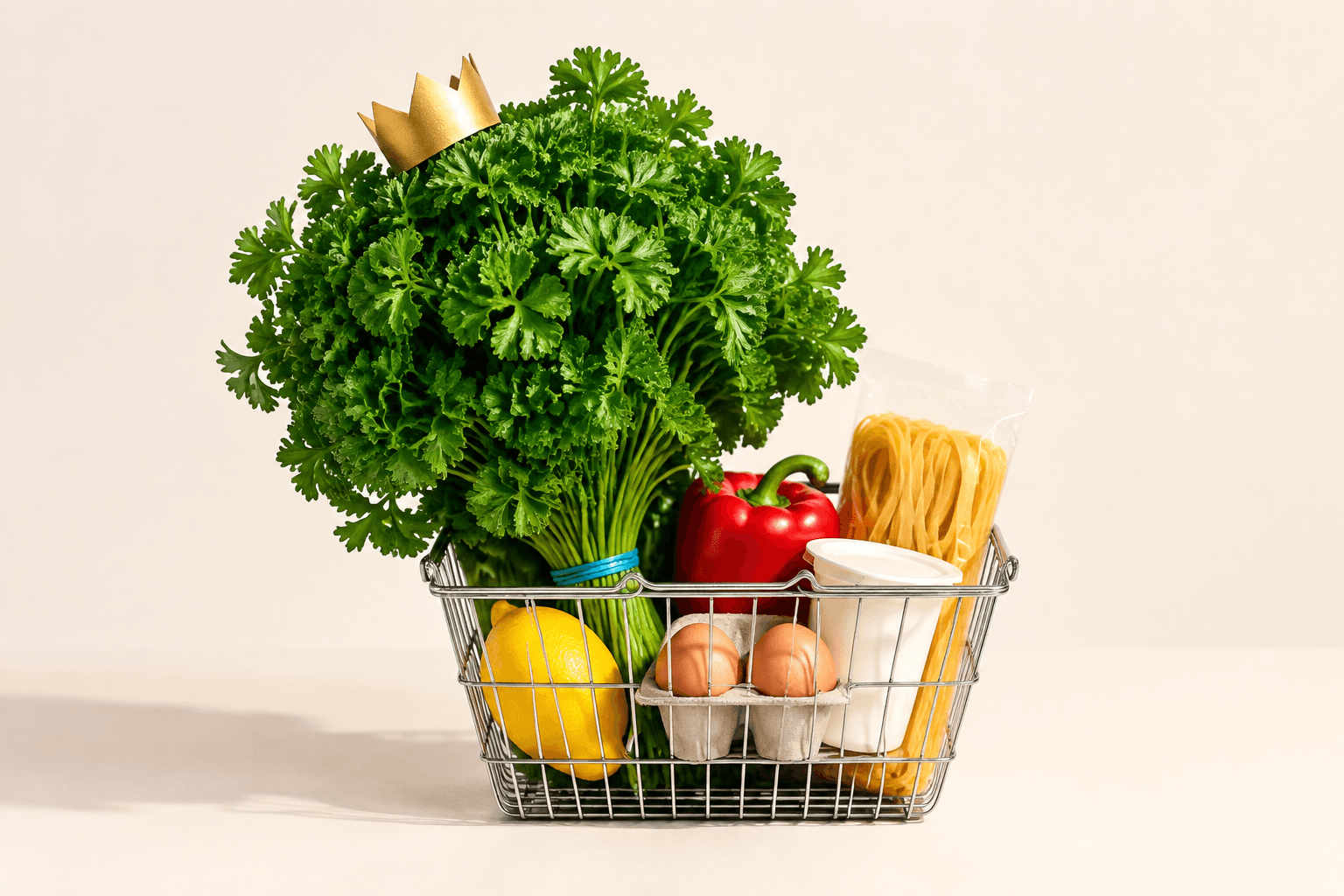
A recipe asks for two tablespoons of parsley. The store offers a bunch roughly the size of a ceremonial bouquet. You buy it with optimism. Five days later, it is a damp green question mark in the produce drawer.
This is a package-size problem, not a character flaw. Grocery stores sell for households, restaurants, people making tabbouleh for forty, and apparently anyone who has appointed themselves Parsley Monarch. One or two people need a shopping method that accounts for the gap between what recipes request and what stores actually sell.
The fix is to shop from a small set of realistic meals, then buy around the overlap. Your list should reflect the week you are actually going to have, including the takeout night, the late meeting, the dinner at a friend's place, and the evening when making toast feels like a bold culinary project.
Start with your actual week, not your fantasy week

Pick the meals you genuinely expect to cook at home. That might be three dinners, a lunch plan, and one backup meal made from a freezer or pantry ingredient. It does not need to be seven nights of immaculate domestic competence.
Before writing a list, put the ingredient lists for those meals side by side. You are looking for:
- ingredients that appear in more than one meal
- expensive or fragile ingredients that need a plan
- ingredients a recipe wants in tiny quantities
- meals that can tolerate a swap if the store only sells a comically large package
Say you choose a spinach pasta, egg wraps with greens, and grain bowls with roasted vegetables. Spinach now has three jobs. It is not sentenced to seven consecutive salads, which is how people begin to feel personally betrayed by lunch.
Cross-utilization means using one ingredient in different dishes, rather than repeatedly eating the same meal with increasingly haunted energy. A few examples:
| Ingredient | Meal one | Meal two | Meal three |
|---|---|---|---|
| Spinach | Pasta | Eggs | Grain bowl |
| Cilantro | Tacos | Rice bowl garnish | Stirred into a sauce or dressing |
| Greek yogurt | Breakfast | Sauce for roasted vegetables | Baking or a creamy soup topping, if the recipe allows |
| Bell peppers | Sheet-pan dinner | Fajita-style filling | Omelet or fried rice |
| Canned beans | Grain bowl | Soup | Mash into a spread or add to tacos |
You do not need every ingredient to appear three times. That way lies a refrigerator full of half-used condiments and one extremely busy zucchini. The point is to give the larger or more perishable purchases somewhere to go.
Treat the lowest unit price with mild suspicion
Unit price is the shelf-label math: price per ounce, pound, or item. It is useful, but it cannot see into your vegetable drawer.
For a small household, the more relevant question is usable cost: what the amount you realistically use ends up costing after the rest is wasted.
Imagine a large tub of herbs costs $2 and you use one quarter before the remainder gives up on life. The herbs you used effectively cost $8 per tub's worth of use. A $1 smaller bunch that you finish can be the better deal, even if its unit price looks worse on the label.
You do not need a spreadsheet with pivot tables and a tiny CFO hat to make this decision. Try this rule:
Pay more for the smaller package when you do not have a credible plan for the extra.
A credible plan is specific. “I will probably use it somehow” is not a plan. “It goes into Tuesday's pasta and Friday's eggs” is a plan. “I can freeze the portion the recipe will not use” may also be a plan, if that ingredient and recipe are suited to freezing.
This does not mean large packages are a scam. A family-size yogurt tub makes sense if you eat yogurt most mornings. A giant bag of salad greens is less charming when you leave town Thursday morning.
Pick formats that match the ingredient's job

The best format depends on how much you need, how fast you expect to use it, and whether the ingredient is doing important texture work in the dish.
Loose produce beats optimism-sized bags
Buy loose onions, potatoes, apples, carrots, peppers, and similar produce when your store offers them. If you need one onion, buying one onion is allowed. Nobody from the Grocery Police will arrive.
Bagged produce can work when several meals use it or when you know you will finish it. Otherwise, a loose item is often the simplest way to avoid accidental bulk purchasing.
The same applies to multipacks. Six avocados are a great purchase for someone who has six avocado plans. They are a less great purchase for someone who merely enjoyed looking at avocados in the store.
Frozen vegetables are useful on low-frequency weeks
Frozen vegetables are handy when a recipe needs a modest amount and you do not expect to use fresh versions again soon. You can take out what you need and leave the rest for another meal.
They are especially practical for ingredients headed into soups, sauces, skillets, curries, blended dishes, or cooked grain bowls. A frozen vegetable may behave differently from fresh in a salad or a dish where crispness is the entire point. The recipe gets a vote here.
Canned, jarred, and shelf-stable ingredients can save a meal plan
If the recipe permits it, canned beans, tomatoes, broth, coconut milk, jarred roasted peppers, shelf-stable grains, and dried lentils can be easier to manage than buying several fresh ingredients for one meal.
This is not a command to turn every dinner into a bunker-pantry situation. Fresh food is great. Shelf-stable options simply give you more flexibility when your schedule does something rude.
A can may still be more than you need. That is fine if the remainder has a place in tomorrow's lunch, another planned meal, or a freezer portion where suitable. If opening a can creates a new orphan ingredient every week, choose recipes that use the whole thing or buy a different format when available.
Small dairy containers are sometimes the bargain
Large tubs of yogurt, sour cream, cottage cheese, or similar ingredients can be a good deal for regular users. For a recipe that needs a few spoonfuls and no other plans, a smaller container may cost more per ounce while costing less in real life.
That calculation also applies to cheese, dips, prepared sauces, and specialty items. If an ingredient only exists to make one recipe feel very authentic on one Tuesday, see whether the recipe allows a substitute, a smaller package, or a different meal entirely.
Authenticity is nice. A half-used jar becoming a permanent resident of the fridge door is less nice.
A five-way decision for oversized packages
Already holding the giant bag of something? Run through this quickly:
- Plan a second use. Add a different meal that uses it in the next few days.
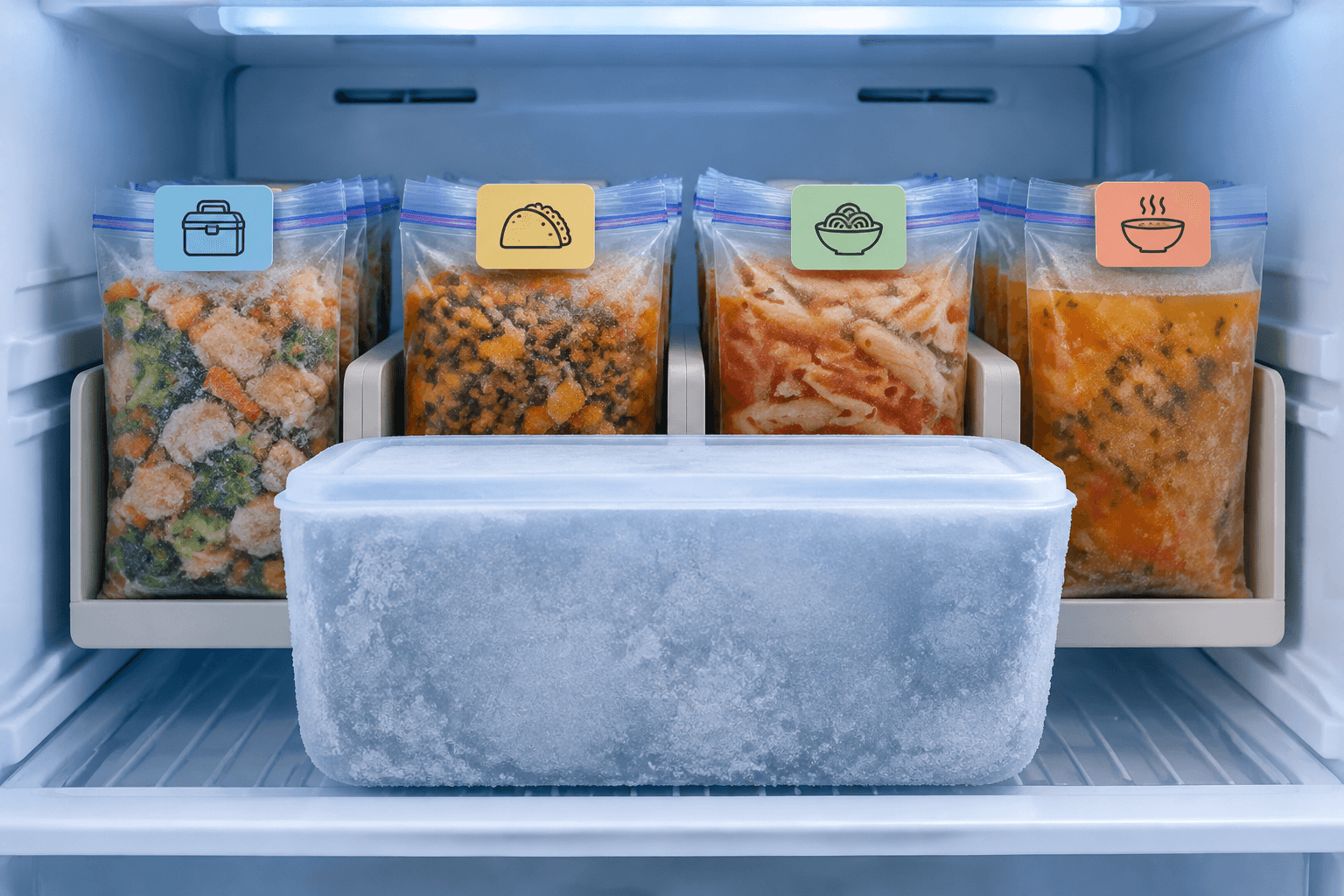
- Freeze a suitable portion. Divide it into amounts you will realistically use later, rather than freezing one enormous mystery lump for Future You.
- Share it. Split with a neighbor, roommate, friend, or nearby relative if that is easy and welcome.
- Substitute. Choose a smaller, frozen, canned, jarred, or shelf-stable option if the recipe can handle it.
- Skip it next time. Some ingredients are simply not worth buying for one tablespoon unless they are doing essential work.
This is also a useful way to edit recipes before you shop. If a garnish needs an entire herb bunch and you have no other use for it, skip the garnish, use a different herb you already have, or pick another recipe. Dinner will survive. The internet may be devastated, but dinner will survive.
Build the list from recipes, then consolidate it
Generic one-person grocery lists often produce a strange collection of virtuous ingredients that do not quite assemble into meals. You wind up with eggs, kale, rice cakes, and an emotional need to order noodles.
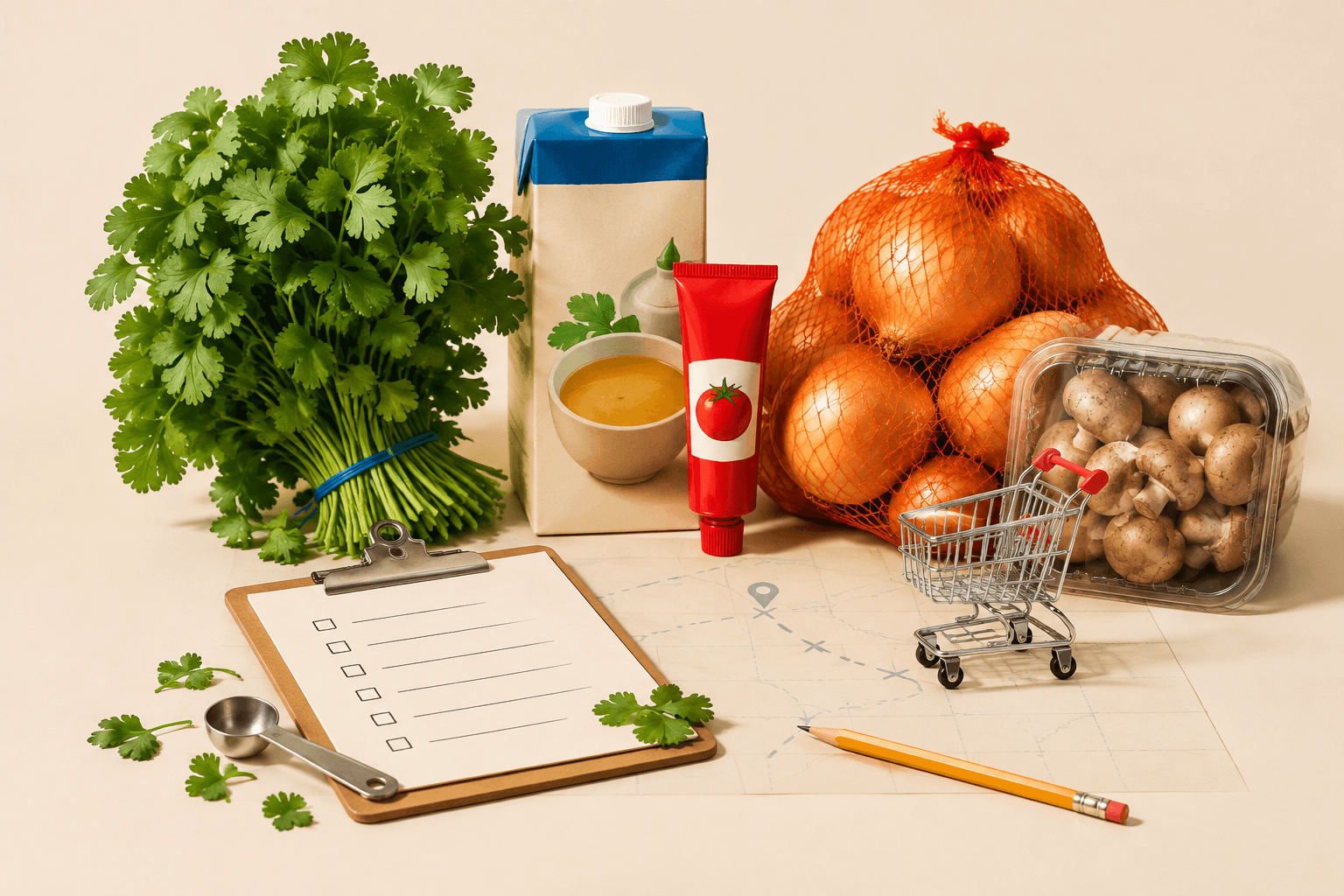
Build your list from the meals first. Write down every ingredient, then combine duplicates and compatible items. Two recipes requiring onions means onions belong on the list once. If one recipe uses spinach and another can use it without turning into a completely different dish, put spinach in the overlap column.
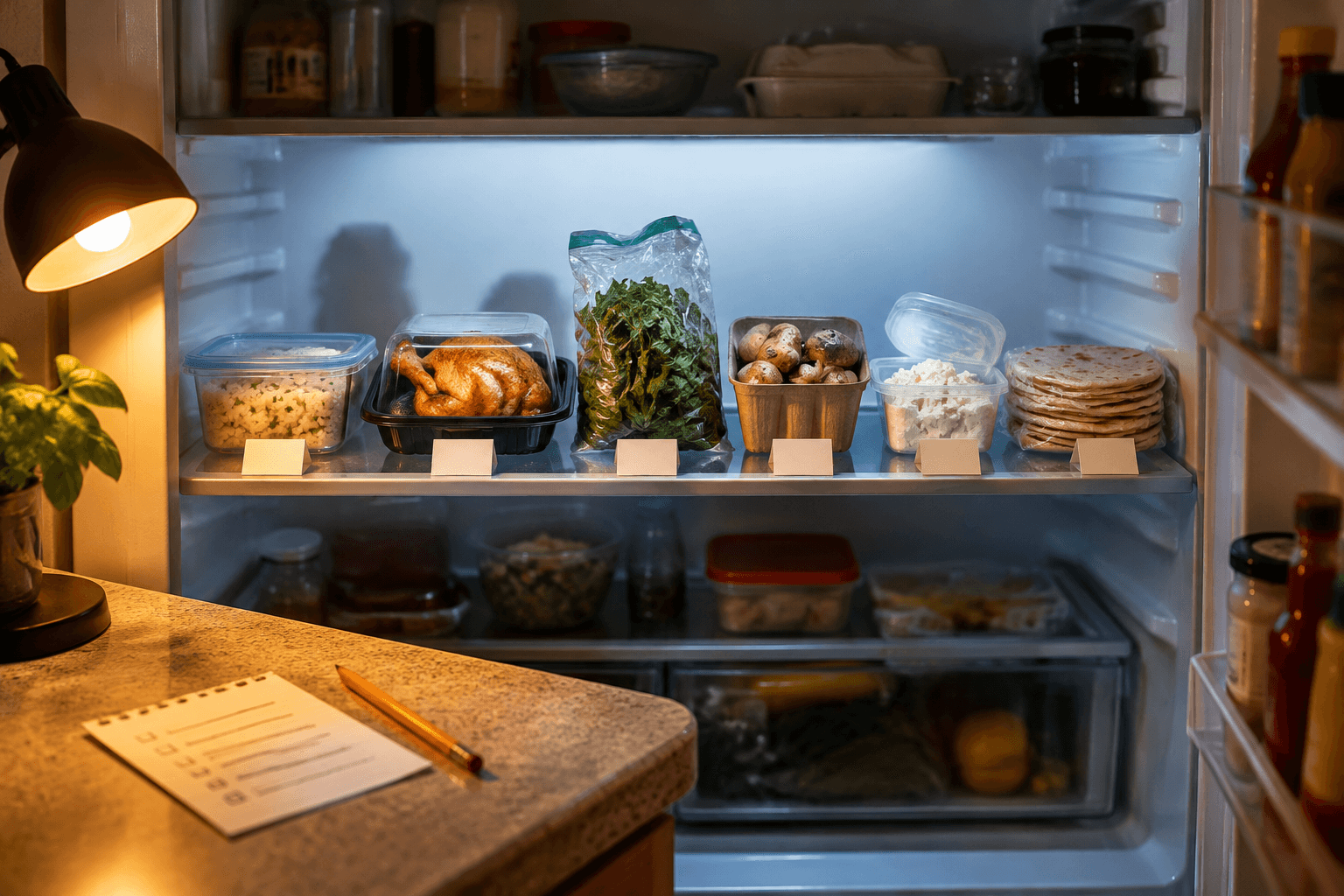
Keep a tiny note beside fragile ingredients with their assignment:
- spinach: pasta Tuesday, eggs Thursday
- mushrooms: grain bowls Wednesday, pizza Friday
- cilantro: tacos Monday, rice bowl Thursday
This takes about a minute and prevents the classic Saturday discovery of a bag of greens whose purpose has been lost to history.
If your recipes are scattered between browser bookmarks, screenshots, Instagram saves, and a note called “FOOD IDEAS!!!,” a recipe manager can make this part less administrative. Spiceful lets you save your own recipes, put chosen saved recipes onto a meal plan, generate grocery items from that plan, and consolidate duplicate ingredients. It helps assemble a list from meals you already picked. The app is not choosing your dinner or peering into your pantry like a tiny culinary surveillance drone.
Plan leftovers as meals, then handle them safely
Leftovers can make shopping for one or two much easier, provided they are actual scheduled food and not just a container labeled “maybe.” Put them on the plan: Tuesday dinner becomes Wednesday lunch, or cook a meal that deliberately creates a freezer portion for a later low-energy night.
Food safety is less flexible than meal planning. According to the USDA Food Safety and Inspection Service, properly handled cooked leftovers should be refrigerated within 2 hours, or within 1 hour when temperatures are above 90°F. USDA advises using refrigerated leftovers within 3 to 4 days or freezing them for later use.
Those are safety guidelines, not vibes. Smell and appearance can tell you that food has become unpleasant, but they cannot reliably confirm that it is safe. Follow package labeling and local guidance for specific products, and use FoodKeeper for item-specific storage guidance when you need it.
The goal is not a flawless, zero-waste refrigerator run by an elite operations team. Buy the food your week can actually support, give the vulnerable ingredients a second job, and let the tiny package win when the enormous one has no future. Parsley deserves better than refrigerator archaeology. So do you.
Ready to tame the chaos? Build your recipe book.
- Save recipes from anywhere
- Turn ingredients into one tidy list
Start free. No credit card needed. Upgrade anytime.