How to Freeze Leftovers So Future You Knows What to Do With Them
A practical system for portioning, cooling, packaging, and labeling leftovers so your freezer holds actual future meals instead of mysterious ice bricks.
The Spiceful Team
You made too much chili. Congratulations, you have solved dinner for a future version of yourself.
Now comes the part where many leftovers enter the freezer under a fake identity: one large container, a vague date, and no clue whether its destiny is lunch, nachos, or being discovered during a lease renewal in 2029.
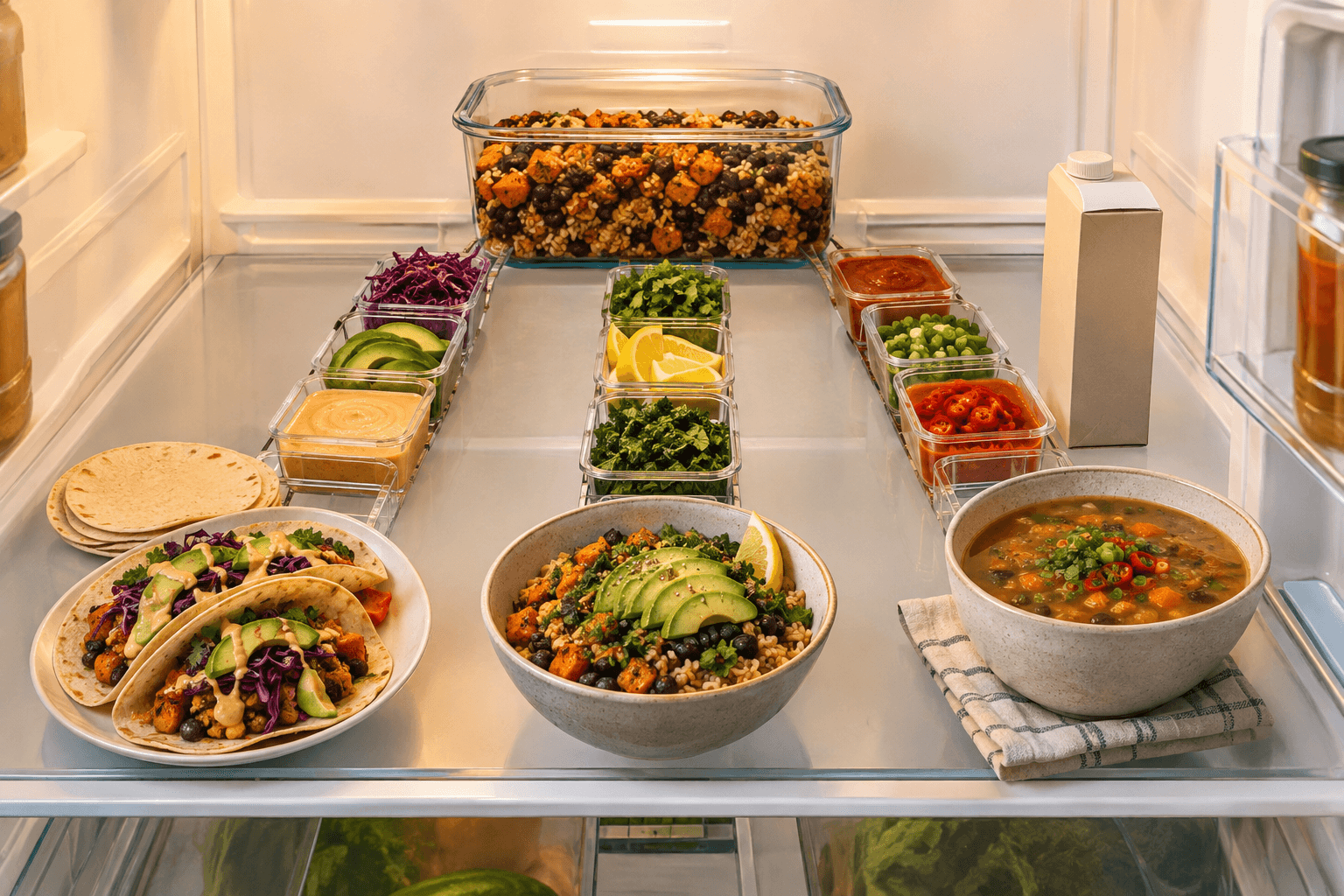
Freeze leftovers with a job attached. The useful unit is not “some food.” It’s one lunch, taco filling for dinner, two cups of sauce for pasta, or a soup portion for the night you cannot emotionally open another recipe website.
That tiny bit of planning changes everything about the container you choose, how much you freeze, and whether you’ll actually use it.
Start with the next likely meal
Before reaching for a bag or container, decide how this food will most likely get used. Pick the boring, realistic answer. You do not need to imagine an aspirational future in which you assemble grain bowls at 7:15 a.m. before Pilates.
A few useful examples:
- Chili: freeze two bowls together for a low-effort dinner, or one bowl for a work lunch.
- Pasta sauce: freeze about enough for a two-person pasta night, rather than one family-size red iceberg.
- Shredded chicken or cooked beans: portion enough for tacos for your household.
- Soup: freeze a single serving if lunch is the plan, or enough for a dinner if that is more likely.
- Cooked rice: package it in the amount you’d actually serve alongside a stir-fry or curry.
- Roasted vegetables: separate portions for future grain bowls, omelets, or whatever meal eventually defeats the zucchini.
A portion does not have to mean one serving. It means one future use. That distinction saves you from thawing six servings of soup because you wanted one bowl while standing in socks at noon.
Cool it promptly, without turning the counter into a waiting room
Perishable leftovers should be refrigerated or frozen within 2 hours of cooking. If the air temperature is above 90°F, that window drops to 1 hour. Those are food-safety limits, not a challenge to see how long the lasagna can “rest.” USDA FSIS
For a large amount of food, divide it into shallow containers so it cools more quickly. This is especially helpful for big pots of soup, chili, beans, or sauce. Spreading food into thinner layers gives the cold a better shot at doing its job.
Do not wait for leftovers to become completely cold on the counter before refrigerating or freezing them. The freezer is not a witness-protection program for food that spent too long hanging out at room temperature. Freezing does not reset the clock on leftovers that have already exceeded the recommended time out.
If food has been left out beyond the applicable time limit, discard it. Smelling it, inspecting it intensely, or taking one “tiny safety bite” will not provide a reliable answer. USDA specifically advises against tasting food to determine whether it is safe. USDA FSIS
Match the package to the food’s future

There is no universal best freezer container. Anyone claiming otherwise has either never frozen soup or owns a suspiciously spacious freezer.
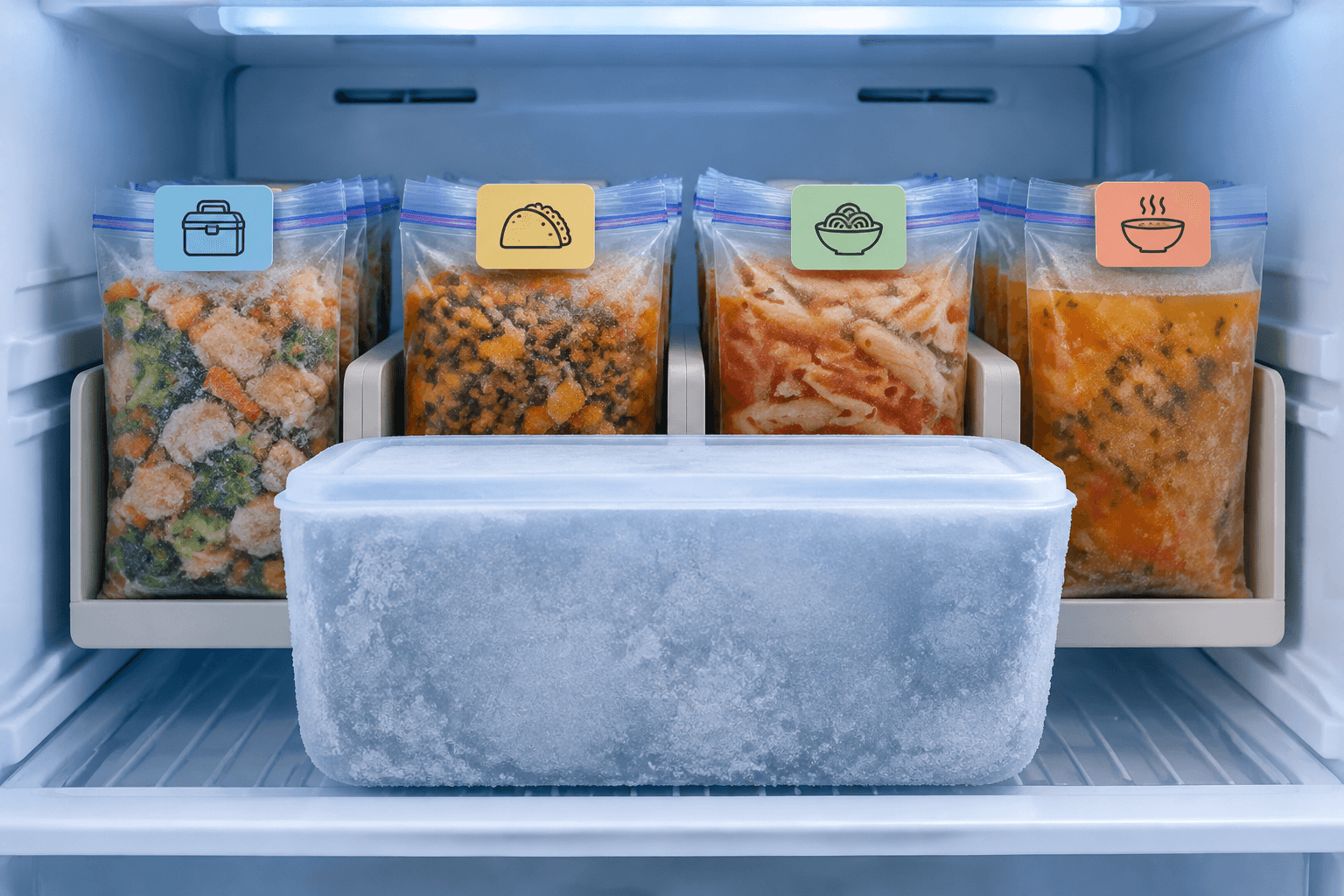
Flat bags are great for sauces, soups, and loose cooked foods
Freezer bags work well for foods that can spread into a flat layer, such as tomato sauce, chili, soup, cooked beans, or shredded meat with a little sauce. Press out as much air as practical, seal the bag, and freeze it flat on a tray or shelf.
Flat packages stack neatly and thaw more evenly than a frozen food boulder. Once solid, you can stand them up like very unglamorous files in a cabinet.
Liquids expand as they freeze, so leave some room in the bag or container rather than filling it to its absolute limit. The same rule applies to rigid containers. Your freezer does not need a sauce eruption scene.
Small containers make ready-to-eat portions easier
Use small freezer-safe containers for things you expect to grab whole: one serving of soup, a lunch-sized casserole portion, rice and beans, or a component you want to reheat without moving it elsewhere first.
They are also handy for foods that would get squashed or leak their way out of a thin bag. Just leave headspace for foods that expand as they freeze, and use a lid that fits properly.
Freeze individual pieces separately when you need flexibility
Meatballs, cooked dumplings, roasted vegetable pieces, cookie dough portions, sliced cooked chicken, and similar separate items can be frozen in a single layer on a tray first. Once frozen, transfer them to a bag or container.
This is often called flash freezing. It keeps everything from joining together into one frozen committee meeting, so you can take out only the amount you need later.
Texture after freezing and thawing varies by food. Sauces, soups, cooked beans, and many braises often handle it well. Delicate vegetables, creamy emulsions, and crisp things may come back with different vibes. That is a quality issue, not necessarily a safety one.
Label like you’re writing directions for a tired stranger
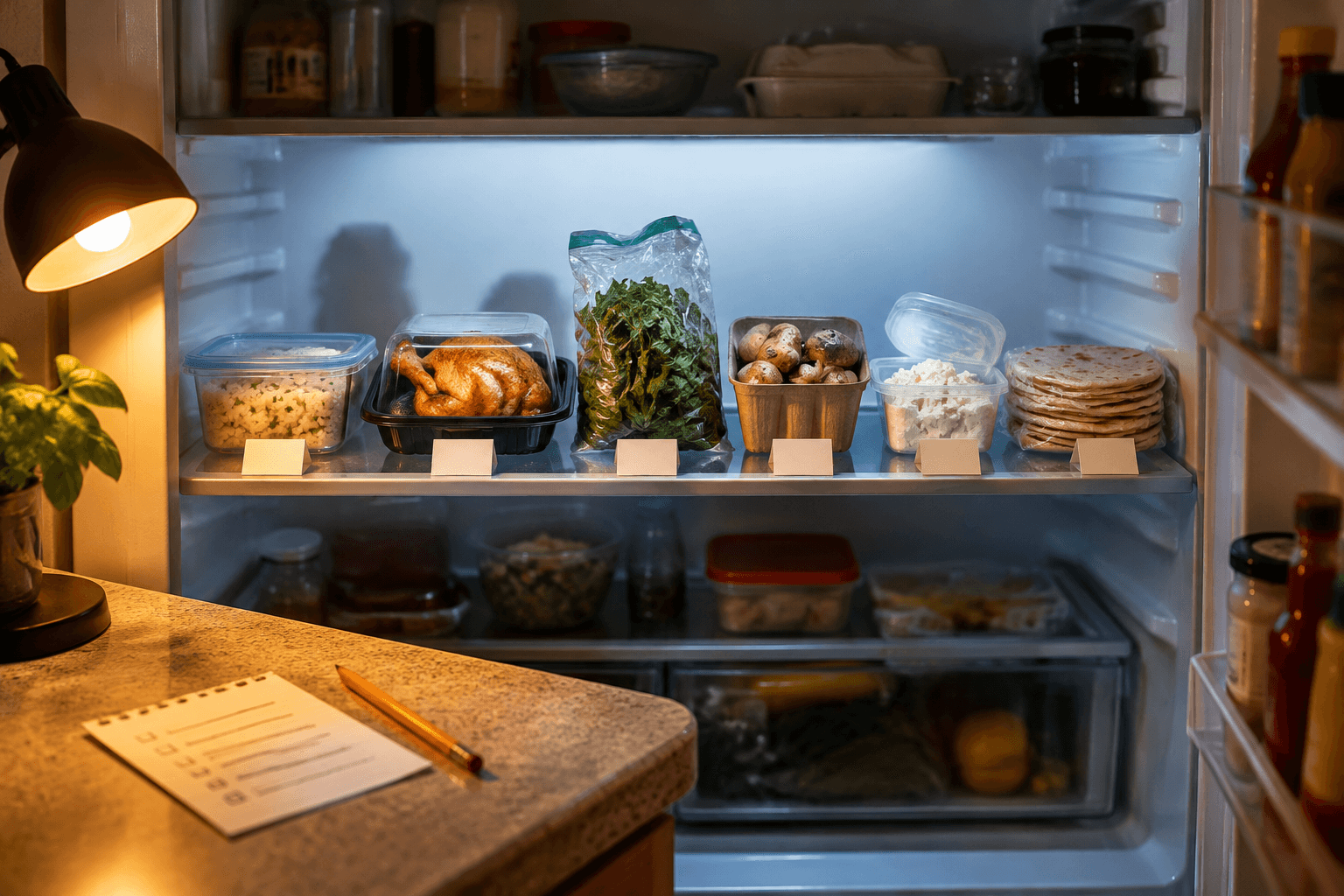
Technically, you are. That stranger is Future You, who will be squinting into the freezer after a day that involved email.
Write four things on every package:
- What it is
- How much is in it, or how many portions
- The date it was frozen
- Its intended use
Use this template:
[Food] | [amount or portions] | frozen [date] | for [meal/use]
For example:
Chili | 2 bowls | frozen Feb. 14 | baked-potato night
Tomato sauce | 2 cups | frozen Feb. 14 | pasta for two
Shredded chicken | taco dinner for 4 | frozen Feb. 14 | Tuesday tacos
Lentil soup | 1 lunch | frozen Feb. 14 | office lunch
The food name and date help identify and rotate what you have. The amount and intended use are your own organizational upgrade. They answer the two questions that matter at 6:40 p.m.: “Is this enough?” and “What was I planning to do with this?”
“Red stuff, maybe?” is not a label. It is a cry for help.
Keep air out, but don’t make it a whole personality
Freezer burn happens when the surface of food dries out from exposure to air. It can leave food dry, tough, or discolored. It is a quality problem, not an automatic sign that food is unsafe. USDA FSIS
Practical prevention is fairly unglamorous:
- Use freezer-appropriate bags or containers.
- Press excess air out of bags before sealing.
- Seal containers well.
- Avoid keeping food in flimsy, poorly wrapped packaging for the long haul.
You do not need to achieve the vacuum seal of a NASA experiment. Reduce air exposure as much as you reasonably can, label the food, and move on with your life.
Safety and quality run on different clocks
USDA recommends using refrigerated leftovers within 3 to 4 days. For frozen leftovers, USDA gives 3 to 4 months for best quality. USDA FSIS
That freezer window is about quality. Food kept continuously frozen at 0°F or below remains safe indefinitely, although flavor and texture can decline over time. USDA FSIS
So a five-month-old container of soup is not automatically a safety emergency because it crossed a calendar line. It may simply be less exciting than it once was. Frozen food does not become immortal in the glamorous sense. It becomes technically safe but increasingly prone to tasting like it has been through something.
When it’s time to use it
USDA recognizes three safe ways to thaw frozen leftovers: in the refrigerator, in cold water, or in the microwave. Food thawed in cold water or the microwave should be cooked or reheated promptly. USDA FSIS
This is where purpose-first portioning pays off. A bag labeled “2 cups, pasta for two” tells you exactly what to thaw. No guesswork, no thawing an entire stockpot because Past You packed dinner like a cryptic riddle.
If you save the original recipe somewhere searchable, it is easier to remember what that frozen sauce or cooked component was meant to become. Spiceful can save and organize your recipes, so when “taco chicken” resurfaces three weeks later, you can find the recipe and pick up where you left off. The freezer still cannot track itself, sadly. It has enough going on.
Ready to tame the chaos? Build your recipe book.
- Save recipes from anywhere
- Turn ingredients into one tidy list
Start free. No credit card needed. Upgrade anytime.