Why Your Onions Are Steaming Instead of Browning, and How to Fix It
Pale, watery onions usually need more room and better evaporation, not maximum heat. Learn how pan size, batch size, stirring, salt, and timing affect browning.

The Spiceful Team
Your onions are steaming because they’ve released more water than your pan can evaporate right now.
That’s the diagnosis. The cure is usually less dramatic than cranking the burner until the smoke alarm starts a podcast: uncover the pan, give the onions more room, let the liquid cook away, then manage the heat once actual browning can begin.
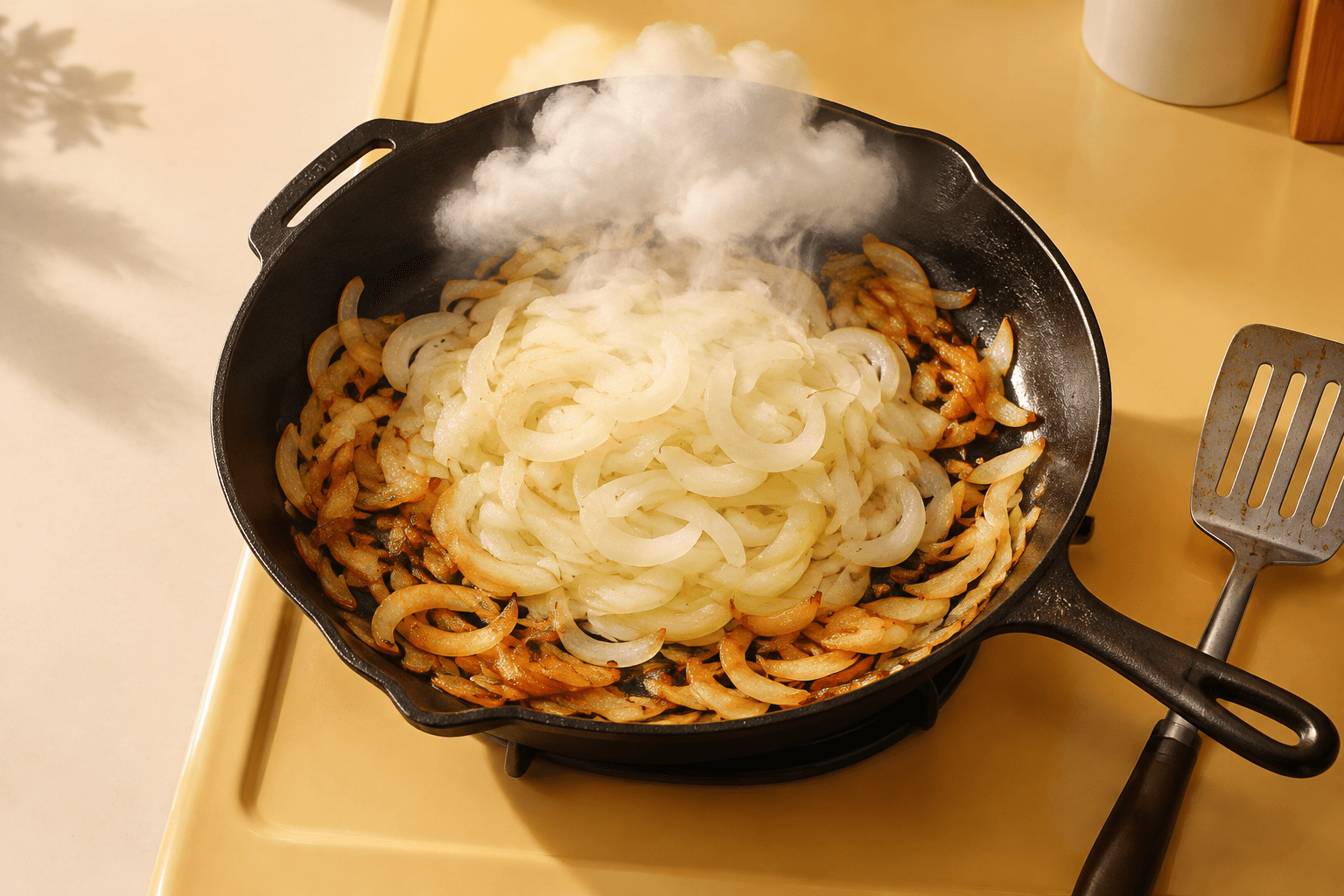
Raw onions contain a lot of water, which is why a generous pile of sliced onions can turn a skillet into pale, onion-scented weather. While that moisture is actively evaporating, much of the pan’s heat is busy dealing with water. A wet surface is reluctant to develop the dry, hot contact points that produce brown color and roasted flavor. USDA FoodData Central lists water as the main component of raw onion, and the basic physics checks out: as water boils away, incoming heat is being used for evaporation rather than simply raising the temperature. Exploratorium explains the principle here.
So before you fix anything, decide what you actually want from the onions.
Pick the onion outcome before judging the pan
“Cook until caramelized” has become one of those recipe instructions that can mean almost anything, like “season to taste” or “be normal in a group chat.” These are different jobs:
Softened or sweated onions are tender and translucent, with little or no color. They’re useful when you want their sweetness and aroma in a soup, sauce, stuffing, or rice dish without browned flavor taking over.
Sautéed onions with some browning are soft with golden edges and a more savory taste. This is often what a quick weeknight recipe actually means, even when it throws around the word “caramelized” with reckless abandon.
Deeply browned, jammy onions are very soft, dark golden to brown, and intensely sweet-savory. This is the slow project. A recipe claiming a full batch reaches that point in five or ten minutes is probably describing softened onions, lightly browned onions, or a minor miracle it has declined to document.
All three are good. The trouble starts when you want one result but use instructions meant for another.
First aid for a wet, pale pan of onions
If your onions are sitting in visible liquid and looking stubbornly blond, work through this sequence:
- Take off the lid. A lid is excellent at trapping steam because that is basically its entire thing.
- Spread the onions out. Use the broadest practical layer. If they’re heaped in the middle, move them outward.
- Keep cooking until most visible liquid is gone. The pan may sound fairly quiet during this stage, especially if there’s a lot of onion liquid.
- Once the onions are sizzling more actively, adjust the heat upward if needed. Medium to medium-high is often the useful zone, but your stove, pan, onion quantity, and level of kitchen chaos all matter.
- Stir and scrape periodically. You want contact with the pan long enough for color to form, without letting one patch become a tiny charcoal exhibit.
If the outer edges are browning rapidly while the center is still wet, don’t simply turn up the heat. Spread the onions, reduce the batch, or move to a wider pan. More heat can speed evaporation, but it can also turn the onions touching the pan into bitter confetti while the rest are still poaching.
Your pan may be the problem, and it has geometry
Four onions piled into a small saucepan will behave like a braise before they behave like a sauté.
A wide skillet gives onion moisture more exposed surface and more access to the air. A narrow, deep pot holds the same steam over a smaller area, especially when full. The onions on top are releasing liquid onto the onions below, everybody is crowded, and the pan is now hosting a very damp convention.
A deep pot can still make deeply browned onions. It may just take longer and require more attention. When speed or even browning matters, use a wide skillet or divide the onions into batches. This is often more effective than playing stove-dial roulette.
Pan material and burner strength matter too, but they’re secondary to the big, visible issue: can the moisture escape as quickly as the onions release it?
Read the pan instead of worshipping a heat setting

There is no magic burner number. “Medium” on one stove can be “surface of the sun, but make it rental-apartment electric” on another.
Use cues:
- Quiet, wet, and pale: evaporation is still the job. Keep the pan uncovered and give it time. A little more heat may help if nothing is scorching.
- Active sizzling, shrinking onions, brown patches appearing: browning has begun. Let onions sit briefly between stirs so they can make contact with the pan.
- Darkening too fast at the edges: lower the heat, spread the onions out, and stir more often.
- Acrid smoke or black residue: the pan is too hot for the amount of attention it’s getting. Reduce heat and scrape promptly.
Browning reactions are favored by hot, relatively dry surfaces, which is why onions tend to color after their released liquid has mostly cooked off. Serious Eats’ overview of the Maillard reaction is useful background if you enjoy knowing why dinner is doing what it’s doing. In everyday cooking, “caramelized onions” is a convenient umbrella term, though several overlapping changes contribute to their color and flavor.
Stirring is a control, not a full-time job
Constant stirring can make it harder for onions to develop sustained pan contact. Leaving them untouched until you remember them during the next calendar quarter is worse.
Give the onions a little time against the pan. Then stir and scrape before the browned bits go too far. As the pan gets drier and the onions get darker, they’ll need more frequent attention. This is especially true with a large batch, a thin pan, or a burner that seems personally offended by vegetables.
The goal is a repeating cycle: contact, color, stir, scrape, repeat. Not a meditative ritual. Not a hostage situation.
Salt is a factor, not the villain
Salt can draw moisture from onion cells, so salting early may make the wet phase more obvious at first. If you’re trying to get browned onions moving along, waiting to salt until they’ve softened and some liquid has evaporated is a reasonable tactic.
It is not a universal law etched into a kitchen tablet.
Onions still contain water whether you salt them early or late. Browning depends heavily on batch size, pan shape, heat, evaporation, and cooking time. If a huge pile of onions is packed into a narrow pot, delayed salt will not arrive on horseback to save the day.
For dishes where soft, tender onions are the goal, early salt can be perfectly sensible. For quicker browning, hold it back for a while. That’s the whole tradeoff.
Brown fond is flavor. Black fond is a warning label.
Fond is the browned material that sticks to the pan. Brown fond can be delicious. Stir or scrape it back into the onions, or add a small amount of an appropriate liquid if the dish calls for it and you want to loosen those browned bits.
Black residue is different. It usually brings bitterness, and the smell shifts from savory to acrid. Lower the heat. Scrape before it spreads its influence through the entire pan like a bad manager. If only a few spots are getting too dark, moving the onions around and adding a splash of suitable liquid can help loosen them, depending on the dish.
A pan does not need to look pristine for onions to be browning well. It does need to avoid looking like it lost a fight with a campfire.
For the next batch
Keep this version in your head:
- Use a wide pan when you can.
- Cook a manageable amount, or work in batches.
- Leave the lid off.
- Let released moisture evaporate before expecting serious color.
- Use enough heat to keep things moving, then lower it if onions or fond are heading toward black.
- Stir periodically, with more attention as the pan dries and darkens.
- Save patience for the deeply browned, jammy version. It is a longer project because the water has to leave before the good brown stuff can really get going.
If a saved recipe merely says “caramelize the onions” and provides no clue which result it wants, edit the note for Future You. Spiceful lets you edit recipes in your personal library, which is handy when Past Recipe Writer has chosen vagueness as a lifestyle.
Ready to tame the chaos? Build your recipe book.
- Save recipes from anywhere
- Turn ingredients into one tidy list
Start free. No credit card needed. Upgrade anytime.