Meal Planning Has Dependencies: How to Plan Dinner Backward
Plan dinners around thawing, soaking, rising, marinating, and intentional leftovers. This practical backward-planning method helps dinner survive contact with a real week.

The Spiceful Team
Dinner has a due date. Unfortunately, some dinners also have homework.
A meal can look perfectly reasonable on a weekly plan: chicken on Tuesday, bean stew on Thursday, pizza on Saturday. Then Tuesday arrives, the chicken is a frozen brick, the beans are dry little pebbles, and the pizza dough has not begun its yeasty emotional journey.
The fix is not a full Sunday meal-prep production involving 17 matching containers and one increasingly hostile sink. Plan each meal with an eat time, a last possible start time, and any earlier action it depends on.
Call it a dependency map if that helps. Call it “a note so I do not get ambushed by dinner” if that feels more honest.
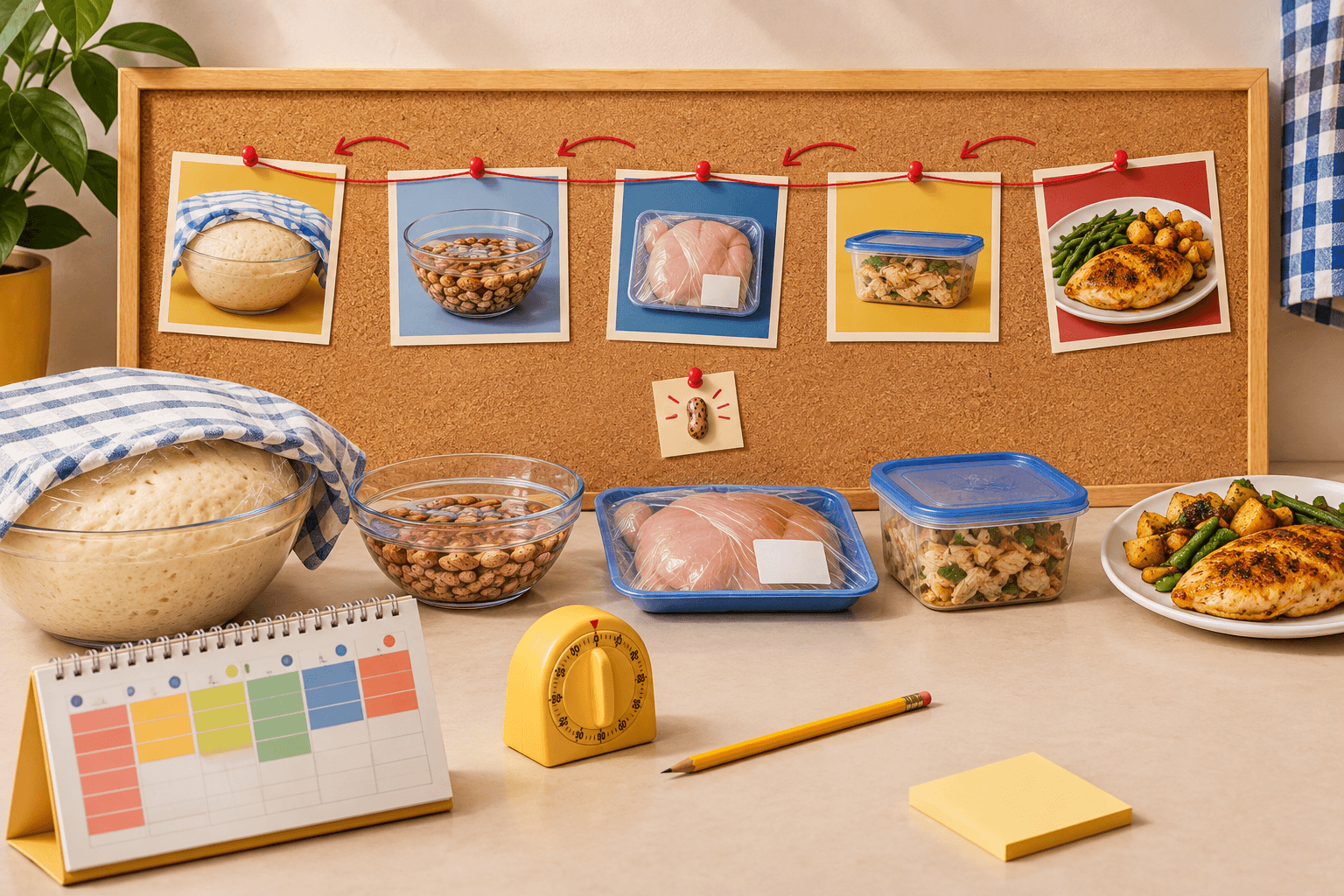
Start with the meal, then walk backward
Put the meal where it belongs first: the day and approximate time you expect to eat it.
Then read the whole recipe, including the parts recipe websites sometimes tuck beneath an ad for orthopedic shoes. Look for anything that must happen before cooking can begin:
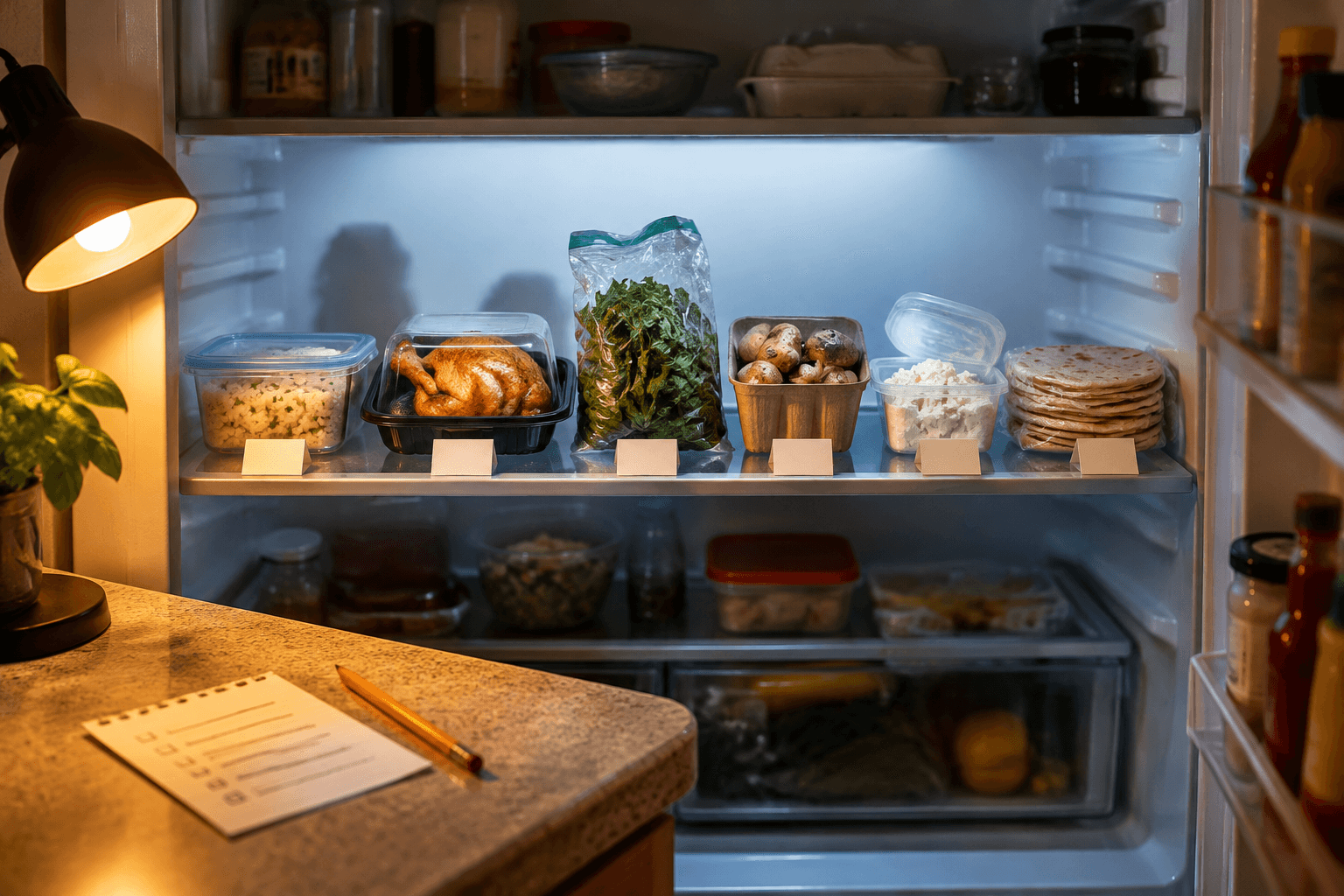
- thawing frozen ingredients
- soaking dried beans or grains
- proofing or chilling dough
- marinating or chilling when the recipe requires it
- cooling a cooked component before packing it for later
- reserving part of one dinner for a later meal
This is where active time and total lead time part ways. A dish may need 25 minutes of chopping and cooking but still require a refrigerator thaw the day before. Bread may involve little hands-on work while claiming several hours of your life in small, oddly spaced installments.
For every meal, ask:
If I want to eat this at 7 p.m., what is the last thing that must happen before I can start cooking?
Then ask what needs to happen before that. Keep working backward until the chain ends.
Write actual calendar actions, not foggy aspirations such as “prep beans.” Try: Wednesday after dinner: start soaking beans according to the recipe. Or: Tuesday after dinner: move chicken from the freezer to the refrigerator for Wednesday.
That is a plan. “Deal with chicken somehow” is a cry for help.
A small dependency map for a real-ish week
This is an illustrative schedule, not a tested recipe plan and certainly not a command from the Dinner Police.
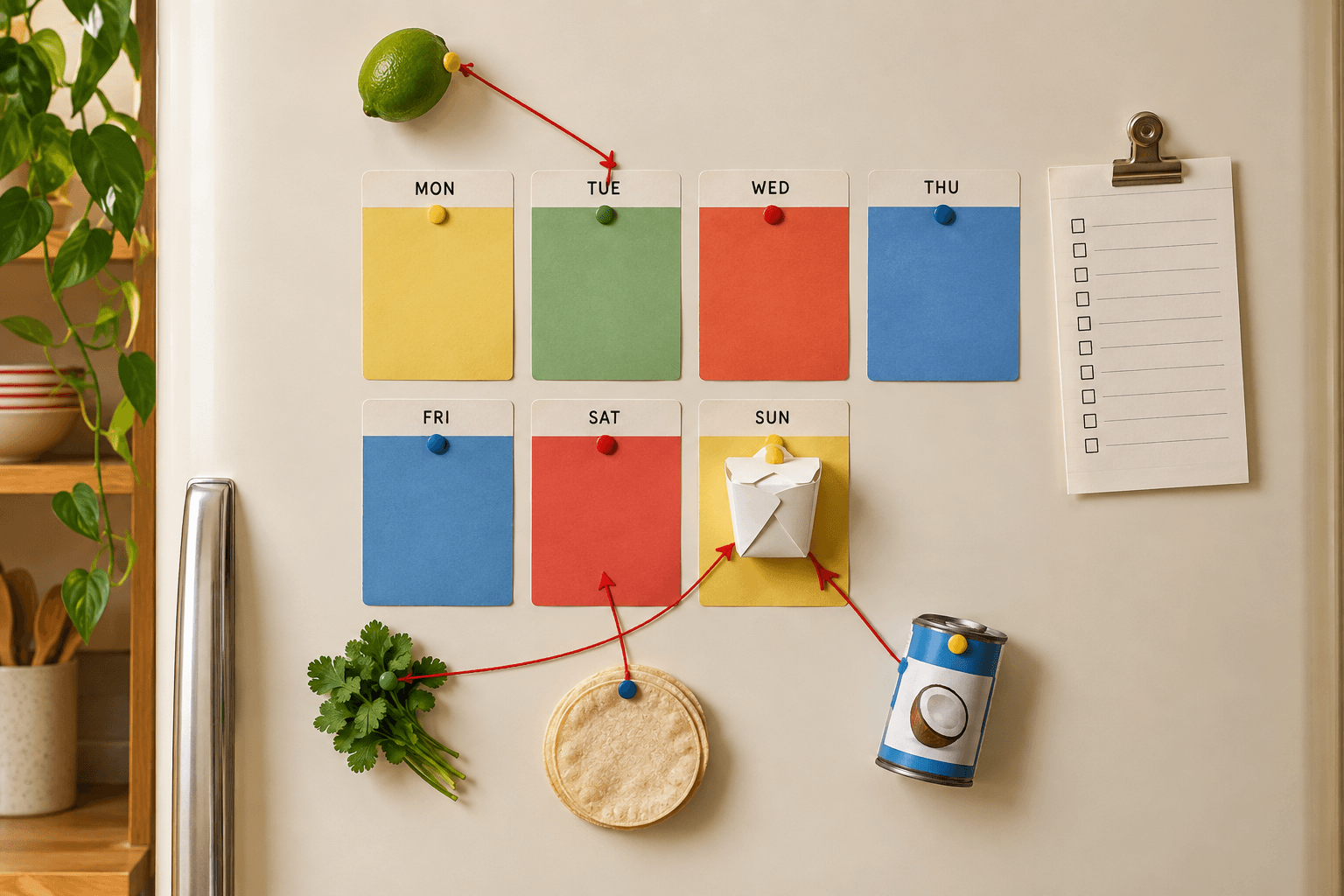
| Meal | When you want to eat | What has to happen earlier |
|---|---|---|
| Monday: chicken dinner | Monday, 7 p.m. | Buy fresh chicken, or make sure frozen chicken was thawed safely before cooking begins. After dinner, reserve a portion for Wednesday and refrigerate it promptly. |
| Tuesday: flex meal | Tuesday, 7 p.m. | Very little. Choose something you can make from ingredients already available. |
| Wednesday: chicken sandwiches | Wednesday, 7 p.m. | Use Monday’s reserved chicken only if it was handled and refrigerated properly. Buy bread and sandwich ingredients with Wednesday in mind. |
| Thursday: dried-bean stew | Thursday, 7 p.m. | On Wednesday evening, soak beans if the chosen recipe calls for soaking. Follow that recipe’s timing. |
| Saturday: homemade pizza | Saturday, 7 p.m. | Check the dough recipe. It may need time to rise, chill, or both. |
The plan contains more than dinners. It contains handoffs between versions of you.
Monday-you cooks extra chicken and makes Wednesday’s portion unmistakable. Otherwise, a container of mystery poultry becomes a refrigerator interrogation. Wednesday-you gets sandwich filling without cooking chicken on a weeknight.
That example falls within the USDA’s general three-to-four-day refrigerated-leftover window only if the chicken was handled and refrigerated properly. Calendar math is useful. It is not a food-safety certification program.
Put prerequisite actions on the day they need to happen
A meal plan might say “Thursday: bean stew.” The dependency map adds the line that prevents Thursday from becoming Survivor: Pantry Edition.
Serving event
- Thursday, 7 p.m.: bean stew
Last possible start point
- Thursday, 6 p.m.: begin cooking, based on the recipe’s instructions
Earlier prerequisite
- Wednesday after dinner: start soaking beans, if required by the recipe
- Grocery day: buy dried beans and anything else needed for the dish
Use the same approach for a marinade, a chilled custard, a loaf that needs proofing, or a casserole that needs to cool before you pack leftovers. Recipes vary, so use the instructions for the specific recipe. There is no universal marinating, soaking, or rising timeline that can govern every dish.
Write down the action future-you could plausibly forget. “Own a pot” does not need a reminder. “Move frozen chicken to the refrigerator” does.
Give unpredictable nights low-dependency meals

Some evenings are bad candidates for dinner with preconditions. Maybe you have a late meeting, a long commute, or a brain that has left the chat by 4:30 p.m.
Put a flex meal there. It could be pantry pasta, eggs on toast, frozen dumplings, or another simple dinner you can make with ingredients you intentionally keep around. It should be able to move to another night without causing a logistical domino collapse.
Reserve long-lead meals for days when you can reasonably do their setup. A Saturday bread project has a better chance than a Thursday bread project if Thursday is when you arrive home carrying 14 grocery bags, one dead phone, and an existential dislike of yeast.
Leave some space in the week, too. A few planned meals plus a flex option beats a seven-day schedule that assumes you operate like a minor European railway system.
If you miss a prerequisite, swap before you improvise
You forgot to thaw the chicken. The beans did not soak. The dough never got started. Irritating, but fixable if you stop trying to force the original plan.
Make the flex meal tonight and move the dependent recipe to a later day, provided the ingredients are still in good condition and you can complete the prerequisite in time. Some recipes include their own alternatives, such as a quick-soak method or a same-day dough version. Follow those instructions instead of inventing a workaround at 6:12 p.m. while staring into the middle distance.
For frozen food, USDA recognizes three safe thawing methods: in the refrigerator, in cold water, or in a microwave. Refrigerator thawing is easiest to schedule. Food thawed in cold water or a microwave should be cooked immediately afterward, according to USDA. Do not thaw food on the counter, even if the counter has been emotionally supportive during hard times. USDA’s thawing guidance explains the methods and timing requirements.
Some missed prerequisites have no tidy rescue. An overnight process may mean tomorrow’s dinner instead. That is the plan absorbing reality, not a personal failure.
Plan leftover chains like ingredients
Intentional leftovers work best when the later meal is decided before the first one is cooked.
If Monday’s chicken is for Wednesday sandwiches, buy the bread and other sandwich ingredients on the grocery trip. Do not assume the chicken will transform into lunch while you have one wilted scallion and a jar of pickles from 2022.
Make the handoff visible:
- Monday: cook enough chicken for dinner plus Wednesday sandwiches.
- Monday after dinner: reserve Wednesday’s portion and refrigerate it promptly.
- Wednesday: use that portion only if it was handled and stored properly.
USDA advises refrigerating perishable leftovers within two hours, or within one hour when temperatures are above 90°F. Refrigerated leftovers should generally be used within three to four days, and leftovers should be reheated to 165°F. Smell and appearance cannot establish whether food is safe. If you do not know how long it sat out or how it was handled, discard it. See USDA’s leftover guidance for the full details.
Quality and safety are separate parts of the plan. A leftover can be within a general storage window and still be a poor match for the later meal. Crisp foods soften. Some roasted vegetables become less roasted and more philosophically tired. Build leftover chains around components that suit the second use.
Let the grocery list follow the timeline
The grocery list is part of the dependency map.
Buy long-lead ingredients early enough for their required step. A frozen ingredient needs to be in the freezer before its scheduled thaw. Beans need to be in the house before soaking night. Perishables supporting a leftover chain need an actual use date.
A plain note is enough:
- Chicken: Monday dinner, reserve for Wednesday
- Bread: Wednesday
- Beans: soak Wednesday evening for Thursday
- Pizza ingredients: Saturday
Once you have the manual method down, a recipe manager can keep the serving schedule in one place. Spiceful lets you put saved recipes on a meal-plan calendar and generate grocery items from that plan, with compatible duplicate ingredients consolidated where appropriate. The Free plan supports planning up to seven days ahead, while Premium supports up to 90 days. Put the dinners on the calendar there, then use your usual phone reminders, paper planner, or highly judgmental sticky note for prerequisite actions. Spiceful does not automatically track those dependencies or send prerequisite reminders.
You do not need a Gantt chart for lentils. You need to notice that Wednesday’s meal began on Monday, then give Monday-you one small, specific job.
Ready to tame the chaos? Build your recipe book.
- Save recipes from anywhere
- Turn ingredients into one tidy list
Start free. No credit card needed. Upgrade anytime.