How to Build a Weekly Meal Rotation Without Eating Tacos Every Tuesday Forever
Build a flexible meal rotation from dinners you already like, with room for leftovers, busy nights, takeout, seasonal changes, and the occasional cereal dinner. The goal is fewer dinner decisions, not a rigid seven-day schedule.

The Spiceful Team
Dinner does not need to be a fresh creative challenge every night. You are allowed to make the pasta everyone likes again. You are allowed to know what Wednesday dinner is before Wednesday arrives. You are even allowed to have a fallback meal involving frozen dumplings and a sauce packet that has seen things.
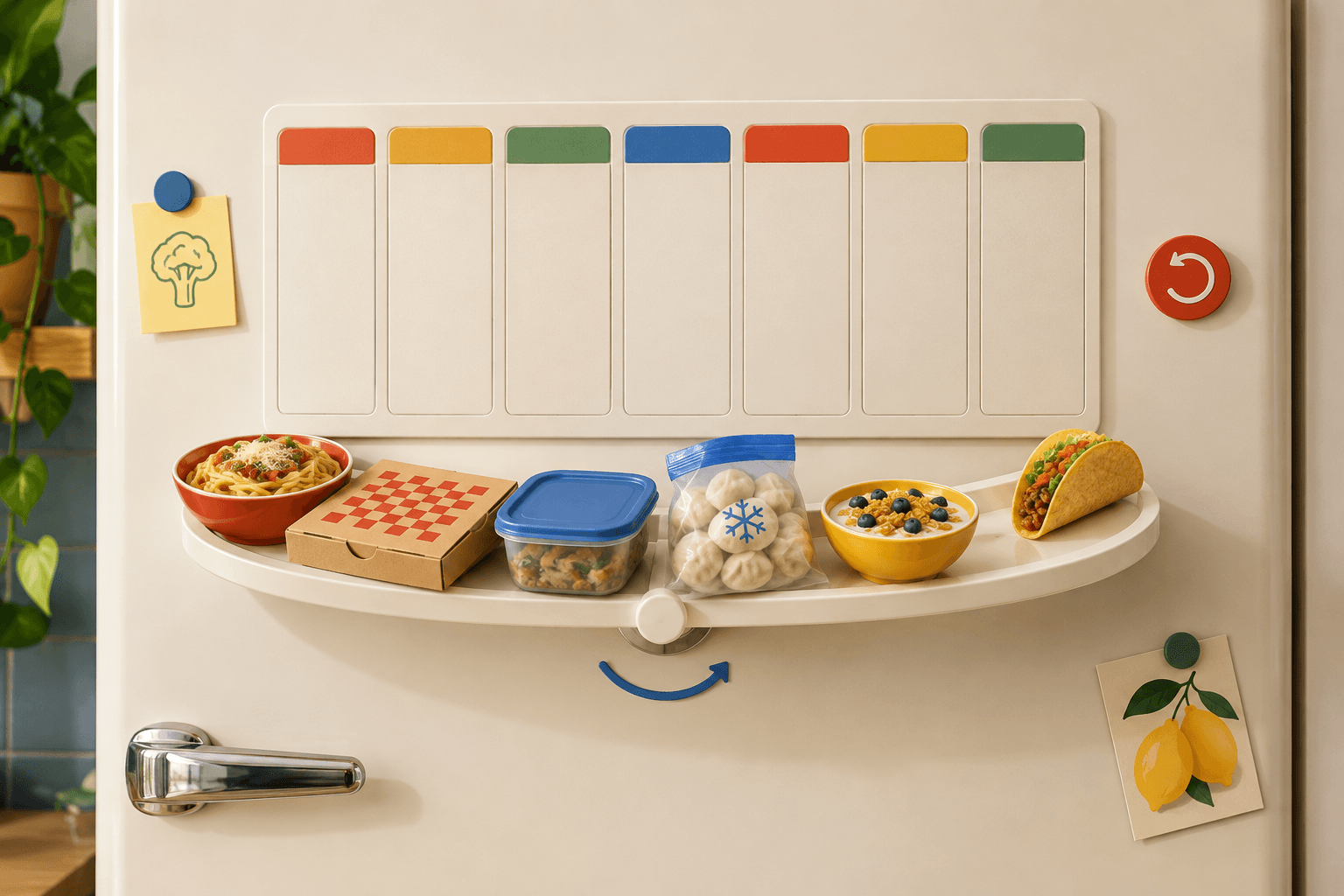
A weekly meal rotation is a reusable pool of meals your household actually enjoys and can realistically pull off. You choose from that pool as the weeks go by. It is not a seven-day menu carved into a stone tablet, where Tuesday must remain Taco Tuesday until the sun consumes the earth.
The point is to spend less time staring into the refrigerator like it has personally betrayed you.
Think repertoire, not a tiny restaurant menu
Your meal rotation is your repertoire: meals you know, like, and can make without needing a full operational briefing.
Some will be anchor meals, the dependable ones that fit a recurring situation. Maybe Friday means pizza, Sunday means something that makes leftovers, and the night after late meetings means eggs on toast, noodles, or whatever your personal version of “I cannot chop an onion today” looks like.
Others can be broad rotation slots rather than exact recipes:
- a pasta night
- a bowl situation
- soup, salad, or sandwich night
- something from the freezer
- a meal you are trying for the first time
That flexibility matters. “Tacos” can mean black bean tacos, fish tacos, crispy potato tacos, or a vaguely taco-shaped bowl because you forgot tortillas. A theme is a prompt, not a legally binding agreement with ground beef.
There is no correct number of meals to keep in rotation. A household that cooks most nights, loves leftovers, and has two adults with incompatible schedules will build a different system from a person who cooks three times a week and considers cereal a valid dinner, as they should.
Start with enough options that dinner does not feel like a hostage situation. Add more only when you actually want them.
Build your first rotation from dinners that already work
Do not begin by finding 30 exciting new recipes. That is how you end up with a board full of ambitious noodle projects and no plan for Thursday.
Start with a rough inventory of meals you have already made and would willingly make again. Look in your browser bookmarks, notes app, screenshots, old grocery lists, and the part of your brain that wakes up whenever someone mentions sheet-pan chicken.
For each meal, give it a loose label based on real life:
| Label | What it means |
|---|---|
| Fast | Works on a busy night with minimal chopping, dishes, or emotional negotiations |
| Comforting | The meal people request when the week has been rude |
| Leftover-friendly | Makes enough for another meal, if that suits your household |
| Cheap enough | Fits your usual grocery budget often enough to be useful |
| Company-worthy | You would make it when someone else is eating with you |
| Seasonal | Better in cold weather, hot weather, tomato season, soup season, or whatever climate nonsense is happening where you live |
You do not need a spreadsheet unless spreadsheets genuinely bring you joy. A scruffy note is fine.
Then pull together a week that reflects your actual schedule. For example, a week might include a fast anchor meal for the late night, one meal with enough food to carry into another day, an open night, and one optional new recipe for when your brain wants a little plot development.
That is a model, not a required lineup. If leftovers do not happen in your home because everyone eats like a competitive swim team, skip that slot. If you cook enthusiastically on weekends and barely function on Tuesdays, build around that.
Leave blank space on purpose
The most useful meal plans have escape hatches.
Reserve an open night when it makes sense. It can absorb leftovers, a spontaneous invitation, takeout, a meal that went further than expected, or the profound realization that nobody is cooking tonight. This is planning for reality, which has a habit of entering the room uninvited.
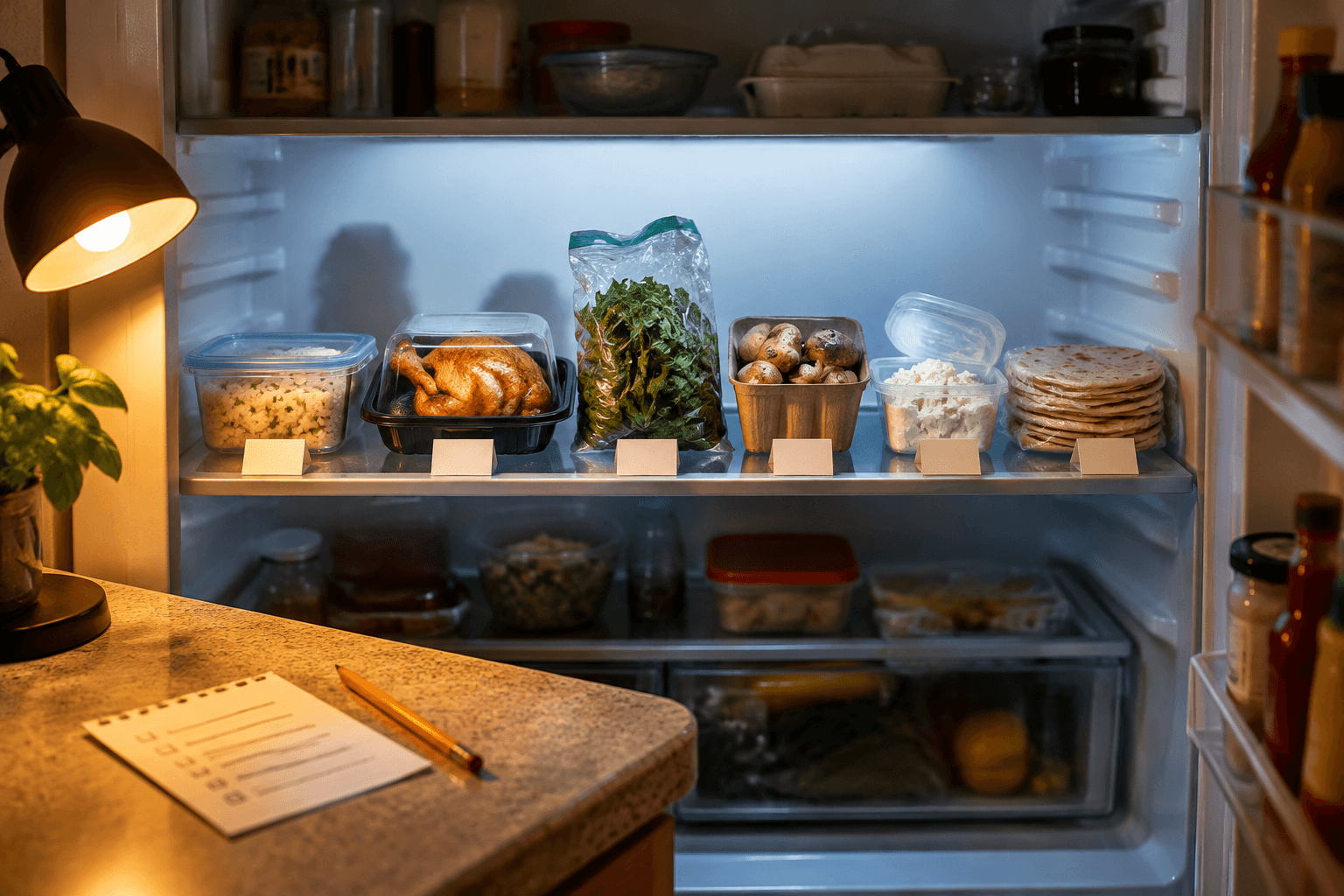
Keep a fallback meal around too. A fallback is different from an aspirational pantry recipe involving 14 shelf-stable ingredients you technically own but cannot locate.
A good fallback is low effort and reliably available to you. It might be:
- frozen dumplings with a quick vegetable
- pasta with jarred sauce
- eggs, toast, and fruit
- canned beans on rice
- a rotisserie chicken situation
Pick foods you actually want to eat on a hard day. “Emergency lentils” are only useful if you will eat the emergency lentils.
Repeat the format, change the details

Boredom usually arrives when dinner feels identical, not simply familiar. You can repeat a meal format while shifting the ingredients enough to keep it from becoming a household enemy.
A few ways to do that:
Change the filling. Tacos and wraps can cycle through beans, chicken, mushrooms, fish, roasted vegetables, or leftovers.
Change the sauce. The same noodles can go with tomato sauce one week, peanut sauce another, then a lemony vegetable situation after that.
Follow the season. Roast vegetables when you want something warm. Make big salads or grill when it is hot. Bring soup back when it sounds comforting again instead of forcing it into August because the calendar says Soup Monday.
Move meals around. A meal returning after a few weeks often feels pleasantly familiar. A meal appearing every Thursday because a template told you to may acquire the emotional atmosphere of a mandatory staff meeting.
Keep one curiosity slot. If trying new recipes is fun for you, give it a place in the rotation. If it is currently exhausting, there is no prize for culinary novelty. The internet will survive if you make your beloved chicken bowls again.
Review the rotation after you have lived with it
A meal rotation should get better by being used. After a few weeks, take ten minutes and ask practical questions:
- Did anyone actually want to eat this again?
- Was it manageable on the night you assigned it?
- Did the cost feel reasonable for your normal grocery budget?
- Did it make more food than you wanted, or less?
- Was the recipe annoying in a way you had conveniently forgotten?
Mark meals that earned repeat status. Retire the duds. A recipe can be delicious and still fail the weeknight test because it dirties every pan you own and begins with the phrase “marinate overnight.” Respectfully, it may be a weekend meal now.
Also let meals come back from retirement. A dish you are tired of in March may return triumphantly in October, wearing a tiny cape in your imagination.
Let the rotation make shopping easier
Known meals make grocery planning more concrete. Once you choose a few dinners, you can list their ingredients, estimate quantities from prior experience, and notice overlap before you buy three separate bags of spinach for recipes that only need half a bag each.
This does not mean your grocery bill will suddenly become a work of minimalist art. Prices change, plans change, and sometimes a recipe requires one highly specific condiment that costs $8.49 and then lives in the fridge behind the mustard. Still, choosing from familiar meals makes the shopping list less of a last-minute guessing game.
Check what you already have before shopping. Your rotation can suggest what to buy, but only you can know whether there is half a bag of rice in the cabinet or whether the garlic situation has become archaeological.
If you use a recipe manager, this is where it earns its keep. In Spiceful, you can save the meals that have made the cut into a searchable personal recipe library, then put the recipes you choose on a calendar-style meal plan. The plan can generate grocery items, and Spiceful can consolidate duplicate ingredients where appropriate. You still choose the meals and check your own kitchen, which is correct. An app should not be allowed to decide you are emotionally ready for lentil stew.
A Free Spiceful plan lets you plan up to seven days ahead. Premium extends the planning horizon to 90 days, for people who enjoy seeing future dinner in the distance like a lighthouse.
A good rotation gives you options before you are hungry. That is the whole trick. Keep the meals that make life easier, let the others drift away, and save room for cereal when cereal is the operational choice.
Ready to tame the chaos? Build your recipe book.
- Save recipes from anywhere
- Turn ingredients into one tidy list
Start free. No credit card needed. Upgrade anytime.