How to Make a Grocery List That Survives Contact With the Actual Store
Build a practical grocery list by planning meals, checking what you already have, combining compatible ingredients, and translating recipe quantities into the packages your store actually sells.

The Spiceful Team
A grocery list is not finished when you have copied every ingredient from every recipe.
It is finished when it has survived a look through the cupboards, a reality check about package sizes, and the fact that cilantro is sold by the bunch despite your recipe requesting “a few leaves.”
Recipes speak in cooking quantities. Stores speak in cans, bags, jars, bunches, and whatever carton size happens to be on the shelf. That gap is where people buy three jars of tomato paste, forget toilet paper, and come home with enough parsley for a small parade.
The method works on paper, in a phone note, or in an app.
1. Start with what you actually plan to make
Choose the meals for the period you are shopping for, then add other household needs. That might mean a week of dinners, a few days of lunches, or simply the ingredients for taco night.
Check the servings on each recipe before adding ingredients. If you are doubling chili, cooking for fewer people, or planning for leftovers, adjust the quantities now. Shopping from the original recipe and doing the math beside the canned beans is a reliable way to buy more beans than anyone emotionally needs.
The USDA MyPlate and FDA both support the basic sequence of planning meals, checking what you already have, and making a list. It works because recipes do not know that you already own half a bottle of soy sauce.
2. Check the kitchen before adding anything
Look through the pantry, refrigerator, freezer, and wherever your household keeps backup snacks. You do not need a museum-quality inventory system. Check the items connected to the meals you chose.
For example:
- If a recipe needs 1 cup of broth, look for an open carton first.
- If it needs 2 tablespoons of tomato paste, check for a tube or opened can before buying more.
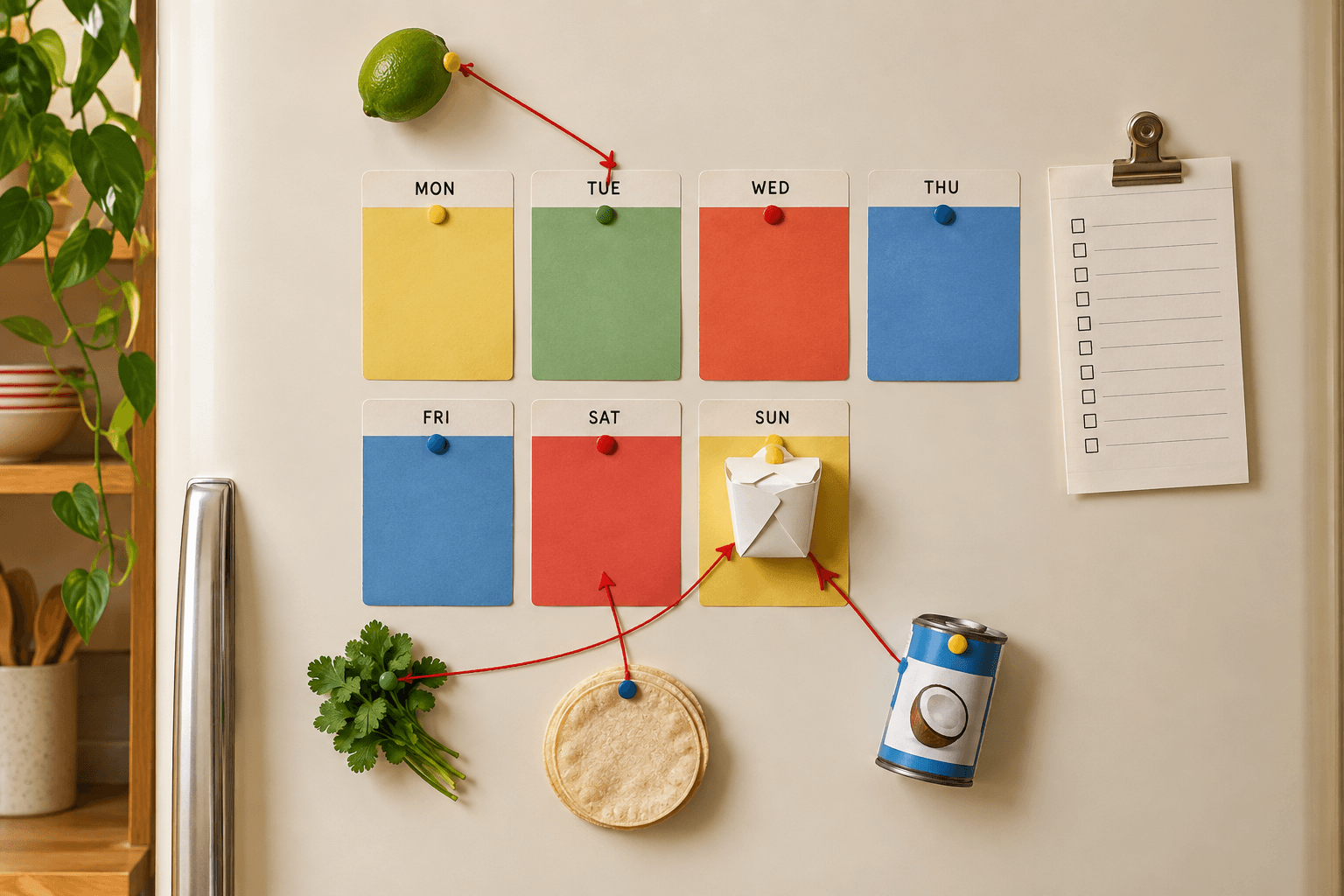
- If it needs a lime, inspect the fruit bowl. The object in there may be a lime, or it may have entered a different chapter of its life.
Add what is missing. Cross off what you have enough of. If you are unsure, write “check cumin” instead of automatically buying another jar. A small note is cheaper than discovering three duplicate spice jars during a cupboard cleanout.
3. Combine duplicates carefully
Once ingredients from several recipes are on the page, combine identical items where it makes sense.
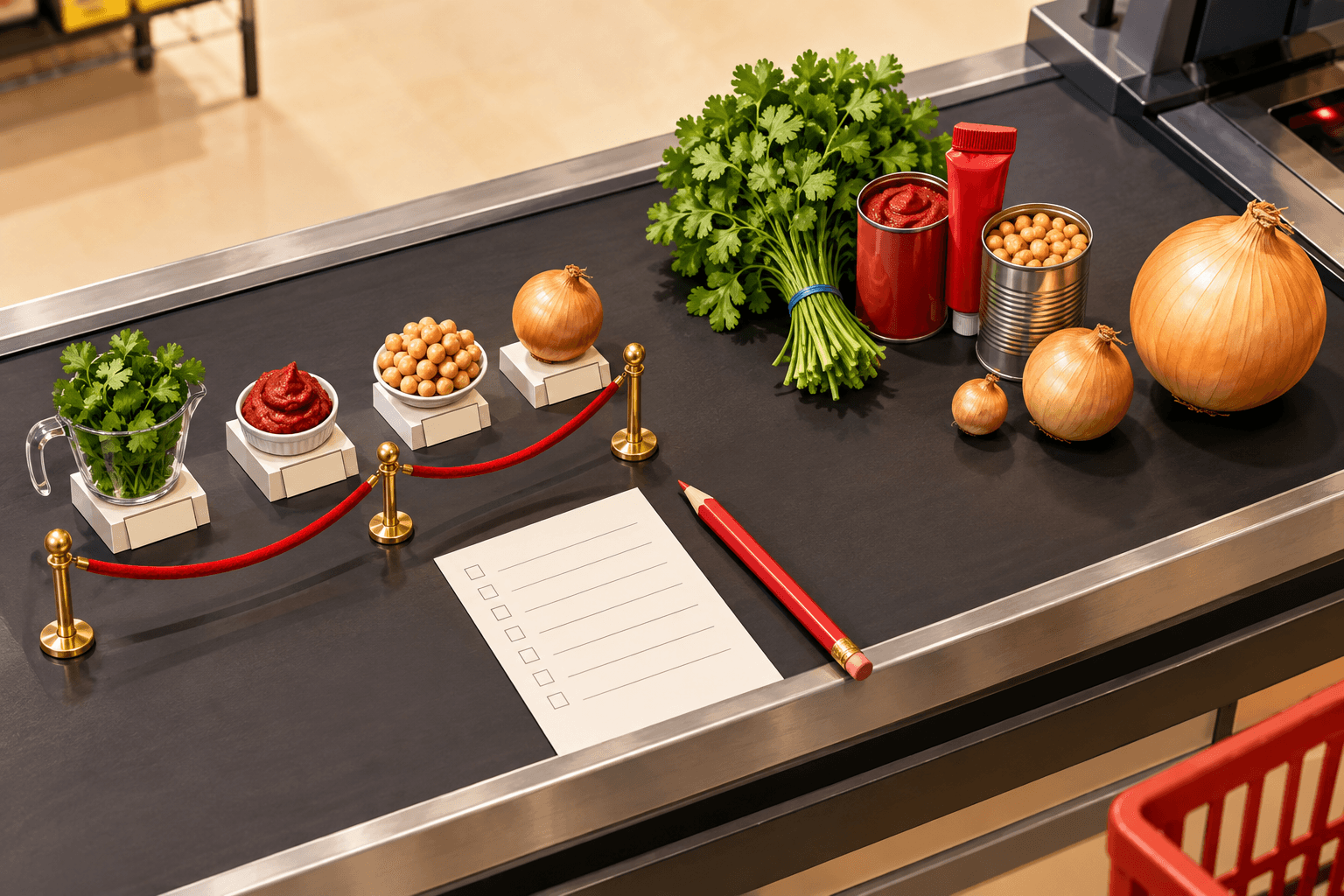
Two recipes that need one onion each can become “2 onions.” Half a cup of shredded cheddar plus another cup can become “1½ cups shredded cheddar.” The goal is one useful shopping instruction instead of several scattered lines.
Pause when two ingredients look similar but may serve different purposes:
- Fresh garlic and jarred minced garlic are different purchase decisions.
- Crushed tomatoes, diced tomatoes, and tomato paste are not interchangeable by default.
- Plain Greek yogurt and sour cream may work as substitutes in some recipes, but the list should not make that decision without checking the recipe.
- “Parmesan” could mean a wedge for grating or a container of pre-grated cheese.
Consolidation is helpful. It is not a permission slip to merge anything with a vaguely similar name.
4. Translate recipe quantities into purchases

This is the step many grocery-list guides skip. It is also the part that makes a list usable.
A recipe quantity is what the recipe asks you to cook with: 2 tablespoons, 1 cup, 3 cloves, or half an onion.
A purchase quantity is what the store sells: a tube, can, carton, bunch, bag, tub, or package.
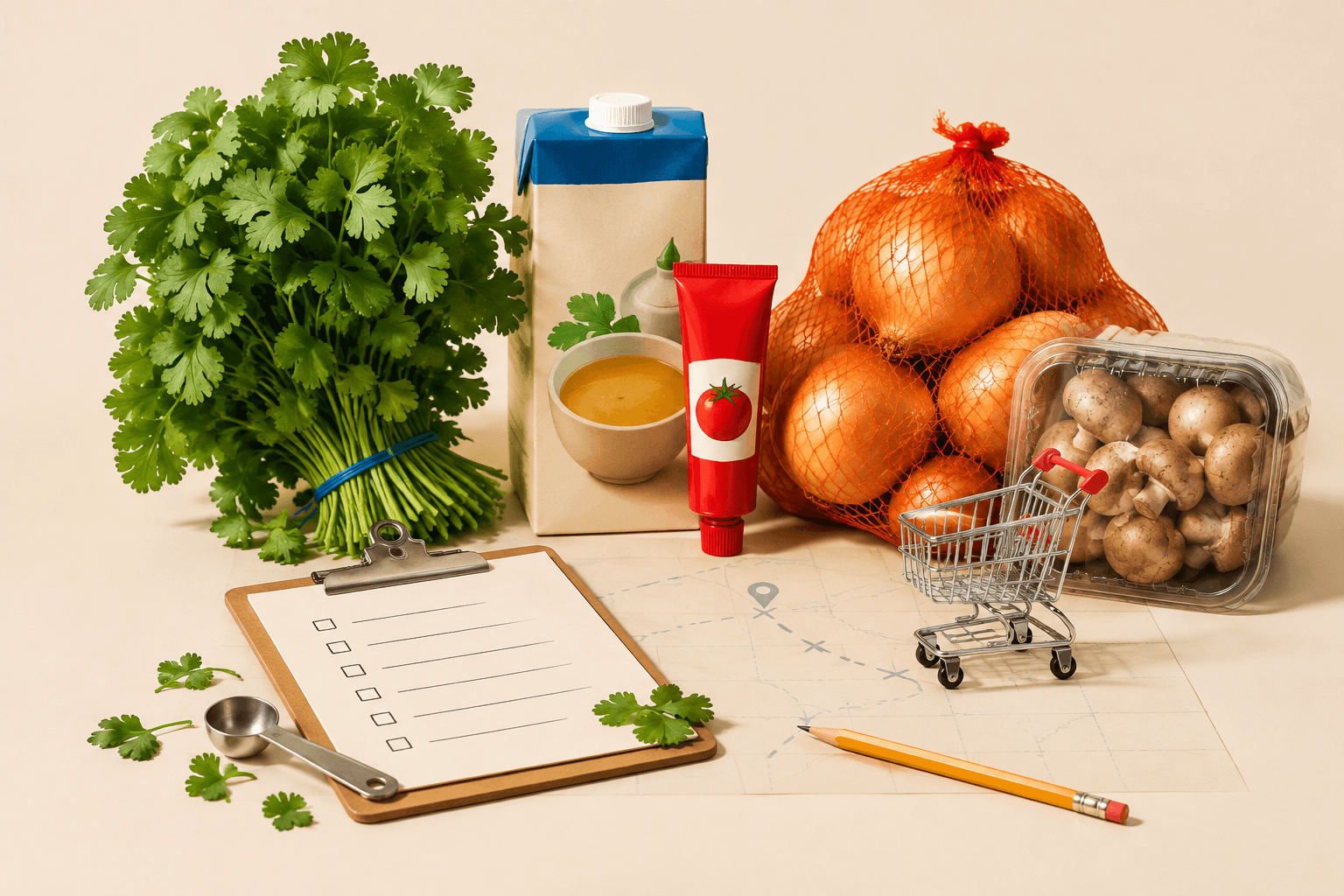
The USDA Food Buying Guide, although designed for child nutrition programs rather than Tuesday-night home cooking, illustrates the distinction between food needed for a dish and food purchased in market units. Yield and package format matter. Your store may sell herbs in large bunches, broth in several carton sizes, and mushrooms in containers that look designed for a much larger dinner than yours.
For each item, ask: What will actually go in the cart?
Tomato paste
The recipe needs 2 tablespoons. The store may offer a tube, a small can, or a larger can. Choose based on this week's other meals, how often you use tomato paste, and whether you want an opened package left over. The recipe quantity helps you judge the purchase. It does not choose the package for you.
Cilantro
The recipe asks for half a bunch or a small handful. The store sells one bunch because produce has its own legal system.
Write “1 bunch cilantro,” then decide whether you have another use for the rest. A note such as “smallest bunch” or “skip if expensive” can be more useful than pretending the store sells exactly three leaves.
Broth
The recipe calls for 1 cup. Your store may sell several carton sizes, and you may already have some at home. Write a purchase instruction such as “small carton vegetable broth” if that reflects what you expect to buy. If another broth would work for the recipe, note that as a possible substitute rather than assuming all broth choices are identical.
Produce
Produce measurements are often approximate in practice. “One medium zucchini” sounds precise until the store presents you with a zucchini large enough to require its own parking space.
Use the recipe amount as a starting point, then consider the size and purpose of what is available. “2 to 3 zucchini” may be more useful than hunting for the theoretical perfect medium zucchini. For greens and herbs, choose the smallest practical package if you do not have another use planned for the rest.
5. Add notes for flexible items
A good list leaves room for store reality. An ingredient may be unavailable, more expensive than expected, or sold only in a format you do not want to keep around.
Useful notes include:
- “Any canned white beans”
- “Smallest tub”
- “Whole milk or half-and-half”
- “Skip if over my budget”
- “Frozen is fine”
- “Preferred brand if available”
These notes turn a minor shopping obstacle into a decision you already made at home, rather than a full courtroom drama in aisle seven.
6. Keep a personal replenishment list
Recipes cover meals. They do not remember dish soap, coffee filters, dog food, toothpaste, or the paper towels that disappeared during one ambitious bacon incident.
Keep a short list of things your household replaces regularly. The list should be personal, not a universal inventory of supposed essentials. One household needs coffee, oats, lunchbox snacks, sparkling water, and laundry detergent. Another needs rice, cat litter, and a very specific hot sauce. Both lists are fine.
Add these items separately from the recipe ingredients, then check whether they actually need replacing. A replenishment list should jog your memory, not issue commands.
7. Group the final list by your usual store route
Once the list is accurate, arrange it in roughly the order you shop. Use the route in your actual store, not an idealized supermarket map made by somebody who has never searched for tahini while holding a basket and losing the will to continue.
Your categories might look like this:
- Produce
- Bakery and deli
- Pantry aisles
- Dairy and refrigerated items
- Frozen
- Household goods
Another store may put dairy near the entrance and tortillas somewhere that suggests retail cartographers have given up. Follow the route you know. Grouping is a usability tool. It can make the list easier to scan, but it does not guarantee lower prices or prevent an impulse purchase involving a cartoon pickle.
The final review before you leave
Read the list once while standing in the kitchen if possible. Check:
- Servings: Did you adjust the recipes for the people and meals you intend to cover?
- What you have: Did you check the pantry, refrigerator, and freezer for enough of each item?
- Duplicates: Did you combine identical ingredients while keeping different ingredients separate?
- Packages: Does each recipe measure now point to a realistic can, carton, bunch, bag, jar, or package?
- Produce: Are the quantities sensible for how your store sells herbs, greens, fruit, and vegetables?
- Household items: Did you add the things recipes never mention?
- Notes: Did you record a possible substitute, preferred size, brand, budget limit, or “skip it” instruction where useful?
That review turns a pile of recipe fragments into a list you can actually use in the store.
If you use a grocery-list app
An app can speed up the assembly stage. Spiceful can add grocery items manually, add ingredients from saved recipes or meal plans, and consolidate grocery ingredients.
You should still review the result. Spiceful does not maintain pantry inventory, and it does not choose the right carton, jar, bunch, or package for your store and household. Check what you already own, confirm that consolidated ingredients really belong together, and make the final package decisions yourself.
The same workflow works without an app: plan the meals, check the kitchen, combine compatible ingredients, translate recipe quantities into purchases, group the list by your store route, and give it one honest final look. Then go buy the cilantro bunch you needed three leaves from.
Ready to tame the chaos? Build your recipe book.
- Save recipes from anywhere
- Turn ingredients into one tidy list
Start free. No credit card needed. Upgrade anytime.