Batch Cook Without Eating the Same Dinner Four Nights in a Row
A flexible batch-cooking method for small households: prepare a few useful components, branch them into different meals later, and store leftovers safely.
The Spiceful Team
Batch cooking has a public-relations problem. People hear it and picture a refrigerator full of identical gray containers, each holding Tuesday’s chili in a slightly different emotional state.
It can be that. It does not have to be.
For one or two people, the useful version is often component prep: make a few flexible things ahead, then stop before they become a fully committed dinner. Cooked rice, beans, roasted vegetables, and simply seasoned chicken can go in several directions. The trick is choosing a branch point, which is the moment you divide the shared base before sauces, toppings, and final assembly turn every portion into the same meal.
Tuesday-you may want tacos. Wednesday-you may suddenly require a bowl with something green and aggressively lemony. Leave room for both people. They are, unfortunately, the same person.
Cook the overlap, not four copies of dinner
Start by looking for the boringly useful overlap between meals you already want to eat.
Maybe it’s:
- roasted vegetables and beans
- a pot of rice or another sturdy grain
- plainly seasoned cooked protein
- a sauce or condiment that genuinely works in more than one meal
“Neutral” does not mean flavorless. It means the seasoning will not pick a fight with every possible next step. Roasted vegetables with oil, salt, pepper, and perhaps garlic can live happily in a taco, grain bowl, or brothy soup. Vegetables roasted in a very specific sticky barbecue glaze have already made their decision.
Batch-cooking complete meals works well if you adore that meal and know you’ll happily eat it again. There is nothing morally superior about variety. But if duplicate dinners make you feel like you’re trapped in a low-budget time loop, branch earlier.
The branch-late method
A simple version looks like this:
- Pick one or two shared components.
- Cook them simply enough to work in several meals.
- Portion the components before they become one finished dish.
- Keep the distinctive stuff separate until meal time.
- Finish each meal with one quick cooking or assembly move.
That last part matters. A branch should be short. If Thursday’s “easy finish” involves making a new sauce, chopping six vegetables, washing a pan, and finding the blender lid, you have invented a separate dinner project wearing meal-prep glasses.
My personal rule of thumb: if the later version needs more than roughly one quick cooking or assembly step beyond reheating, it probably does not belong in the batch plan. It may still be a great dinner. It just should not be allowed to pretend it is a five-minute favor from Sunday-you.
A realistic example: one base, three actual dinners
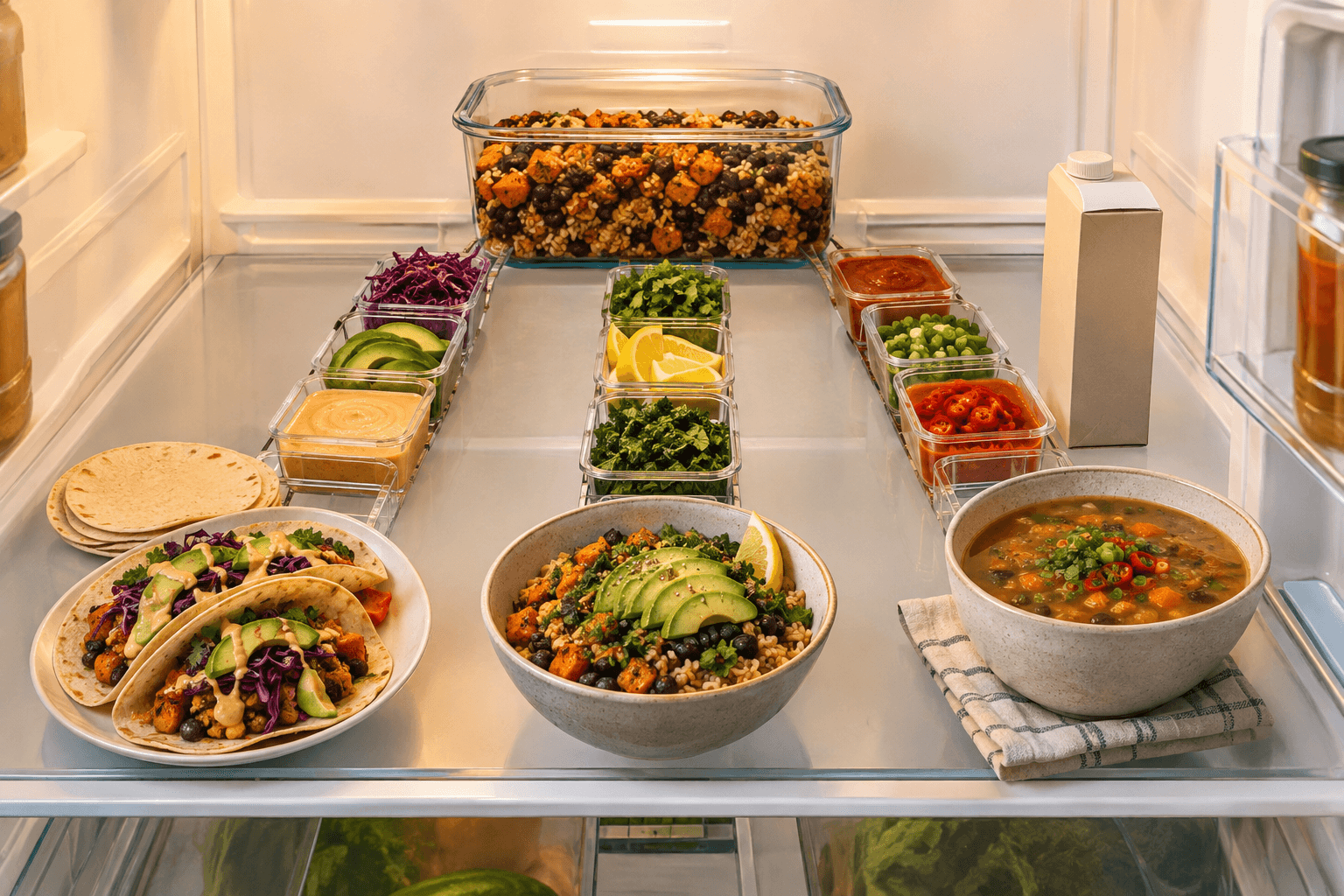
Say you roast a tray of vegetables and cook a batch of beans. Keep the seasoning flexible rather than locking everything into one cuisine. You might divide it like this:
Dinner one: grain bowls
Warm some vegetables and beans. Add cooked grain, a quick sauce or dressing, something crisp, and a fresh herb if you have one. This is an assembly meal, so it can be as low-effort as your Wednesday requires.
Dinner two: tacos
Warm another portion in a skillet with taco-friendly seasoning. Put it in tortillas with crunchy cabbage, salsa, avocado, or whatever toppings you actually enjoy. A tortilla changes the experience more than people give it credit for. It is edible set design.
Dinner three: brothy soup
Warm the remaining beans and vegetables in broth with any extra seasonings you like. Add a fresh finishing element near the end, such as herbs or a squeeze of acid. Serve with bread, rice, or something else that turns “soup” into “this counts as dinner.”
The shared base will still be recognizable. Nobody should claim otherwise. A bean is not going to become an internationally acclaimed character actor just because it got into a tortilla. But changing the format, seasoning, and texture can make a small batch feel far less repetitive.
Things that want to stay separate

Texture is usually the first thing meal prep throws under the bus.
Keep these apart until close to eating when you can:
- crisp garnishes, such as crushed chips or toasted nuts
- tender herbs
- acidic dressings
- fried or toasted elements
- crunchy vegetables
- anything creamy that was meant to be served right away
A dressed salad may be perfectly edible later, but it is likely to become a damp memoir of itself. Fried food softens. Toasted toppings lose their little moment. Herbs tend to look like they have received difficult news.
This is also why some meals resist branching. Casseroles, creamy pasta dishes, heavily dressed salads, delicate fried foods, and highly specific sauces are usually happier as finished meals you eat promptly, or as deliberate leftovers you already know you like.
There is no need to force every food into a modular system. Dinner does not need to become an airport lounge with interchangeable parts.
Do an honest labor check before you start
The method pays off when the base is truly shared. It gets silly when the plan requires a production calendar.
Roasting vegetables once and using them in three formats: good.
Making four unrelated sauces, two different proteins, homemade flatbreads, pickled onions, and a special topping for every night: you have booked yourself into a tiny unpaid catering job.
For a small household, one or two bases and a couple of fresh finishes is usually plenty. Plan meals that overlap on purpose. If tacos and grain bowls both use the same beans and cabbage, great. If one meal needs fennel pollen and the next needs an ingredient sold only in a tiny jar at the back of a specialty market, perhaps let those meals live separate lives.
Store the batch like you expect to enjoy it
A good plan has a pacing decision built in: which portions are for the next few days, and which ones should head to the freezer now?
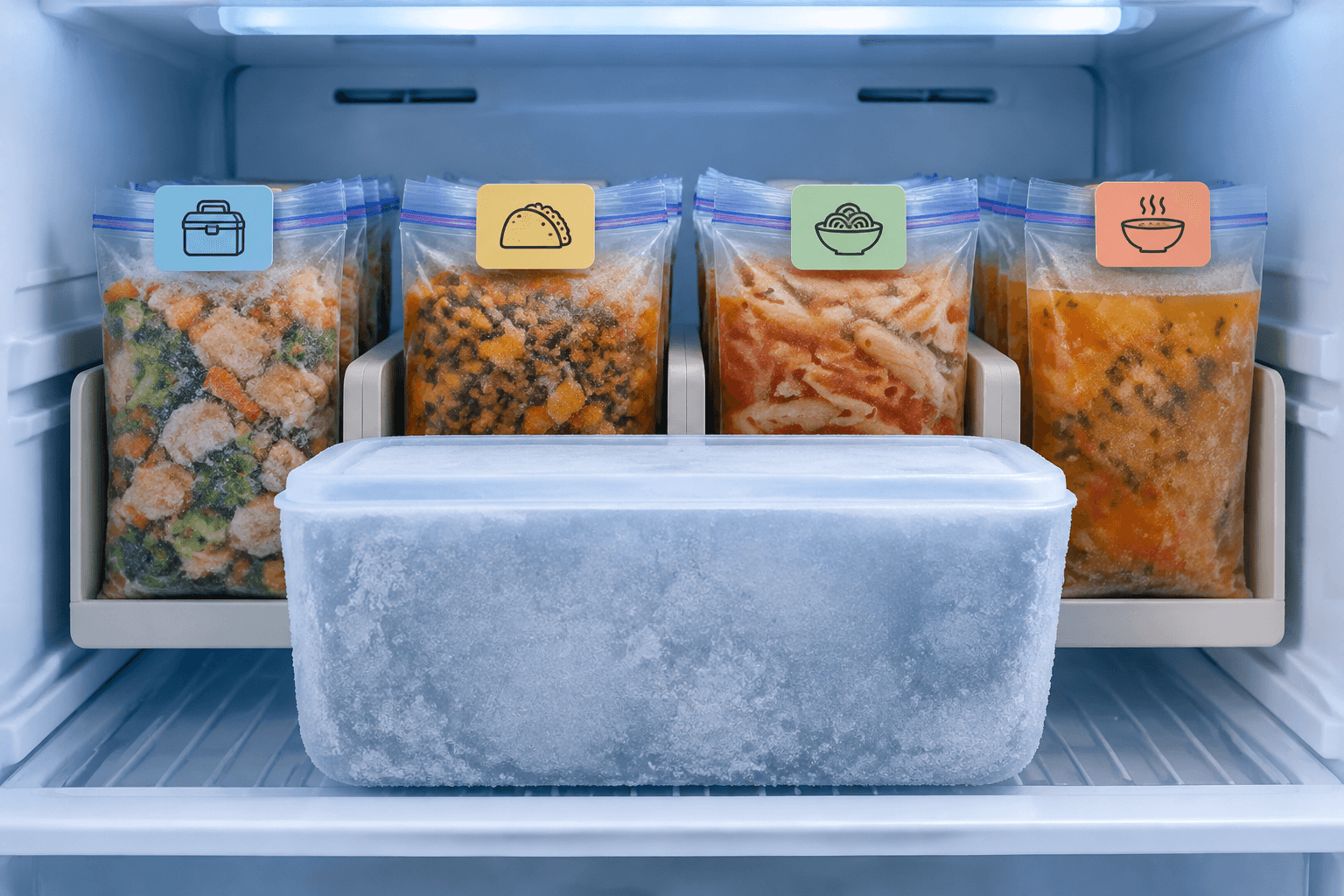
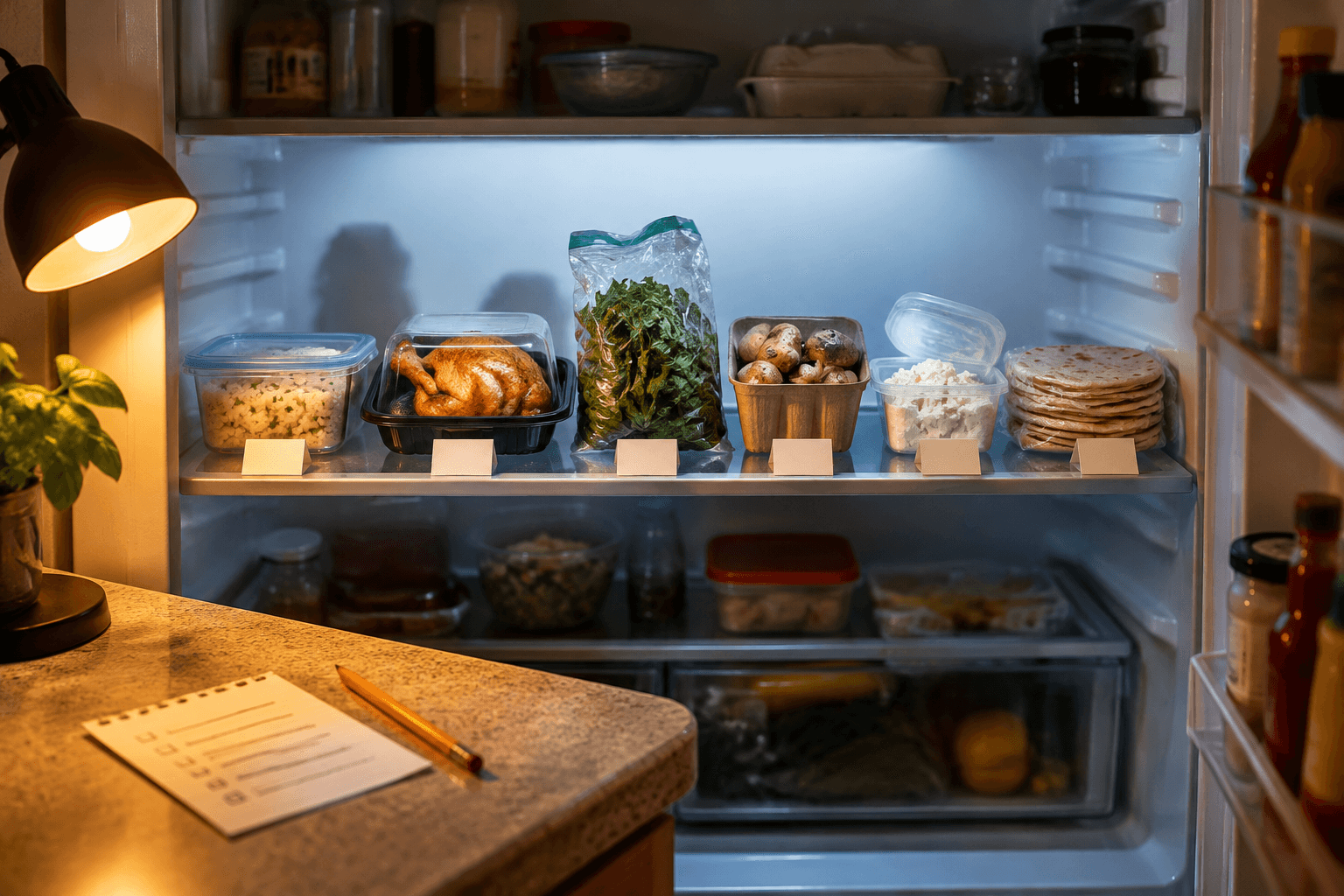
For a smaller household, refrigerate only the portions you expect to use soon. Freeze the rest early rather than daring a container of cooked food to survive until Friday through sheer optimism. Label containers with what they are and the date. Future-you should not have to conduct a forensic investigation on a frozen beige brick.
USDA guidance says to refrigerate or freeze perishable cooked food within 2 hours, or within 1 hour if the temperature is above 90°F. Use shallow containers so food cools more quickly. Refrigerated leftovers should be used within 3 to 4 days, and leftovers should be reheated to 165°F. These are safety guidelines, not a promise that every component will still taste fantastic on day four. Texture and flavor often begin their own little rebellion earlier. USDA FSIS: Leftovers and Food Safety
Frozen leftovers keep their best quality for about 3 to 4 months, according to USDA. Food kept continuously frozen at 0°F or below remains safe indefinitely, though “safe indefinitely” is not the same as “still a thrilling culinary event.” USDA FSIS: Freezing and Food Safety
And skip the smell test as a safety strategy. Harmful bacteria may not change a food’s smell, appearance, or taste. Do not taste questionable leftovers to investigate. Your refrigerator is not an escape room.
Plan the finishes, then shop once
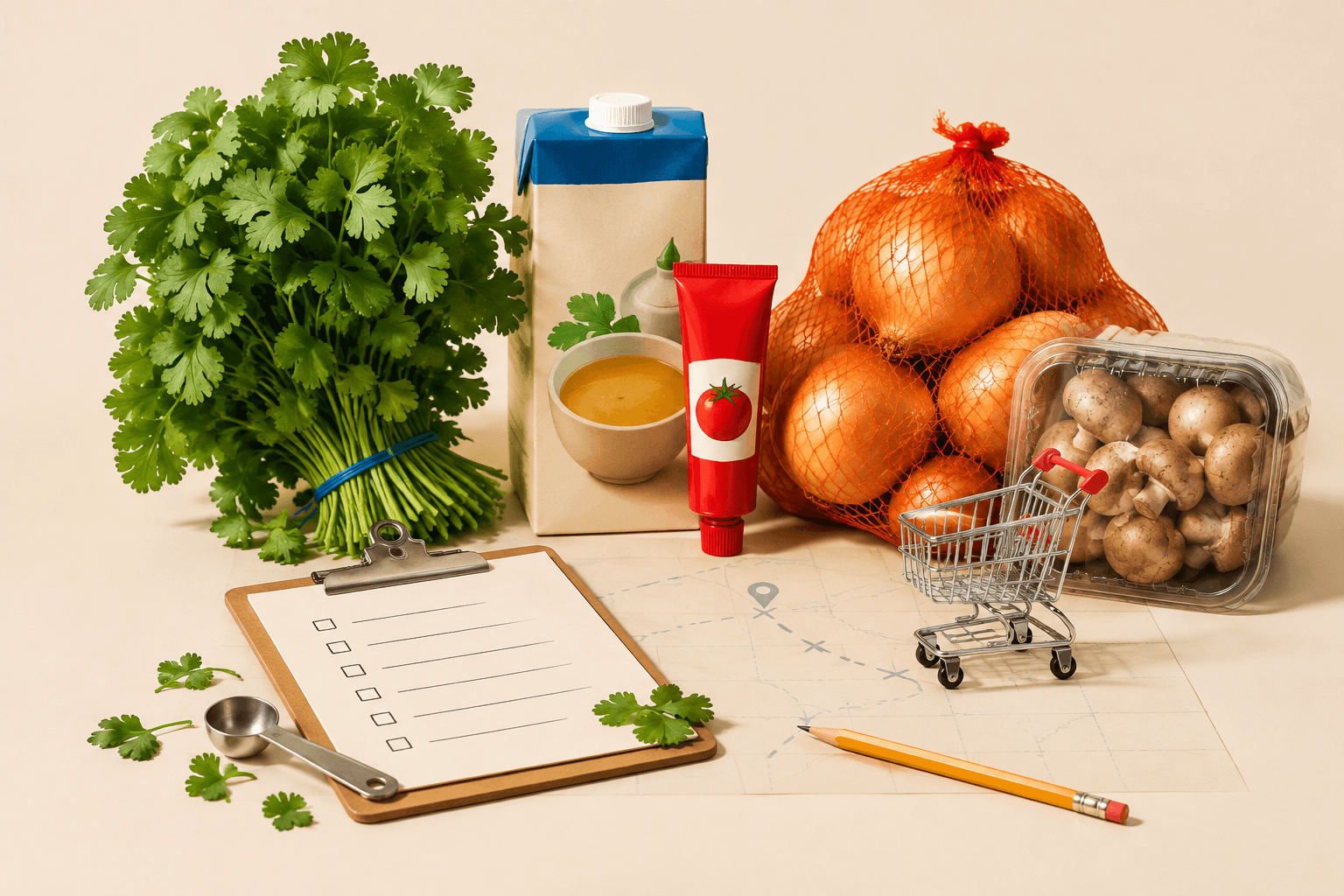
You do not need a spreadsheet with color coding and a dedicated font. A note containing “beans + roast veg: bowls Tuesday, tacos Thursday, soup Sunday” is a perfectly respectable plan.
What matters is that you decide on the branches before shopping. That way, you buy the shared base ingredients once, plus the few things that make each dinner feel different: tortillas, broth, a crunchy topping, a fresh herb, maybe one sauce. The plan stays flexible without becoming vague enough to end in delivery again.
If you want to keep those finish-meal ideas from dissolving into browser tabs and screenshots, Spiceful can store them in your personal recipe library. You can schedule the versions you choose on a meal plan, then build a grocery list from that plan. It can also consolidate duplicate grocery ingredients, which is handy when three dinners all quietly ask for onions.
Batch cooking works best when it gives you less to do later, while leaving dinner enough room to change its mind. Cook the useful parts. Save the personality for the plate.
Ready to tame the chaos? Build your recipe book.
- Save recipes from anywhere
- Turn ingredients into one tidy list
Start free. No credit card needed. Upgrade anytime.