How Smart Grocery Lists Help You Buy Less & Waste Less
Learn how smart grocery lists help reduce food waste, prevent duplicate purchases, and save money by combining ingredients across recipes into one organized shopping list.

The Spiceful Team
How Smart Grocery Lists Help Home Cooks Reduce Food Waste
Many home cooks want an easier way to waste less food and save money. USDA data from 2024 shows that the average American household wastes 25% to 33% of what they buy at the grocery store. For a family of four, this can mean over $1,500 per year in forgotten leftovers, spoiled produce, and unopened items. Most of this loss happens quietly: food lingers in the back of the fridge or pantry and is never used.
What is household food waste?
Household food waste is any edible food that is bought but never eaten. This includes excess purchases, forgotten leftovers, and products that expire before use. If you paid for it but it ends up in the trash or compost, it counts as wasted food.
Why does household food waste matter for home cooks?
Wasted food means wasted money and time for home cooks. Every unused purchase is a lost opportunity and can create the need for another grocery trip. On a larger scale, household food waste fills landfills and releases methane, a harmful greenhouse gas. The EPA (2023) points out that as food waste rises, the environmental impact grows as well.
How do traditional grocery lists fall short?
Traditional grocery lists are static and rely on your memory. Paper lists or basic digital notes do not check what you already have or match items to actual meals you will cook. These lists are rarely coordinated among household members, do not help avoid duplicate or missing purchases, and are easy to misplace or forget.
Common issues with traditional lists:
- Duplicate or missing items
- Accidental repeat purchases
- Forgetting ingredients needed for a specific meal
- Lists that are lost or forgotten
How does meal planning reduce food waste?
Meal planning connects grocery shopping to specific meals you plan to cook. When you create your list from recipes, you buy only what you need in the right amounts. This leads to fewer impulse or “just in case” purchases, less forgotten produce, and more uses for leftovers.
Steps for effective meal planning:
- Choose meals for the week and write down needed ingredients
- Check your kitchen for what you already have
- Plan ways to use up leftovers in additional meals
What are smart grocery lists and how do they work?
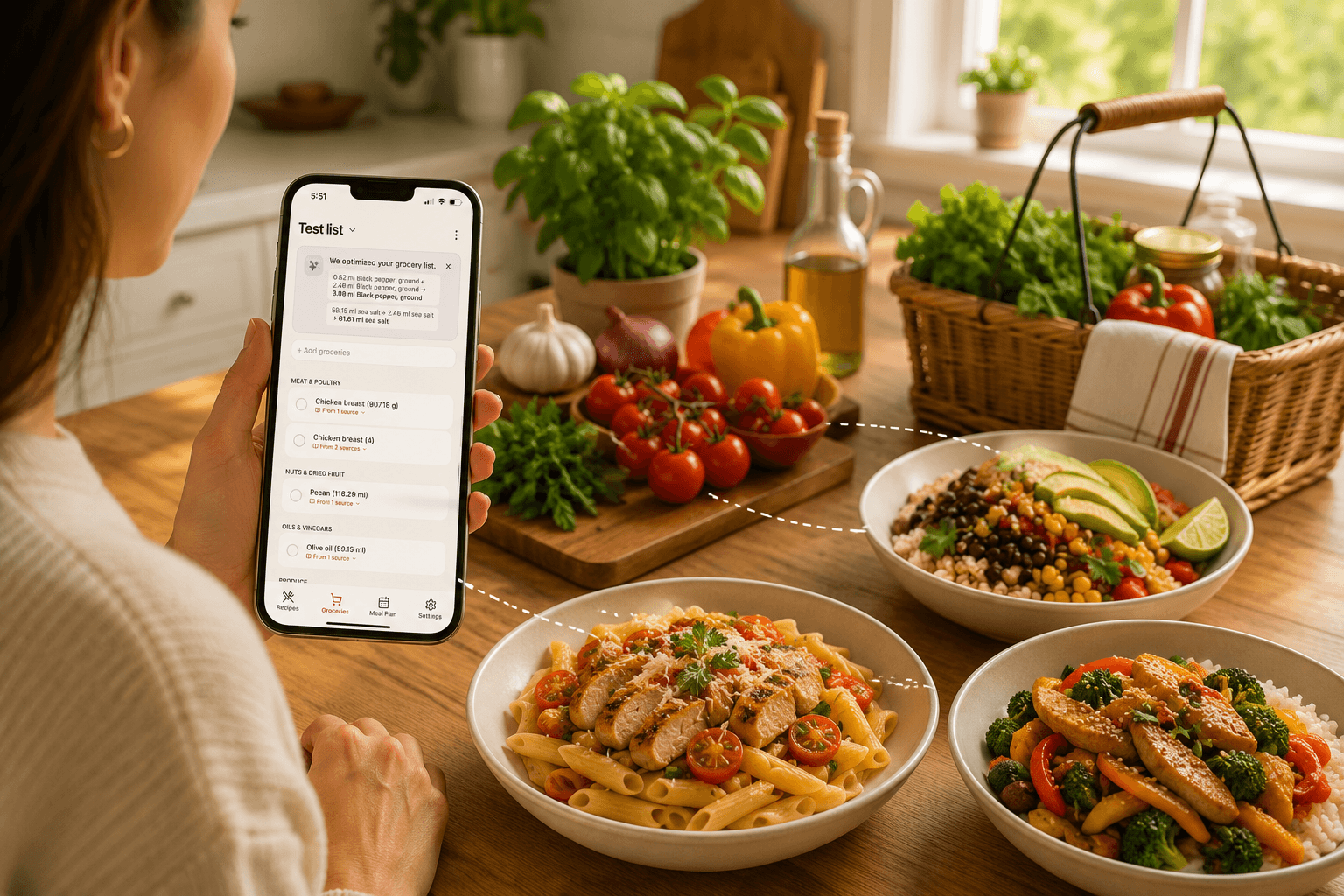
Smart grocery lists are digital tools that combine recipes, merge ingredient quantities, and organize items for shopping. They pull ingredients from planned meals, add up quantities, and sort them by store category. As your meals change, so does the list. Spiceful focuses on collecting recipe ingredients, merging quantities, and grouping by category.
How do smart lists prevent duplicate purchases?
Smart lists add up amounts for ingredients that appear in multiple recipes. For example: three meals need onion in different forms. The list converts them to one summed amount, reducing confusion over units and stopping overbuying.
How do smart lists organize shopping by category?
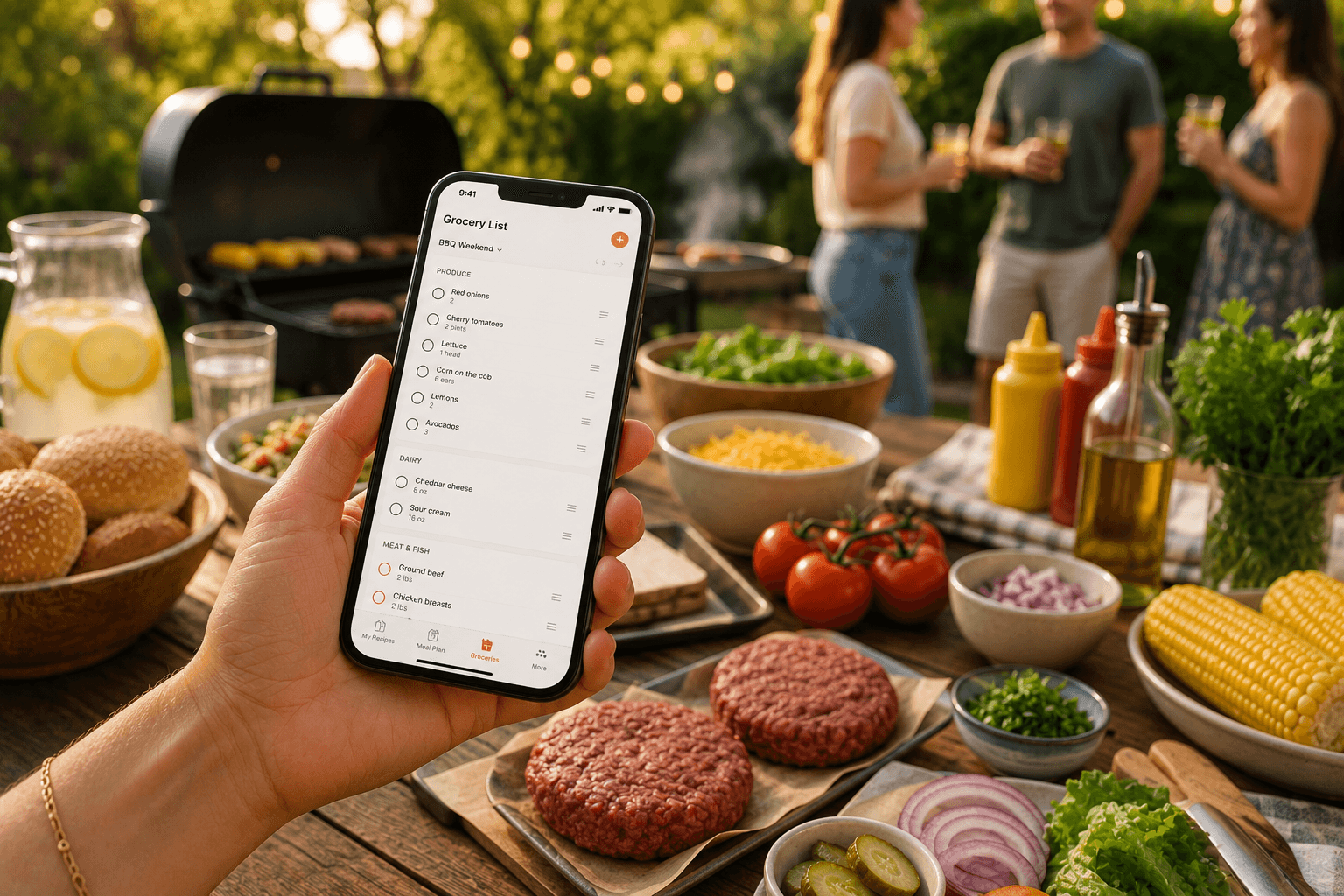
Smart grocery lists group items by aisle, such as produce, dairy, or bakery. Organizing by category makes shopping faster and lowers the chance of missing or buying the same item twice.
What are the main benefits of using a smart grocery list?
A smart grocery list can:
- Decrease food waste by matching shopping to planned meals
- Lower grocery costs because you only get what you need
- Speed up shopping with automatic merging and sorting
- Reduce duplicate purchases by summing up ingredient totals
- Reduce environmental impact by cutting excess grocery buying
What to do with Spiceful:
- Add this week’s recipes to the app.
- Let the app build and organize your list by category.
- Check your pantry and fridge for what you already have.
- Mark as complete the ingredients you already have.
- Go shopping! And mark items off as you shop.
What should you do next?
To waste less food and avoid extra grocery trips, start with a smart grocery list tool like Spiceful. Pick three to five meals to make this week, create your list in the app, and check your pantry before shopping. Most home cooks see less waste and fewer missing ingredients after one week of this approach.
FAQs
How do smart grocery lists save money?
Smart grocery lists combine ingredients from planned meals, so you only buy what you need. This stops repeat purchases and helps you use what you buy, cutting down the money spent on unused food.
Does Spiceful work with recipes from any website?
You can add recipes from most websites to Spiceful by using manual entry, pasting URLs, or uploading screenshots. This keeps you flexible in how you track your favorite meals.
Can I use a smart grocery list even if I do not plan every meal?
Yes. Planning even just two or three meals per week with a smart grocery list can cut waste and help you shop with more focus. You can also add staple items to your list. Full meal planning is not required to reduce waste.
Ready to tame the chaos? Build your recipe book.
- Save recipes from anywhere
- Turn ingredients into one tidy list
Start free. No credit card needed. Upgrade anytime.